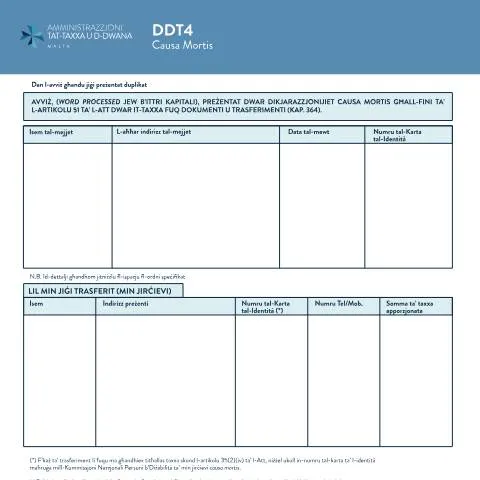
Navigating the Property Tax Landscape with Form DDT4
Understanding the nuances of property taxation in Malta can often feel overwhelming, particularly when it comes to filling out the necessary documentation. Among these documents, Form DDT4 plays a pivotal role. This official form is essential for individuals engaging with the property's tax framework, whether they are property owners or tenants. Accurately completing this form is crucial for ensuring compliance and avoiding potential penalties. In this guide, we will delve into the specifics of Form DDT4, outlining its purpose, procedure, and implications for users.
A Deep Dive into the Functionality of Form DDT4
Before proceeding to fill out Form DDT4, it’s important to grasp its significance. This document serves as a critical tool for managing property tax responsibilities. It not only facilitates the declaration of property values but also assists in the assessment process for taxation purposes.
When submitting Form DDT4, property owners provide the government with necessary data to determine tax liabilities accurately. This form is typically submitted annually, aligning with the fiscal calendar, and is therefore time-sensitive. The completion and accurate submission of this document can have far-reaching consequences for property owners and tenants alike, impacting their financial obligations under Maltese law.
The Lifecycle of Form DDT4: From Submission to Assessment
Understanding the timeline associated with Form DDT4 offers valuable insights into its procedural context. The lifecycle of this form can be segmented into several critical phases:
- Notification: Property owners receive notifications regarding property assessments, typically at the start of the fiscal year.
- Submission Window: The form must be lodged within a specified timeframe. Late submissions may incur penalties.
- Assessment: Following the submission, the Property Tax Authority will review the form and make assessments based on the information provided.
- Outcome Notification: Once the property tax is assessed, property owners receive a notification detailing their liabilities.
This chronological breakdown underscores the importance of timely and accurate submissions.
What to Expect After Submitting Form DDT4
Once the form has been submitted, various scenarios may unfold based on the information provided. Here are several potential outcomes:
- Approval: If the submission meets all requisite criteria, applicants will receive confirmation of their property tax assessment.
- Reassessment Request: If the authorities identify discrepancies or require more information, they may initiate a reassessment process. Property owners will be given a chance to clarify or amend submissions.
- Penalties for Non-Compliance: Failure to submit Form DDT4 on time may lead to financial penalties, impacting the overall fiscal health of the property owner.
A Closer Look at the Components of Form DDT4
Breaking down the components of Form DDT4 reveals the critical information required for proper assessment. Each section of the form serves a specific purpose, and understanding these can help avoid common pitfalls:
| Section | Description | Common Issues |
|---|---|---|
| Property Details | Information about the property, including address and type. | Incorrect property categorization may lead to inflated tax assessments. |
| Owner Information | Details of the property owner, including ID number and contact information. | Failure to update ownership details can result in communication breakdowns. |
| Valuation | Estimated value of the property as determined by the owner. | Under- or over-valuation will affect tax calculations. |
Each section should be approached with care, ensuring that all information is accurate and complete to avoid delays or complications.
Confronting Challenges: What If Things Go Wrong?
Despite best efforts, discrepancies can arise, whether due to errors in data entry or changes in property status. Understanding how to navigate these challenges effectively is crucial:
- Correction of Errors: If an error is identified post-submission, promptly contact the Property Tax Authority to amend the submission.
- Handling Missing Documentation: If your application lacks supporting documentation, the authority will usually issue a request for the necessary documents. Responding quickly is essential to avoid penalties.
- Appeal Procedures: In case of rejection or disagreement with the tax assessment, property owners have the right to appeal. It is advisable to submit any appeals in writing, detailing reasons and providing further evidence if possible.
The Legal Framework Surrounding Form DDT4
Form DDT4 operates within a broader legal context established by the Public Administration Act (Cap. 595 of the Laws of Malta). This legislation outlines the responsibilities and authorities of property tax administration:
- Transparency in Tax Assessments: The law mandates that tax assessments must be conducted fairly and transparently, providing property owners with clear reasoning behind their tax obligations.
- Right to Information: Property owners have the right to request information regarding how their tax assessments were calculated, promoting accountability in the administration process.
Staying informed about the legal framework ensures property owners understand their rights and responsibilities throughout this process.
Anticipating Future Changes: The Evolving Nature of Property Tax
As Malta continues to adapt its property tax system, it’s essential to stay informed about potential changes that could affect Form DDT4 and related processes. This could include:
- Tax Rate Adjustments: Modifications in tax rates can directly influence property tax liabilities.
- New Regulations: Amendments to existing laws may introduce new requirements for submissions or change assessment methodologies.
- Technological Advancements: The potential implementation of digital platforms for submission could streamline processes, making it easier for applicants to manage their obligations.
Being aware of such changes allows property owners to prepare and adapt, ensuring compliance with the latest regulations.
Conclusion: Empowering Yourself in the Property Tax Process
Form DDT4 is not merely a bureaucratic hurdle; it is a fundamental instrument for managing one’s property tax liabilities effectively. By understanding its structure, the implications of its completion, and the legal context it operates within, property owners can navigate the Maltese property tax landscape more confidently. Whether you are facing challenges in completing the form or simply wish to ensure your compliance, staying informed is the key to empowerment in this essential administrative process.
Understanding the DDT4 Form and Its Significance in Malta
The DDT4 form is an essential component within the Maltese administrative framework, primarily utilized for declaring property transfers. Specifically, it serves as a declaration for the transfer of property ownership to the Inland Revenue Department. Understanding the intricacies of this form is crucial for both local residents and foreign nationals engaging in property transactions in Malta.
When submitting the DDT4 form, it is important to comply with specific regulations set forth by the Public Administration Act (Cap. 595 of the Laws of Malta). This form not only facilitates the smooth transfer of property but also ensures compliance with tax obligations, thereby preventing potential legal issues. Misunderstanding or improperly filling out the DDT4 could lead to delays or complications in the property registration process with the Lands Authority.
Notably, the DDT4 must be accompanied by relevant supporting documents, such as proof of identity, property valuation certificates, and past ownership documents. Each document plays a pivotal role in verifying the legitimacy of the property transfer and ensures that all parties involved are protected under Maltese law.
For individuals unfamiliar with the process, engaging the services of a legal professional or a property consultant can streamline the process, allowing for a clearer understanding of the DDT4’s requirements and implications. Aspects such as the applicable rates of duty, exemptions, and concessions available should also be thoroughly explored to maximize benefits.
Navigating the Digital Submission of the DDT4 Form
In recent years, Malta has made significant strides towards digitizing its public services. The DDT4 form can now be submitted online through the e-ID portal, streamlining the process and enhancing accessibility for users. This digital transition is a part of the government’s broader initiative to modernize public administration and improve efficiency.
To utilize the online submission system, users must possess a valid e-ID. This identification system not only offers secure authentication but also simplifies the submission of various forms and applications. Once logged in, applicants will find that the DDT4 form is readily available within the services offered, providing a user-friendly interface to fill out the necessary details.
Furthermore, submitting the DDT4 form online often results in faster processing times compared to traditional paper submissions. This can be particularly advantageous for individuals eager to finalize their property transactions. However, it is imperative to ensure that all information entered is accurate and that any required documents are uploaded in the specified formats to avoid delays in processing.
Additionally, users should be aware of the system's operational hours and maintenance schedules, as these may temporarily affect availability. Regular updates and announcements can be found on servizz.gov.mt, where the government provides comprehensive information on public services.
Common Pitfalls When Filing the DDT4 Form
While the DDT4 form is generally straightforward, certain pitfalls can complicate the filing process. One of the most common errors involves the misrepresentation of property values, which can lead to tax discrepancies and potential fines. Ensuring that the property value is accurately represented based on fair market value or an official valuation is crucial to avoid these issues.
Another frequent mistake is the omission of required documents. As mentioned, the DDT4 form necessitates various supporting documents, and failing to provide these can result in delays or outright rejection of the submission. It is advisable to create a checklist of all required materials before initiating the submission process. This might include, but is not limited to, the property title deed, a copy of the seller's ID, and any relevant correspondence regarding the property.
Moreover, individuals often overlook the importance of timely submissions. The DDT4 form must be filed within a specific timeframe post-transaction to ensure compliance with tax obligations. Understanding the deadlines is critical, as failure to submit on time can result in penalties or the need for additional administrative steps to rectify the situation.
Lastly, many users underestimate the value of seeking professional assistance. Legal experts familiar with Maltese property law can provide invaluable insights and guidance, helping individuals navigate potential challenges and ensuring that all aspects of the DDT4 filing process are handled correctly.