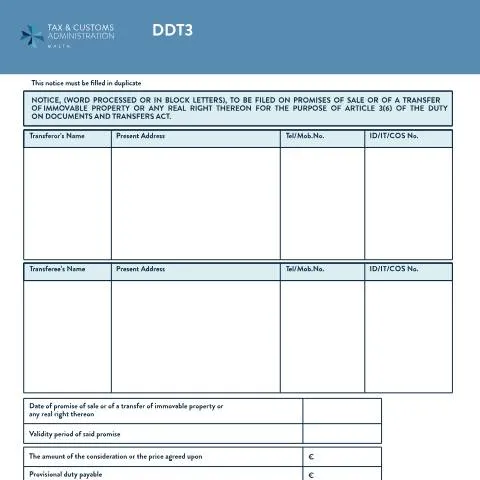
Understanding the Role of the ddt3 Form in Property Tax Applications
When you own property in Malta, understanding the intricacies of property tax obligations is vital. Among the key documents in this domain is the ddt3 form, critical for various property-related applications. This official document serves a particular function within the broader framework of property taxes and is essential for property owners looking to fulfill their tax responsibilities efficiently. The ddt3 form pertains to specific property tax declarations and requires careful attention to detail from the applicant.
Navigating the Submission Channels: Online vs. In-Person
As digital transformation continues to reshape administrative processes in Malta, submitting the ddt3 form has become more streamlined. Below are the primary channels through which one can submit this form:
- Online Submission: The e-ID system facilitates online applications through the official government portal. Utilizing e-ID for authentication allows for a faster and more efficient submission process, which is highly recommended.
- Paper Submission: If online submission is not feasible, applicants may choose to print the ddt3 form and submit it by post. This method may take longer due to postal delays and additional processing time.
- In-Person Submission: Alternatively, residents can visit local offices to file their applications. This face-to-face interaction can provide immediate assistance and clarification for any uncertainties surrounding the application.
Essential Documentation: Preparing Your Application
Completing the ddt3 form accurately requires gathering a range of documents that substantiate your property status and tax obligations. Depending on your situation, the necessary paperwork may vary:
- Proof of Identity: Valid identification, such as a Maltese ID card or passport, is mandatory.
- Property Ownership Documents: This may include title deeds or any documentation confirming ownership.
- Previous Tax Returns: If applicable, submitting past property tax returns can assist in establishing a history of compliance.
- Additional Supporting Evidence: Depending on the nature of your application, additional documents such as bank statements or utility bills may be required.
It is advisable to compile these documents well in advance to avoid any last-minute complications during submission.
Understanding Implications: Responsibilities and Rights
Filing the ddt3 form is not merely a formality; it has significant implications for property owners.
- Tax Assessment: Proper completion of the form can lead to accurate assessments of property tax obligations. Failure to submit or inaccuracies can result in higher tax liabilities.
- Access to Benefits: Certain exemptions or reductions can be accessed by correctly filing the ddt3 form, particularly for first-time homeowners, senior citizens, or individuals with disabilities.
- Legal Obligations: Neglecting to file the ddt3 form or submitting incorrect information can result in fines or legal action from the property_tax authority.
What to Do When Challenges Arise: Errors and Clarifications
Despite the best efforts to ensure accuracy, there may be instances where errors occur during the submission of the ddt3 form. Here’s how to navigate these challenges:
- If You Receive a Rejection: Upon receiving a notification regarding a rejected application, review the reasons provided and gather any missing information or correct errors. Resubmit your application along with an explanatory note if necessary.
- Addressing Missing Documents: If notified that your submission lacks required documents, promptly provide the missing information. Failure to do so may delay processing or lead to penalties.
- Requesting Clarifications: In case of doubt, contacting the property_tax authority for clarification can save time and ensure compliance with requirements. It is advisable to have your application reference ready for any inquiries.
Distinct Features: Comparing ddt3 with Other Forms
Understanding how the ddt3 form differs from similar property-related forms can help streamline the application process.
| Form Code | Purpose | Key Differences |
|---|---|---|
| ddt3 | Property Tax Declaration | Specifically for property owners, focusing on tax obligations. |
| Form V | Property Valuation | Used for assessing property value rather than tax obligations. |
| GOV1 | General Tax Information | Covers a broader scope, including various types of taxes, not solely property tax. |
Being aware of these distinctions will help prevent confusion and ensure that the correct documentation is filed for the appropriate purpose.
Special Cases: Navigating Unique Circumstances
There are scenarios where the standard process may not apply, particularly for specific demographics or situations:
- Foreign Nationals: Non-residents owning property in Malta must comply with specific requirements and might need to provide additional documentation, including residency status.
- Minors: Applications involving property owned by minors may require legal guardians to fill out the ddt3 form and provide necessary approvals.
- Urgent Applications: In cases where time is of the essence, such as impending sales or transfers, it is advisable to highlight this urgency when submitting the application to receive expedited handling.
A Step-by-Step Journey: From Submission to Decision
Understanding the lifecycle of the ddt3 form from submission to decision can alleviate anxiety and provide clarity throughout the process:
- Preparation: Gather all required documents and ensure the ddt3 form is completed accurately.
- Submission: Choose your preferred method of submission, ensuring you receive confirmation of your application.
- Processing: The relevant authorities will review your application, which can take several weeks, depending on the backlog.
- Response: You will receive a notification regarding the approval or any issues that require rectification.
- Final Outcome: If accepted, your property tax obligations will be assessed based on the information submitted in your ddt3 form.
By following this structured process and remaining proactive about potential challenges, property owners can navigate the complexities of property taxes with greater ease.
Understanding the DDT3 Form: Purpose and Importance
The DDT3 form in Malta serves a crucial function for individuals and entities engaged in various administrative processes, particularly in relation to property transactions and taxation. It is primarily used for the declaration of property income, which is fundamental for the computation of property tax obligations. Understanding the nuances of the DDT3 form is essential for compliance and to avoid any potential pitfalls associated with misreporting or omissions.
When filling out the DDT3 form, it is imperative to accurately report all sources of income derived from property. This includes residential rental income, commercial leases, and any other property-related earnings. The form requires detailed disclosures, such as the nature of the property, the total income generated, and any allowable deductions that may apply, including maintenance costs and management fees. Failing to provide complete and accurate information can lead to penalties imposed by the Commissioner for Revenue, thereby emphasizing the importance of diligence in this process.
Moreover, the DDT3 form can also impact a taxpayer's eligibility for various tax incentives and reliefs provided by the Maltese government. These may include preferential tax rates for first-time landlords or those managing properties deemed as 'social housing.' Therefore, understanding how the DDT3 form interacts with the broader taxation framework in Malta can provide significant financial benefits.
Common Mistakes and How to Avoid Them While Filing DDT3
Filing the DDT3 form can be a daunting task, particularly for those unfamiliar with the intricacies of Malta’s tax system. Various common mistakes can hinder a smooth filing process and could result in delays or increased tax liability. Awareness of these pitfalls can save taxpayers both time and money.
One prevalent mistake is the incorrect reporting of rental income. Ensure that all income sources are included and accurately quantified, as discrepancies can red-flag your submission for further scrutiny by tax authorities. Additionally, taxpayers sometimes overlook allowable deductions that could significantly reduce taxable income. Familiarizing oneself with deductible expenses related to property management, such as repairs, property insurance, and service charges, is crucial. Keeping thorough documentation of all expenses will support claims and simplify the reporting process.
Another frequent error is the misunderstanding of filing deadlines. The DDT3 form must be submitted within a specified timeframe, typically aligned with the annual tax declaration period. Missing this deadline can result in penalties and interest charges on unpaid taxes. Therefore, it’s wise to mark important dates on your calendar and consider setting reminders in advance.
Finally, consultative resources such as e-forms available through the [services portal](https://servizz.gov.mt) or engaging with a tax professional can provide further clarity and guidance when completing the DDT3 form. Leveraging expert advice helps mitigate risks associated with incorrect filings and enhances compliance with local laws.
The Role of Digitalization in DDT3 Submissions
Malta's move towards digitalization has profoundly impacted how administrative processes are conducted, including the submission of the DDT3 form. The government has made significant strides to streamline processes via the [e-ID](https://identitymalta.com) system, enabling citizens to access various services online. This digital transformation not only enhances convenience but also improves accuracy and efficiency in the submission process.
By utilizing the e-ID, taxpayers can securely authenticate their identity and access the DDT3 form through the official [government portal](https://servizz.gov.mt). The digital form often includes features such as automatic calculations for tax liabilities and deductions, reducing the chance of human error. Furthermore, the online system allows for real-time updates and information retrieval, which can simplify the filing experience.
As Malta continues to embrace digital solutions, future iterations of the DDT3 form may incorporate advanced features such as pre-filled information based on previous submissions or integrated data from land registries. This evolution could significantly lessen the administrative burden on taxpayers and improve compliance rates, fostering a more transparent and efficient tax system in Malta.
In conclusion, adapting to the digital landscape is essential for both taxpayers and the administrative framework of Malta. As the DDT3 form and its submission processes evolve, staying informed of changes and embracing technology will be pivotal in ensuring seamless and compliant property income reporting.