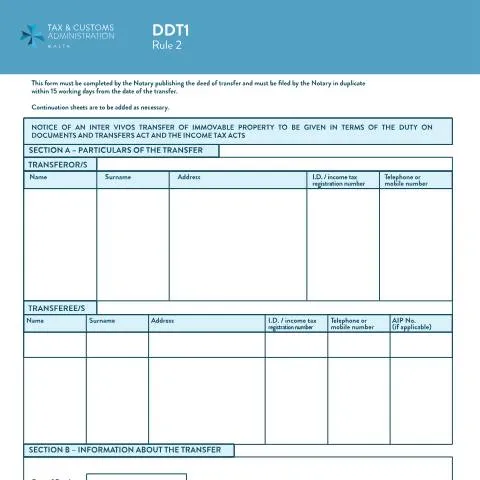
Diving into the Property Tax Document: Form ddt1
When it comes to property ownership in Malta, fulfilling tax obligations is a critical responsibility. The form ddt1 stands out in the myriad of documents associated with property tax, serving particular functions that are often unclear to many. Understanding its nuances is essential for anyone involved in property transactions or ownership in Malta.
The Legal Framework Behind ddt1
Form ddt1 operates within the framework set by the Public Administration Act (Cap. 595 of the Laws of Malta), which lays down the guidelines for administrative processes related to public taxation, including property taxes. This regulatory backdrop ensures that property transactions are executed transparently and fairly while safeguarding the rights of both the state and property owners.
Introduced to streamline the property tax assessment process, the ddt1 form has evolved alongside the growing complexities of the Maltese property market. Its creation was aimed at simplifying property tax submissions while establishing clear guidelines for reporting changes in property ownership, condition, or use.
Who is Required to Submit the ddt1 Form?
The ddt1 form is primarily submitted by property owners or legal representatives involved in property transactions. However, the circumstances can vary significantly:
- Individuals: Maltese citizens or residents who own property and need to declare changes or updates.
- Legal Entities: Companies or associations that own property or are involved in real estate dealings.
- Foreign Nationals: Non-residents who own property in Malta and are subject to the same tax responsibilities as local owners.
For many, especially foreign owners, navigating the legal landscape can be daunting. Understanding the specific obligations related to the ddt1 form is critical. It could be the difference between compliance and facing potential penalties.
Chronological Journey: From Initiation to Submission
Filling out the ddt1 form involves several key stages that should be followed meticulously:
- Identify the Trigger: Typically, the need to fill out the ddt1 arises from changes in property status. This could include sales, inheritance, or significant renovations that affect property value.
- Gather Required Information: Before beginning the form, collect essential documents such as previous property tax assessments, proof of ownership, and any documentation detailing changes made.
- Complete the ddt1 Form: Using clear and accurate information, fill out the form. Ensure that all sections are completed, noting any specific instructions related to your situation.
- Submit the ddt1 Form: Once filled, the form must be submitted to the appropriate authorities, typically the Property Tax Office. Ensure to keep a copy for your records.
- Follow Up: After submission, it may take some time for the review process. It’s essential to track the application and ensure all requested information is provided promptly.
Understanding the Review Process
Once the ddt1 form is submitted, it enters the review phase, where property tax officials assess the information. This process is crucial for ensuring that property taxes are accurately levied based on the updated status of the property. Here’s what to expect:
- Eligibility Checks: Officials will verify that the submitted information aligns with the property registration and other tax records.
- Potential Follow-Up Queries: Should there be inconsistencies or unclear information, officials may reach out for clarification.
- Assessment of Tax Obligations: Based on the updated information, tax officials will determine any new tax liabilities or adjustments to existing amounts.
It is advisable to maintain communication with the property tax office during this period. If there are delays or a lack of updates, proactive follow-up can help clarify any questions or expedite the process.
Detailed Profiles: Who Might be Affected
Different demographics may be impacted by the ddt1 form differently. It’s essential to understand these profiles to anticipate potential questions or needs:
| Profile | Considerations |
|---|---|
| First-Time Homeowners | Must ensure that they understand their obligations starting from the moment of property purchase. |
| Inheritors | Need to submit the ddt1 if the property ownership changes due to inheritance. |
| Foreign Investors | Should be aware of additional documentation requirements and tax obligations specific to non-residents. |
| Commercial Property Owners | May have more complex tax assessments based on property use and revenue generation. |
Each profile has unique requirements and potential pitfalls that can significantly affect the submission process. Tailoring the approach based on individual circumstances is essential.
Consequences of Non-Compliance with the ddt1 Form
Ignoring the obligations tied to the ddt1 form can have serious ramifications. Here’s a look at some of the possible outcomes:
- Penalties and Fines: Failure to submit the ddt1 on time can lead to financial penalties, adding unnecessary costs to property ownership.
- Legal Complications: Inconsistent tax reporting may lead to legal issues, especially in disputes over property ownership or tax assessments.
- Inaccurate Tax Assessments: Neglecting to update property information can result in incorrect tax obligations, which may put property owners at a disadvantage.
Understanding these consequences emphasizes the importance of timely and accurate completion of the ddt1 form. Property owners must stay proactive in meeting their tax obligations to avoid complications down the line.
Special Cases: Navigating Unique Situations
Certain scenarios warrant special attention when it comes to the ddt1 form:
- Properties with Multiple Owners: In cases of joint ownership, all parties must agree on the submitted information.
- High-Value Properties: Properties that have undergone significant renovations or that are classified as luxury homes may require additional documentation.
- Foreign Nationals: Non-residents must ensure they are aware of any additional tax implications or obligations specific to non-local property ownership.
- Minors as Property Owners: In situations where the property is owned by minors, legal guardians must handle the submission on their behalf.
Each of these situations brings its own set of challenges and requirements. Being informed and prepared for these unique cases can significantly ease the process of filing the ddt1 form.
The Importance of Accurate Information
Finally, the integrity of the information submitted on the ddt1 cannot be overstated. Accurate, up-to-date information is vital for ensuring that the property tax system functions properly and that property owners are treated fairly. Here are a few tips to keep in mind:
- Double-Check Details: Prior to submission, verify that all figures and documents are correct.
- Consult Professionals: If uncertainty arises, consider seeking advice from tax professionals or legal experts familiar with property law in Malta.
- Stay Informed: Regularly monitor changes in property tax regulations that could affect future submissions of the ddt1 form.
Being thorough not only enhances the chances of a smooth processing experience but also protects property owners from unexpected complications.