Navigating the Value Added Tax Return: A Comprehensive Guide for Businesses in Sri Lanka
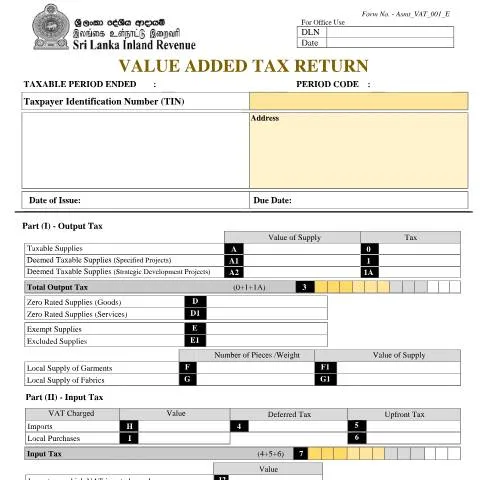
In the vibrant economic landscape of Sri Lanka, compliance with tax regulations is paramount for any business's sustainability and growth. Among these obligations, the submission of the Value Added Tax Return (Form Asmt_VAT_001_E) stands out as a critical requirement for registered businesses. This document serves as an essential instrument for recording taxable supplies and calculating the VAT that businesses owe to the government, as well as the input tax they can claim back. Understanding its intricacies can illuminate the entire tax compliance process.
The Vital Role of the VAT Return
The Value Added Tax Return plays a central role in the taxation process for businesses engaged in the supply of goods and services within Sri Lanka. Form Asmt_VAT_001_E, established under the Value Added Tax Act No. 14 of 2002, is designed to facilitate the accurate reporting of VAT liabilities and entitlements. The completion and submission of this return effectively contribute to the broader framework of taxation, ensuring that businesses adhere to local laws and the collection of public revenue.
Understanding Taxable and Non-Taxable Supplies
- Taxable Supplies: These include goods and services that are subject to VAT. Businesses must diligently calculate their sales during the taxable period and report this on the return.
- Zero Rated Supplies: Goods and services that are VAT exempt but may still require reporting if the business incurs related input tax.
- Exempt Supplies: Certain categories of goods and services that are not subject to VAT, which businesses need to account for correctly in the return.
The differentiation between these categories is essential, as it determines how businesses calculate their obligations and rights under the VAT regime.
Step-by-Step Process of Completing the Form
Filing the Value Added Tax Return involves a systematic approach. Businesses must first gather all necessary financial data for the taxable period, typically covering three months. The following steps outline the process:
1. Gathering Financial Statements
Start by compiling all relevant financial documents, including sales invoices, purchase receipts, and previous VAT returns. This ensures that the figures reported are accurate and verifiable.
2. Completing Part (I) - Output Tax
In this section, businesses report their total sales, including:
- Taxable Supplies (A)
- Deemed Taxable Supplies (A1, A2)
- Zero Rated Supplies (D, D1)
- Exempt Supplies (E)
Each category should be accurately filled out, reflecting the true nature of the transactions conducted during the period.
3. Filling Part (II) - Input Tax
This section allows businesses to claim back VAT on purchases made during the taxable period. Key components include:
- VAT Charged on Imports (H)
- Local Purchases (I)
- Disallowable Input Tax (8)
- Allowable Input Tax (9)
Identifying and reporting the correct amounts here is crucial for optimizing tax returns and preventing potential penalties.
Submission Procedure: Where and How to File
Once the form is completed, the next step involves submission, which is mandated to be done electronically, as per the guidelines set forth by the Commissioner General of Inland Revenue. This can be accomplished through the official Inland Revenue Department (IRD) web portal.
Timelines and Due Dates
Each business must be aware of the due dates for submission, which are generally outlined in the fiscal calendar. Filing the return late may incur penalties, which can accumulate if payments are not made promptly.
Post-Submission: What to Expect
After submission, businesses should be prepared for potential follow-ups from the IRD regarding their filings. Understanding how to track the status of one’s submission can ease concerns and allow for proactive management of any issues that arise.
Tracking Your Submission
Businesses can track their submissions through the same IRD web portal. Regular checks can provide peace of mind and help to quickly address any queries raised by tax officials.
Potential Outcomes and Responses
Once the IRD has processed the return, there are typically two outcomes:
- Tax Payable: If the output tax exceeds the allowable input tax, businesses will need to remit the difference.
- Refundable Tax: Conversely, if input taxes surpass output taxes, businesses may be due a refund.
Understanding these outcomes informs businesses on cash flow management and future financial planning.
The Legal Framework behind VAT Returns
The implementation of the VAT Return is grounded in a robust legal framework that has evolved over the years. The Value Added Tax Act No. 14 of 2002 governs the procedures and obligations concerning VAT in Sri Lanka. This legislative background not only supports the requirement for businesses to file VAT returns but also establishes penalties for non-compliance, making adherence to these regulations critical.
Key Legal Considerations
As outlined in the Value Added Tax Act, specific provisions detail:
- Requirements for registration as a VAT taxpayer
- Filing obligations and frequency of returns
- Penalties for incorrect or late submissions
Businesses are encouraged to remain updated on any amendments to the tax laws, as these can directly impact their filing obligations and financial responsibilities.
Integrating VAT Returns within Broader Tax Strategy
Filing the Value Added Tax Return is one piece of a larger tax strategy that businesses in Sri Lanka must navigate. The interplay between VAT, income tax, and other forms of taxation necessitates a comprehensive approach to compliance and financial management.
Consulting with Tax Professionals
Given the complexities of tax regulations, engaging with tax professionals or consultants can provide businesses with tailored advice on VAT compliance and ensure effective tax planning strategies are in place. This can enhance accuracy in reporting and mitigate risks associated with tax audits.
Continual Learning and Adaptation
Finally, businesses should embrace a culture of continual learning and adaptation when it comes to tax compliance. With the landscape of taxation evolving, staying informed through workshops, seminars, and the IRD’s updates will empower businesses to navigate the complexities of VAT with confidence.
Leveraging Digital Tools
With the push for digitalization in tax compliance, utilizing available software and tools can streamline the preparation and submission process for the Value Added Tax Return. These tools can assist in maintaining records, generating reports, and ensuring timely submissions, ultimately enhancing a business's operational efficiency.
Conclusion: The Path to Compliance
Navigating the intricacies of the Value Added Tax Return requires diligence, awareness, and strategic planning. Businesses must be proactive in understanding the requirements, completing the form accurately, and ensuring timely submissions. By integrating these practices into their operational frameworks, they will not only comply with local tax laws but also cultivate a sustainable business environment poised for growth.
Understanding Value Added Tax (VAT) in Sri Lanka
The Value Added Tax (VAT) in Sri Lanka is governed by the Value Added Tax Act No. 14 of 2002, which has undergone various amendments to streamline and enhance the tax collection process. VAT is a consumption tax levied on the value added to goods and services at each stage of the supply chain. Businesses registered under VAT must charge VAT on their sales and are eligible to claim input VAT on their purchases, thereby allowing a deduction for the tax paid on inputs.
It is crucial for businesses to maintain precise records of all transactions, as the tax authorities may require documentation to substantiate claims made in VAT returns. The standard VAT rate is currently set at 8%, while specific goods and services may attract different rates or exemptions. Understanding the applicable rates, exemptions, and conditions is essential for compliance and optimal tax planning.
Filing VAT Returns: Important Considerations
When filing your VAT Return in Sri Lanka using the Asmt_VAT_001_E form, it is essential to pay attention to several critical factors to ensure compliance and avoid potential penalties. The VAT return must be submitted on or before the last day of the month following the end of the tax period. For example, if your tax period ends on December 31, your return is due by January 31 of the following year.
Moreover, businesses must ensure that their books of accounts are up-to-date and accurately reflect all taxable supplies, input VAT, and any adjustments made during the tax period. In situations where the business engages in both taxable and exempt supplies, it is important to calculate the apportionment of input VAT correctly, as only the VAT attributable to taxable supplies can be claimed. This may be particularly relevant for businesses involved in mixed supply activities.
In cases where a business fails to submit the VAT return on time, penalties may apply, ranging from a fixed amount to a percentage of the tax due. Therefore, companies should establish a robust internal process for tax compliance, including calendar reminders for filing dates and a checklist to ensure all required documentation is prepared in advance.
Common Mistakes in VAT Returns and How to Avoid Them
VAT returns can be complex, and errors are common among businesses, especially for those new to the VAT system. Some common mistakes include misreporting sales and purchases, incorrect calculations of VAT due, and failure to claim input VAT on eligible expenses. These mistakes can lead to audits by the Department of Inland Revenue (DIR) and potential penalties.
To mitigate these errors, businesses should consider implementing a comprehensive training program for the finance team involved in preparing the VAT returns. This training should cover the intricacies of VAT compliance, the importance of accuracy, and the specific requirements of the Asmt_VAT_001_E form.
Furthermore, employing a robust accounting software solution designed to handle VAT calculations automatically can significantly reduce the potential for human error. Regular internal audits or reviews of the VAT returns before submission can also help catch mistakes early. Companies should also keep abreast of any changes to VAT regulations, as updates can affect reporting requirements and compliance obligations.