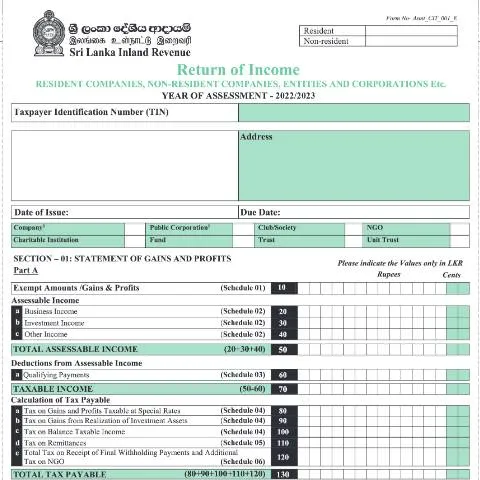
Understanding the Return of Income: A Deep Dive into Asmt_CIT_001_2022
In the realm of financial compliance in Sri Lanka, the Return of Income - Asmt_CIT_001_E represents a pivotal document for both resident and non-resident entities, including corporations and other organizations. This form is essential for declaring income and assets, a process that can significantly impact tax obligations. This article explores the intricacies of this form, starting from its inception to its submission, enriching your understanding of its critical aspects.
Triggering Your Responsibility: When to File the Return of Income
Tax season can be daunting, especially when multiple deadlines converge. The obligation to file the Return of Income is primarily triggered by the end of the financial year, which is typically on March 31st. Entities must take heed of the following timeline:
- Filing Start Date: April 1st, following the financial year-end.
- Submission Deadline: The completed form must be submitted to the Inland Revenue Department by November 30th of the assessment year.
- Late Submission Penalties: Failing to adhere to this deadline may result in penalties, escalating depending on the duration of the default.
The necessity of keeping an accurate and timely filing could not be overstated, especially considering that these filings serve as the basis for tax assessments and future financial planning.
Breaking Down the Form: Navigating Sections with Care
Understanding the layout and requirements of the Asmt_CIT_001_E is essential for accurate completion. The form is sectioned into parts that each serve specific functions:
Section 1: Statement of Gains and Profits
This section requires detailed income reporting including:
- Exempt Amounts/Gains & Profits: Income exempt from taxation must be accurately reported.
- Assessable Income: Report income from various sources, including business income, investment income, and other income. Each category is further detailed in respective schedules.
Potential Pitfall: It's imperative to ensure that all income sources are accounted for; omissions can lead to significant penalties.
Section 2: Details of Approved Accountant
In instances where an approved accountant prepares the return, their details must be provided. This includes:
- Name and designation
- Contact information
- Date of certification
Failure to include this information, especially if an accountant is involved, could jeopardize the submission’s validity.
Part B: Declaration of the Taxpayer
This is a crucial affirmation of the truthfulness and accuracy of the submitted information. The taxpayer must:
- Sign and date the declaration
- Provide their National Identity Card (NIC) or Passport Number
Reminder: Any false declaration may lead to severe penalties, including fines or legal repercussions.
Comparative Analysis: Distinguishing the Asmt_CIT_001_E from Other Forms
Tax compliance in Sri Lanka involves various forms catering to distinct requirements. Understanding what sets the Return of Income apart is essential:
| Form | Purpose | Target Entities |
|---|---|---|
| Asmt_CIT_001_E | Reporting of income for tax assessment | Resident and Non-Resident Companies, Entities, and Corporations |
| Form A | Application for Tax Identification Number (TIN) | All entities commencing operations |
| Form B | Final Tax Returns | Specific types of income earners |
Understanding this differentiation is key for businesses to avoid errors in submission and ensure compliance with Sri Lanka's tax regulations.
The Consequences of Non-Compliance: Rights and Obligations
When it comes to taxation, ignorance of obligations does not absolve entities from consequences. Non-filing or late filing can lead to:
- Financial penalties, which can accumulate over time.
- Increased scrutiny from the Inland Revenue Department, leading to audits.
- Inability to access certain government contracts or benefits, as tax compliance is often a prerequisite.
On the flip side, timely filing opens avenues for potential tax credits and exemptions, making it essential for entities to recognize their rights and responsibilities under Sri Lankan tax law.
Preparing Supporting Documentation: The Path to Complete Submission
Completing the Return of Income requires not only filling out the form but also preparing necessary documentation that supports the reported information. Essential documents include:
- Audited Financial Statements: These provide an overview of the financial health of the entity.
- Tax Payment Receipts: Proof of any taxes already settled during the financial year.
- Other Supporting Documents: Depending on the type of income reported, additional documents may be necessary, such as contracts or invoices.
Each piece of documentation should be meticulously organized and attached to avoid delays in processing.
Key Considerations for Special Circumstances
Various situations can complicate the filing process. Understanding these will help in smooth submission:
Non-Resident Filers
For entities that operate in Sri Lanka but are categorized as non-residents, specific regulations apply, including:
- Different tax rates may be applicable.
- Specific declarations regarding income sourced from Sri Lanka.
Complex Situations
Entities facing unique complexities, such as mergers or foreign investments, should seek professional advice to navigate the implications on the Return of Income filing.
Moreover, minors or trusts must have a legal guardian or trustee file the return on their behalf, ensuring compliance and accuracy.
The E-Filing Revolution: Embracing Digital Transformation
In a bid to enhance efficiency, the Sri Lankan government has pushed for digital submissions through forms.gov.lk. This platform simplifies the process by allowing:
- Instant submission and confirmation of the form.
- Real-time updates on the status of the return.
Entities transitioning to e-filing will find it contributes significantly to reducing the administrative burden associated with paper-based submissions.
After Submission: Understanding the Follow-Up Process
Upon submission, several steps follow that are vital for the taxpayer:
- Processing Time: The Inland Revenue Department typically takes a few weeks to process the returns and may request additional information.
- Tax Assessment: Once evaluated, a formal tax assessment will be communicated, detailing any liabilities or refunds due.
- Appeal Process: Entities dissatisfied with their assessment can formally appeal through designated channels.
The follow-up process is as crucial as the submission itself, ensuring that entities remain informed and proactive regarding their tax obligations.
Conclusion: Navigating the Tax Terrain with Confidence
Completing the Return of Income - Asmt_CIT_001_E is not merely a bureaucratic task; it is a critical component of financial and tax stewardship in Sri Lanka. With this guide, entities can approach their filing obligations with clarity and confidence, ensuring compliance and leveraging their rights in the tax landscape. Whether you are a seasoned business owner or a new entrant, understanding and successfully navigating the complexities of this form is paramount for sustainable operations and growth.
Understanding the Return of Income Process for Companies in Sri Lanka
The Return of Income is a critical document that companies operating in Sri Lanka must submit annually to the Department of Inland Revenue (DIR). It reflects the company's financial performance for the fiscal year, including total income, allowable deductions, and the resultant taxable income. To ensure compliance, businesses must be well-versed in the requirements and procedures involved.
Upon the conclusion of the fiscal year, which runs from April 1 to March 31, companies must prepare their Return of Income by completing the relevant sections accurately. The primary form utilized for this submission is known as the Corporate Income Tax Return (Form CIT), where taxpayers must provide comprehensive financial information. This includes income from various sources, such as trading, investments, and other business activities.
Key Requirements and Documentation for the Return of Income
To successfully file the Return of Income, organizations must gather several essential documents that substantiate the figures reported. These documents serve as evidence for the income disclosed and the expenses claimed, ultimately influencing the tax liability. Here are some key documents that should be meticulously prepared:
- Financial Statements: Complete financial statements for the fiscal year, including the balance sheet, profit and loss account, and cash flow statement. These documents are fundamental in demonstrating the financial status of the company.
- General Ledger Accounts: A detailed general ledger containing all transactions that took place during the fiscal year, supported by the necessary accounting entries.
- Tax Computation: A detailed computation of taxable income, providing a breakdown that justifies the deductions and allowances claimed, such as capital allowances, donations, and other permissible deductions.
- Supporting Documentation: Invoices, receipts, and contracts relevant to transactions, as well as documentation relating to any other forms of income or capital gains.
It is essential to adhere to the deadline for filing the Return of Income, which is typically within 30 days from the date of the Notice of Assessment issued by the DIR. Late submissions may incur penalties and interest, emphasizing the importance of timely compliance.
Common Pitfalls and How to Avoid Them
Filing the Return of Income can be complex, and several common pitfalls may arise during the process. Understanding these challenges can significantly ease compliance and minimize the risk of errors or omissions.
- Inaccurate Reporting: One of the most significant issues is the inaccurate reporting of income or expenses. Companies must ensure that all figures are correctly calculated and that all income sources are reported. Regular training for accounting personnel can mitigate this risk.
- Neglecting Deductions and Allowances: Many businesses overlook potential deductions that could lower their tax liability. Familiarity with allowable deductions, such as expenses related to research and development or donations to registered charities, can lead to substantial savings.
- Failure to Maintain Proper Records: Insufficient documentation can lead to disputes with the DIR. Companies must implement robust record-keeping practices to ensure all transactions are documented. This preparation is vital in the event of an audit.
- Missing Deadlines: Adhering to deadlines is crucial. Companies should establish a calendar with key dates for filing, including reminders for when to gather necessary documentation and complete the return.
By recognizing these common pitfalls and actively taking steps to address them, companies can enhance their compliance with Sri Lankan tax law and ensure an efficient Return of Income submission process.