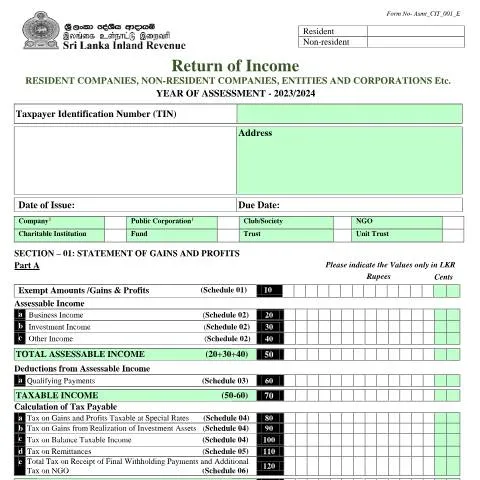
A Comprehensive Overview of the 2023 Return of Income: Asmt_CIT_001_E
In the realm of taxation in Sri Lanka, the Return of Income - Asmt_CIT_001_E serves as a pivotal document for all resident and non-resident companies, entities, and corporations. This official form is indispensable for ensuring compliance with the Inland Revenue Act, No. 24 of 2017. The completion of this return is not merely a bureaucratic task; it plays a critical role in the fiscal responsibility of corporations and entities operating within and outside of Sri Lanka. Failure to submit this documentation accurately and on time can lead to significant legal repercussions, including penalties and interest charges.
The Mandatory Nature of the Return: Why Compliance is Crucial
The Return of Income must be submitted by every resident and non-resident entity earning income within Sri Lanka for the year of assessment ending on March 31, 2024. This requirement encapsulates a broad range of organizations, from public corporations to non-governmental organizations (NGOs). The implications of non-compliance or inaccuracies are substantial; entities may find themselves facing penalties as outlined in the Inland Revenue regulations.
Understanding Your Obligations
- Deadline: The return must be filed by November 30, 2024.
- Taxpayer Identification Number (TIN): A unique identifier assigned to each tax-paying entity is crucial for processing.
- Accurate Reporting: All figures reported must correspond to the financial statements and must be accurate to avoid legal issues.
Furthermore, organizations must prepare and attach audited financial statements, which reinforce the authenticity of the information submitted in the return. This meticulous approach to documentation not only protects the organization from penalties but also ensures a transparent relationship with the Inland Revenue Department.
Deciphering the Structure: Components of the Return
Understanding the intricacies of the Return of Income is fundamental to its successful completion. This document consists of multiple sections, each requiring careful attention.
Section Breakdown
- Section 01: This section captures gains and profits, requiring entities to specify their assessable income across various categories such as business income, investment income, and other income.
- Section 02: This section demands a declaration from the taxpayer, ensuring that all information provided is accurate and complete.
The form also requests detailed computations of taxable income, deductions, and the corresponding tax payable. Each of these elements must be diligently calculated to ascertain the total tax liability accurately.
Unique Challenges for Foreign Entities
Non-resident companies face unique challenges when completing the Return of Income. Their income sources may differ from local entities, which necessitates a clear understanding of the tax treaties and regulations that govern their operations.
Key Considerations for Non-Resident Companies
- Tax Treaties: Non-residents must be aware of any existing tax treaties between Sri Lanka and their country of residence, as these can greatly affect their tax obligations.
- Documentation: Non-residents should ensure that they maintain robust documentation to support any claims made in their return.
Misunderstandings regarding taxable income can lead to disputes with the Inland Revenue Department. Thus, the involvement of an approved accountant is advisable, particularly for complex cases.
Timelines and Implications: Navigating the Filing Calendar
Time is of the essence when it comes to filing the Return of Income. The deadlines established by the Inland Revenue Department are strict, and adherence is vital.
Filing Timeline
| Event | Date |
|---|---|
| End of Assessment Year | March 31, 2024 |
| Deadline for Submission | November 30, 2024 |
| Potential Penalty for Late Submission | Immediate upon non-compliance |
Entities that submit their returns late may incur penalties, which can significantly impact their financial standing. Understanding this timeline is crucial for effective tax planning.
Document Preparation: Ensuring Compliance through Proper Documentation
Completing the Return of Income requires a systematic approach to documentation. Organizations must gather various supporting documents that validate the figures reported in the return.
Essential Documentation
- Audited Financial Statements: These are mandatory and should be prepared by a qualified accountant.
- Certificates from Approved Accountants: If the return preparation involved an accountant, their certification is necessary.
- Tax Credits Documentation: Entities should maintain records of any tax credits they are eligible for, as these can affect the total tax payable.
Each document must be meticulously organized and reviewed to ensure completeness and accuracy before submission to the Inland Revenue Department.
Clarifying Misconceptions: Distinguishing from Other Forms
The Return of Income is often confused with other tax forms due to overlapping terminologies in Sri Lanka's regulatory landscape. It is crucial to distinguish this document from others to avoid confusion during the filing process.
Comparison with Similar Forms
| Form Name | Purpose | Applicable Entities |
|---|---|---|
| Return of Income - Asmt_CIT_001_E | Report total income and tax liability for the assessment year | All resident and non-resident entities |
| Tax Payment Form | Facilitate payment of taxes owed | All taxpayers |
| Withholding Tax Return | Report taxes withheld on payments made | Entities making payments subject to withholding tax |
This distinction not only aids in the correct filing of documents but also streamlines the tax compliance process for all entities operating in Sri Lanka.
Impact of Errors: Understanding the Consequences of Inaccuracy
Submitting an inaccurate Return of Income can have serious ramifications. Recognizing the severity of these consequences is vital for all organizations.
Potential Consequences of Errors
- Financial Penalties: Significant fines can be levied for inaccuracies or omissions.
- Interest Accrual: Interest charges may be applied to any unpaid tax amounts stemming from an incorrect return.
- Legal Ramifications: In severe cases, false reporting can lead to criminal charges against the entity's management.
To mitigate these risks, it is advisable for all organizations to seek professional assistance, particularly when navigating complex tax situations.
The Role of Approved Accountants: Navigating Complexities
Engaging an approved accountant can be a game-changer for many businesses. Their expertise not only facilitates accurate reporting but also enhances understanding of the tax landscape.
When to Engage an Accountant
- When the business structure is complex.
- If the organization engages in international trade.
- When significant tax credits or deductions are anticipated.
These professionals can provide invaluable insights into tax planning and compliance, ultimately aiding in the preparation of the Return of Income and ensuring that all submissions are in accordance with Sri Lankan regulations.
Conclusion: Navigating the Terrain of Tax Compliance
Ultimately, the Return of Income - Asmt_CIT_001_E is a crucial instrument in the tax compliance arsenal for both resident and non-resident entities in Sri Lanka. Understanding its complexities, requirements, and implications is essential for sustainable business practices. By adhering to the guidelines set forth, engaging professional assistance, and ensuring accurate reporting, organizations can successfully navigate their tax obligations while minimizing potential risks.
Understanding the Importance of Accurate Income Reporting
In Sri Lanka, the Return of Income is not merely a formality, but a crucial component of fiscal responsibility and compliance. Accurate reporting ensures that the government can effectively implement its budgetary policies and social programs, while also contributing to the sustainability of public services. Inaccuracies or omissions in reported income can lead to serious consequences, including fines, penalties, or even legal action.
It's important to understand the implications of section 6 of the Inland Revenue Act for income reporting. This section defines various categories of income that must be declared, including employment income, business profits, and investment earnings. Each category has its own nuances, and understanding these will aid taxpayers in ensuring they report their income correctly.
Moreover, documenting income sources meticulously can facilitate not just compliance but also benefit taxpayers in the long run. When it comes to claiming deductions or credits, having a robust documentation trail can substantiate claims and lead to favorable assessments by the tax authorities.
Navigating Tax Deductions and Allowances
The Return of Income form allows taxpayers in Sri Lanka to claim various tax deductions and allowances, significantly impacting the final tax liability. Understanding which deductions are permissible under the law can lead to substantial tax savings. Common deductions include expenses related to business operations, education expenses, and medical expenditures, among others.
For instance, if you operate a business, you may be able to deduct costs associated with purchasing raw materials, utilities, and even salaries paid to employees. It is essential to keep detailed records of these expenses, as the Inland Revenue Department (IRD) may request documentation to verify claims during an audit.
In addition to standard deductions, taxpayers should also be aware of specific allowances that may apply to certain sectors or activities. For example, individuals engaged in agricultural activities may be entitled to special allowances aimed at promoting investment in the agricultural sector. Engaging with a tax professional can provide insights into these often-overlooked opportunities for savings, ensuring compliance while maximizing financial benefits.
Impact of Digital Transformation on Filing Returns
The push for digital transformation in Sri Lanka has significantly changed the landscape of tax compliance and the filing of Returns of Income. With the implementation of the Electronic Transaction Act and the establishment of platforms like forms.gov.lk, taxpayers now have the ability to fill and submit their Returns of Income electronically. This transition not only simplifies the process but also enhances accuracy through automated validations that reduce common errors associated with manual submissions.
By adopting digital platforms, the Inland Revenue Department can handle a larger volume of submissions more efficiently, which in turn accelerates processing times for tax assessments and refunds. Furthermore, taxpayers can benefit from instant access to their submission history, reducing the risk of loss or misplacement of documentation.
It is essential for taxpayers to familiarize themselves with the digital filing process, as it often requires specific identification documentation, such as the National Identity Card (NIC). Additionally, the digital platform may require adherence to deadlines that differ from traditional paper filings, making it critical to stay informed of any updates or changes in filing requirements.
As digital solutions continue to evolve, staying abreast of developments will be key for both individuals and businesses alike. Leveraging technology not only aids in compliance but also fosters a culture of accountability and transparency within Sri Lanka’s tax regime.