Understanding the Schedules to Return of Income: A Vital Document for Individuals
In the intricate world of taxation in Sri Lanka, the Schedules to Return of Income (Form No. Asmt_IIT_002_2024) stands as a crucial instrument. Its proper completion ensures compliance with the Inland Revenue regulations and can significantly impact one's tax obligations. This guide will explore the multifaceted aspects of this document, detailing how to navigate its complexities effectively.
Who Should Submit This Schedule? A Detailed Breakdown
The Schedules to Return of Income are primarily intended for individuals who earn various forms of income, whether from employment, business operations, investments, or other sources. Understanding who falls under this category is essential for compliance.
Primary Profiles of Taxpayers
- Employees: Individuals receiving salary income from local or foreign employers.
- Business Owners: Sole proprietors and partners in a business partnership, both local and foreign.
- Investors: Individuals earning income from investments, including dividends, interest, or rental income.
- Trust Beneficiaries: Individuals benefiting from income received through trusts.
It’s important to note that each profile may have specific conditions and exemptions applicable to them, particularly concerning the type of income they receive.
Navigating the Submission Channels: Digital vs. Physical
With the push towards digitalisation, understanding the channels through which to submit the Schedules to Return of Income is paramount. The options available are both online and physical, offering flexibility based on individual circumstances.
Online Submission through ICTA
The online platform provided by the Information and Communication Technology Agency (ICTA) allows taxpayers to fill out and submit their returns electronically. This method is particularly advantageous for:
- Accessibility: Complete the forms at your convenience from anywhere.
- Efficiency: Immediate submission reduces processing time.
- Guidance: The platform includes resources to assist in completion.
Physical Submission at Designated Locations
For those who prefer traditional methods, submitting printed schedules at designated Inland Revenue Department (IRD) offices remains an option. This might be particularly beneficial for:
- Individuals lacking reliable internet access.
- Those who require assistance from a tax consultant in person.
- Taxpayers who need to clarify specific concerns with an officer.
Regardless of the method chosen, keeping a copy of the submitted documents is advisable for personal records.
Preparing the Documentation: Essential Supporting Materials
Completing the Schedules to Return of Income requires meticulous preparation of relevant supporting documents. Each category of income has distinct requirements.
Employment Income Documentation
When reporting employment income, ensure you have:
- Taxpayer Identification Number (TIN): Mandatory for all submissions.
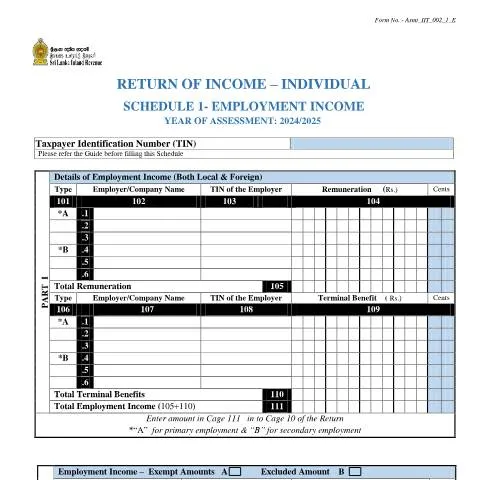
- Employer Details: Including the employer’s name, TIN, and remuneration amounts documented accurately.
Business Income Documentation
For individuals declaring business income, it is imperative to gather:
- Business Registration: Proof of registration if applicable.
- Income Statements: Detailed records of profits and losses.
Investment Income Documentation
Investors must prepare:
- Transaction Records: Detailed statements of all income derived from investments, including dividends and interest.
- Tax Relief Claims: Documentation supporting any claims for tax relief.
Other Income Documentation
For miscellaneous income, ensure you can substantiate:
- Sources of Income: Clear records of all income streams.
- Remittance Records: For any foreign currency remittances.
Deciphering the Sections of the Form: A Detailed Walkthrough
The Schedules to Return of Income consist of various sections addressing different income types. Each section must be filled out with precision to ensure accurate assessment.
Employment Income Schedule
This section focuses on income derived from employment, requiring details about:
- Employer Information: Including names and TINs.
- Remuneration and Benefits: Total earnings to be accurately reported.
Business Income Schedule
This part captures earnings from business activities and requires:
- Nature of Business: Descriptions and codes relevant to your operations.
- Total Profits: Summation of income from all business ventures.
Investment Income Schedule
Report income from investments here, detailing:
- Types of Income: Distinguish between investment types.
- Total Gains: Accurate figures for all income streams.
Other Income Schedule
For additional sources of income, report:
- Income Types: Breakdown of other income categories.
- Total Earnings: Verification and total summation.
Timeline for Submission: Key Dates to Remember
Awareness of the timeline for submission is critical in avoiding penalties and ensuring compliance.
Assessment Year Dates
| Activity | Date Range |
|---|---|
| Tax Year Start | April 1, 2024 |
| Tax Year End | March 31, 2025 |
| Deadline for Submission | July 31, 2025 |
After submitting your Schedules to Return of Income, the Inland Revenue Department will process your return, and notifications regarding any discrepancies or further requirements will usually be communicated promptly.
After Submission: Follow-Up and Record Keeping
Once your submission is complete, it is wise to engage in regular follow-up to ensure that your return is being processed correctly.
How to Monitor Your Submission
- Tracking Online: Utilize the ICTA platform's tracking system to monitor the status of your submission.
- Contacting the IRD: If delays occur, don’t hesitate to reach out to the Inland Revenue Department for clarifications.
Maintaining records of your submissions, including receipts or confirmation emails, is crucial for future reference, especially in case of audits or disputes.
Understanding Exemptions and Reliefs: Optimize Your Tax Obligation
It’s essential for taxpayers to familiarize themselves with exemptions and reliefs available under Sri Lankan tax law, as they can significantly reduce tax liabilities.
Common Exemptions
- Employment Benefits: Certain allowances or benefits may be exempted under specific conditions.
- Investment Reliefs: Certain investments may qualify for tax relief, particularly in sectors designated by the government.
Claiming Reliefs
When filling out the schedules, ensure to document any claims for reliefs meticulously, as this can affect the overall tax calculations and obligations.
By understanding the Schedules to Return of Income and its complete submission process, individuals can navigate Sri Lanka's tax landscape with confidence, ensuring compliance while also optimizing their tax responsibilities.
Understanding the Importance of Filing the Return of Income
Filing the Return of Income is a crucial step for individuals and entities in Sri Lanka to ensure compliance with the Inland Revenue Department's regulations. The income tax system in Sri Lanka operates on a self-assessment basis, meaning taxpayers are responsible for accurately calculating their tax liabilities and submitting the appropriate forms. The Return of Income serves not only as a means to report income but also as documentation for various future financial activities, including applying for loans and grants, and justifying financial transactions.
Moreover, timely filing can prevent penalties and interest charges, which may accumulate in the event of delayed submissions. Understanding when and how to file the Return of Income, including all the supporting schedules required, is paramount to prevent any legal implications. Taxpayers should ensure they are familiar with the specific deadlines prescribed by the Inland Revenue Department to avoid lapses in compliance.
Detailed Breakdown of Schedules Required with the Return of Income
The Return of Income form, often denoted as [Asmt_IIT_002_E], necessitates the attachment of various schedules that delineate different sources of income and deductions. Each schedule serves a unique purpose and must be meticulously completed to reflect the taxpayer's financial situation accurately. Key schedules include:
- Schedule of Employment Income: This schedule details all employment-related income, including salaries, wages, bonuses, and any fringe benefits. It is essential for employees to gather all relevant payment statements from employers to ensure no income is overlooked.
- Schedule of Business Income: For self-employed individuals or business owners, this schedule details revenues generated from operations, costs incurred, and any allowable deductions. Accurate record-keeping is crucial for this section, as it must align with the financial statements prepared for the business.
- Schedule of Investment Income: This section captures income accrued from investments, including dividends, interest, and gains from the sale of assets. Taxpayers must maintain comprehensive records of all investment transactions to substantiate reported figures.
- Schedule of Other Income: Income that does not fall under the aforementioned categories, such as rent or royalties, is reported here. It is advisable to include any supporting documentation to validate these income streams.
Each of these schedules must be filled out accurately, as discrepancies can lead to audits or reassessments by the Inland Revenue Department. There are specific guidelines available that detail what documentation is required for each schedule, and it is in the taxpayer’s best interest to consult these guidelines to ensure compliance.
Common Mistakes and How to Avoid Them When Filing the Return of Income
Many individuals and businesses encounter difficulties while filing their Return of Income, often due to common mistakes that could easily be avoided with due diligence and preparation. Some prevalent errors include:
- Incorrect Personal Information: Each taxpayer must double-check their personal information against the National Identity Card (NIC) details. Errors in NIC numbers, names, or addresses can lead to processing delays or rejections.
- Omission of Income Sources: Failing to report all sources of income can lead to discrepancies during audits. Taxpayers should maintain meticulous records of all income streams and ensure they are reported in the relevant schedules.
- Improper Documentation: Not attaching the required schedules or not providing sufficient supporting documentation can result in penalties. It is advisable to review the checklist provided by the Inland Revenue Department to ensure all necessary documents are included.
- Failure to Utilize Deductions: Many taxpayers overlook potential deductions that could lower their taxable income. Understanding available credits and deductions can significantly impact tax liabilities. Engaging with tax professionals or utilizing available resources can elucidate any applicable deductions.
Implementing a structured approach to tax filing can mitigate these common pitfalls. Taxpayers are encouraged to begin the filing process early, allowing ample time to gather documentation and review information critically. Additionally, seeking advice from tax consultants or utilizing resources available on government websites can provide clarity and assistance in navigating the complexities of income tax filing in Sri Lanka.