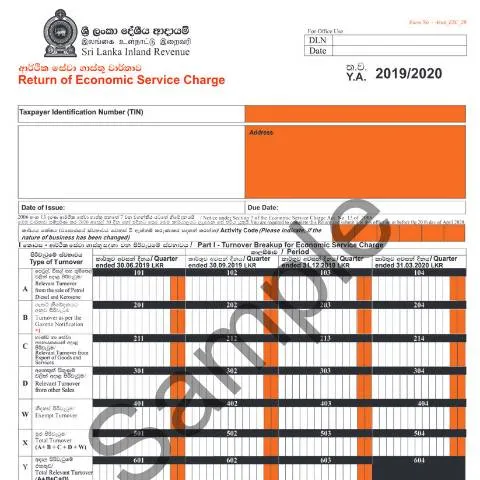
Navigating the Economic Service Charge Return: A Detailed Guide
Understanding the intricacies of the Return of Economic Service Charge (ESC) [ASMT_ESC_20_E] is crucial for businesses and individuals subject to this tax on their turnover. The accurate submission of this form influences compliance with the Economic Service Charge laws and avoids potential penalties. This guide aims to provide a comprehensive walkthrough of the form, from its purpose to the specifics of completion, submission, and the subsequent implications on the filer.
Context and Importance of the Economic Service Charge
The Economic Service Charge (ESC) is a tax applicable to businesses that meet specified turnover thresholds within Sri Lanka. The introduction of the ESC, governed by the Economic Service Charge Act, aims to generate revenue while ensuring compliance from the corporate sector. Submitting the Return of ESC serves not only as a legal obligation but also as a means to maintain transparency in business operations. Failure to file this return can lead to significant penalties, making it essential for any liable entity to understand the ins and outs of this requirement.
Breaking Down the Return of Economic Service Charge Form
The Return of Economic Service Charge [ASMT_ESC_20_E] consists of several sections, each targeting different aspects of the taxpayer's economic activities. Let’s dissect the form into manageable parts:
Section A: Identification Details
- Taxpayer Identification Number (TIN): Essential for ensuring your submission is linked to your business records.
- NIC Number: The National Identity Card number serves as a fundamental identification criterion.
- Business Registration Details: Ensure that your business name and address are accurate to avoid discrepancies.
Section B: Economic Activity Summary
This section demands a concise summary of your business operations, including:
- Nature of Business: Clearly describe your business activities to avoid misinterpretation.
- Turnover Estimates: Provide accurate turnover figures as they directly impact your tax liability and are crucial for post-assessment verification.
Section C: Declaration of Turnover
In this critical section, taxpayers must declare their gross turnover. It is imperative to capture all revenue-generating activities, as failure to do so may lead to discrepancies. Common pitfalls include:
- Omitting income from secondary revenue streams.
- Incorrectly calculating total revenue due to misrecording of financial transactions.
Submission Process: From Completion to Filing
Once the form is accurately completed, the next step is to file it with the Department of Inland Revenue. The preferred method of submission increasingly leans towards digital avenues, facilitated by the ICTA. Here’s a structured approach to the submission process:
Step 1: Digital Submission via Forms.gov.lk
Utilizing the digital platform enhances efficiency. Follow these steps:
- Visit the official portal: Navigate to forms.gov.lk.
- Select the “ESC Return Submission” option to access the relevant form.
- Log in using your TIN and NIC to authenticate your identity.
- Carefully input all required information, referencing your completed ASMT_ESC_20_E form.
Step 2: Alternative Submission Methods
If opting for paper submission, ensure that:
- You download the ASMT_ESC_20_E form from the Department of Inland Revenue website.
- Complete the form manually, ensuring all sections are filled accurately.
- Submit at your local Inland Revenue office before the deadline specified in the fiscal calendar.
Understanding the Timeline: Key Deadlines and Expectations
The timeline for submission is as critical as the accuracy of the information provided. Typically, businesses must submit the Return of ESC by a certain date following the closure of their financial year. As stipulated by the Department of Inland Revenue, here's an outline of the timeline:
| Financial Year End | Submission Deadline | Potential Penalties |
|---|---|---|
| March 31 | April 30 | Up to 10% of understated tax due |
| December 31 | January 31 | Up to 10% of understated tax due |
Post-Submission: What Happens Next?
After submitting the Return of Economic Service Charge, the taxpayer enters a phase of waiting for confirmation from the Department of Inland Revenue. This process may involve:
- Assessment and Review: The authorities may conduct assessments to verify the accuracy of declared figures.
- Request for Additional Information: Be prepared to furnish supplementary documentation if requested.
- Issuance of Assessment Notice: Eventually, you will receive an assessment notice detailing your tax liability, if applicable.
Identifying Unique Situations: Special Cases and Considerations
Certain categories of filers may encounter unique circumstances when completing or submitting the Return of ESC:
Foreign Entities
Foreign businesses operating in Sri Lanka must adhere to additional criteria, including:
- Appointment of a local agent for tax matters.
- Providing documentation to prove business activities within Sri Lanka.
Minors and Enterprises with Complex Structures
Entities involving minors or complex ownership structures must consider:
- Engaging a professional tax advisor to navigate complexities.
- Ensuring compliance with local laws regarding minors in business.
The Ripple Effects of Non-Compliance: Consequences of Omission
The repercussions of failing to submit the Return of ESC are significant and can impact future operations. Key consequences include:
- Financial Penalties: These can be severe, often calculated as a percentage of unpaid taxes.
- Legal Ramifications: Continuous non-compliance may lead to legal action from the Department of Inland Revenue.
- Reputation Damage: Persistent issues with tax compliance can tarnish a business's reputation, affecting client trust.
Expert Tips for Smooth Submission
To streamline the process and minimize errors when submitting the Return of ESC, consider the following practical advice:
- Document Everything: Keep meticulous records of all transactions throughout the year.
- Review Before Submission: Double-check all entries for accuracy and completeness.
- Seek Professional Guidance: If in doubt, consulting with a tax professional can save time and resources.
In conclusion, the Return of Economic Service Charge [ASMT_ESC_20_E] is more than just a form; it is a vital component of tax compliance in Sri Lanka. Through thorough understanding and precise execution of this document, businesses can navigate their obligations effectively while fostering a transparent and compliant operational environment.
Understanding the Economic Service Charge (ESC) in Sri Lanka
The Economic Service Charge (ESC) is a significant fiscal measure implemented in Sri Lanka to generate revenue from specific business activities. The ESC is applied at a rate of 0.5% on the turnover of certain businesses, particularly those involved in manufacturing, distribution, and importation of goods and services. It is crucial for businesses to understand the scope of this tax, as it is levied irrespective of profitability, which differentiates it from conventional income taxes that are based solely on net income.
The ESC applies to businesses with an annual turnover exceeding Rs. 12 million, necessitating compliance from a diverse array of sectors. Certain exemptions may apply, especially for small businesses or those operating in specific industries such as agriculture. An understanding of these exemptions is vital for proper tax planning and compliance.
Another critical aspect to consider is the interaction of the ESC with other tax liabilities, such as VAT or income tax. It is important for businesses to assess their overall tax obligations to optimize their financial standing while remaining compliant with government regulations.
Steps to Ensure Compliance with ESC Regulations
Compliance with Economic Service Charge regulations is vital to avoid penalties and ensure smooth business operations. Here are detailed steps to guide businesses:
- Determine Eligibility: Ascertain whether your business meets the turnover threshold of Rs. 12 million. Maintain accurate records and documentation of your financial transactions to simplify this process.
- Record Keeping: Maintain meticulous records of all sales and income. This includes invoices, receipts, and other relevant documentation which will substantiate your turnover when filing the ESC return.
- Filing Returns: Prepare your Economic Service Charge Return Form (ASMT_ESC_20_E) accurately. Ensure that all columns are filled and calculations are correct. The form can be submitted either via the electronic platform established by the ICTA or through traditional paper methods, depending on your preference and the technological capabilities of your business.
- Payment of ESC: Along with your return, ensure that the ESC payment is submitted timely. Payments must be made through designated banks and must be accompanied by the relevant payment receipt.
- Stay Informed: Regularly review updates from the Department of Inland Revenue regarding any changes in ESC rates, compliance requirements, or reporting guidelines. Engage with sectoral associations or tax advisors for tailored advice.
Common Challenges and Solutions in Filing ESC Returns
Filing for the Economic Service Charge can present numerous challenges for businesses. Below are some of the most common issues faced, along with potential solutions:
- Inaccurate Turnover Calculations: Many businesses struggle with calculating their turnover accurately, leading to errors in their ESC returns. A solution is to implement robust accounting software that can track sales and revenue in real-time. This will ensure accurate calculations and facilitate timely reporting.
- Technological Barriers: With the push for digital filings, some businesses, particularly smaller enterprises, may face challenges due to inadequate technology. In such cases, seeking assistance from a third-party service provider who specializes in digital compliance can be beneficial.
- Understanding Exemptions and Deductions: Many businesses are unaware of the various exemptions available under the ESC regulations. Engaging with a tax consultant can help clarify these aspects and provide guidance on how to capitalize on available deductions.
- Late Filings and Penalties: Timeliness in filing returns is crucial. To avoid late fees, set internal deadlines well ahead of the official deadline to ensure that ample time is allocated for data collection and return preparation.