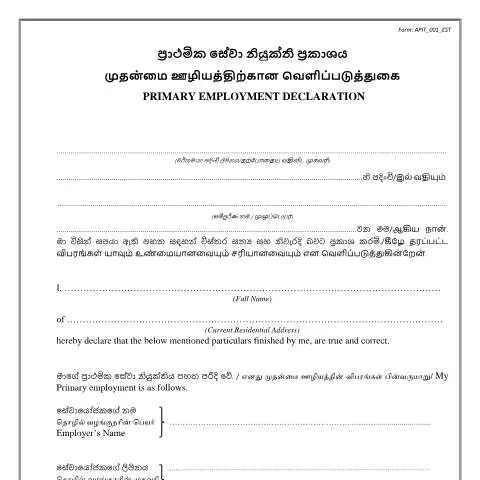
Understanding the Primary Employment Declaration (APIT_001_EST)
The Primary Employment Declaration, designated as APIT_001_EST, serves a pivotal role in Sri Lanka's Advance Personal Income Tax (APIT) framework. This document is essential for employees to formally declare their primary employment details to the relevant authorities, thereby facilitating the accurate assessment of income tax liabilities. For an employee in Sri Lanka, submitting this declaration is a crucial step in ensuring compliance with tax regulations and avoiding potential penalties.
Who Is Required to Submit the Primary Employment Declaration?
Individuals engaged in salaried employment are mandated to submit the Primary Employment Declaration. The submission is typically required from:
- New employees starting their first job.
- Employees changing their primary employment.
- Individuals who need to declare additional sources of income related to their primary job.
It is important to note that this declaration is significant not only for the employee but also for their employer, as it aids in the correct calculation of tax deductions at the source.
The Timeline for Submission: Key Dates
The submission of the Primary Employment Declaration is governed by specific timelines which align with the fiscal calendar of Sri Lanka. The key deadlines include:
- Submission Period: Typically, the declaration must be submitted within 30 days from the commencement of employment or any changes to employment status.
- Fiscal Year End: The Sri Lankan fiscal year runs from April 1 to March 31. Employees should aim to have their declarations submitted before the end of the fiscal year to ensure that their income is accurately represented.
- Penalties for Late Submission: Failing to submit the declaration on time may result in penalties as stipulated by the Advance Personal Income Tax regulations, which could include additional tax liabilities.
Understanding these timelines is crucial for compliance and to avoid unnecessary financial repercussions.
Preparing the Required Documentation
Completing the Primary Employment Declaration requires careful preparation of various documents that substantiate the information provided. Employees should collect the following details:
- Full Name and Address: The employee's complete name and current residential address.
- Employer Information: This includes the employer's name, address, and contact details, which should be updated if there are any changes in employment.
- National Identity Card (NIC) or Passport Number: The employee must provide their NIC or Passport number for identification purposes.
- Taxpayer Identification Number (TIN): If applicable, this number should be included to streamline the tax process.
- Witness Information: A witness signature is required, which cannot be the employer. The witness should include their name and signature, alongside the date.
By organizing these documents in advance, employees can ensure a smoother submission process.
Submission Methods: Where and How to Submit?
Employees have various options for submitting the Primary Employment Declaration. Understanding the available channels is essential for compliance:
| Submission Method | Description | Pros and Cons |
|---|---|---|
| Online Submission | Using the digital platform provided by the Information and Communication Technology Agency (ICTA). | Pros: Quick, efficient, and environmentally friendly. Cons: Requires internet access and understanding of online forms. |
| Paper Submission | Filling out the form manually and submitting it in person at the relevant tax office. | Pros: Direct interaction with officials for clarification. Cons: Time-consuming and requires physical presence. |
| Through Employer | Submitting the declaration through the employer, who then forwards it to the tax authorities. | Pros: Streamlined process for employees. Cons: Relies on employer’s timely action. |
Choosing the appropriate submission method depends on individual circumstances, including access to technology and personal preferences.
The Process: From Declaration to Tax Assessment
The journey of the Primary Employment Declaration involves several stages, each crucial for ensuring compliance with tax regulations:
- Completion of the Declaration: Employees must accurately fill out the form with all required details, ensuring correctness to avoid future disputes.
- Submission: The completed form must be submitted through the chosen method. The submission must be accompanied by any necessary supporting documents.
- Verification by Authorities: Once submitted, the tax authorities will review the declaration and verify the information provided. They may reach out for clarifications if needed.
- Tax Assessment: Based on the declaration, the authorities will assess the tax liability for the employee and inform the employer about the tax deductions to be made.
- Annual Review: Employees should keep track of their tax situation annually, especially during the tax filing season, to ensure all records are accurate and up to date.
Each step in this process is vital, as any inaccuracies can lead to complications, including penalties or increased tax burdens.
Legal Framework Supporting the Declaration
The necessity for the Primary Employment Declaration is anchored in the Sri Lankan legal framework concerning tax regulations. The key legislative documents include:
- The Income Tax Act: This act outlines the legal basis for personal income tax in Sri Lanka and mandates the reporting of income through formal declarations.
- Electronic Transactions Act: Facilitates the use of digital forms in tax filings, promoting efficiency and accessibility of tax-related processes.
- Advance Personal Income Tax (APIT) Guidelines: These specific guidelines govern the procedures and obligations of employees regarding income tax declarations and payments.
Understanding the legal framework helps employees grasp the importance of timely and accurate submissions.
Final Remarks on the Importance of Accurate Declarations
Submitting the Primary Employment Declaration is not merely a bureaucratic exercise; it is a fundamental aspect of civic responsibility in Sri Lanka. Accurate declarations help maintain transparency in income reporting, which is essential for the functioning of the tax system. Moreover, it enables the government to allocate resources effectively based on revenue collected from taxes.
Employees are encouraged to approach the declaration process with diligence and responsibility. This not only aids in individual compliance but contributes to the broader economic health of Sri Lanka.
Understanding the Importance of the Primary Employment Declaration (APIT_001_EST)
The Primary Employment Declaration (APIT_001_EST) holds significant importance for individuals navigating the employment landscape in Sri Lanka. This document not only serves as a formal notification of one's employment status but also plays a crucial role in tax compliance and employment verification. The declaration is essential for ensuring that employees are correctly categorized for tax purposes under the Advance Personal Income Tax (APIT) scheme, aligning with the current fiscal policies set forth by the Sri Lankan government.
Submitting the APIT_001_EST allows the tax authorities to monitor and validate income declarations, helping to prevent discrepancies in tax payments. By accurately declaring employment status, employees contribute to the national revenue system, reinforcing the integrity of the tax framework. This process bolsters economic development by ensuring that taxation is equitable and reflective of the actual earnings of individuals.
Furthermore, the declaration is vital for employees seeking to access various public services and benefits. For instance, employers may require a copy of the Primary Employment Declaration when issuing pay slips or when processing claims for employee benefits such as social security or health insurance. Therefore, the timely submission of this declaration not only fulfills legal obligations but also facilitates smoother interactions between employees and employers.
Step-by-Step Guide to Completing the Primary Employment Declaration
Completing the Primary Employment Declaration (APIT_001_EST) is a straightforward process, but it requires careful attention to detail to ensure accuracy. Here is a step-by-step guide to assist you in filling out this essential document:
- Access the Form: The Primary Employment Declaration can be accessed online through the official forms portal at forms.gov.lk or obtained physically from designated government offices. Ensure you are using the latest version of the form to avoid issues.
- Gather Required Information: Before starting to fill out the form, compile all necessary information, including your National Identity Card number, employment details (such as the name of the employer, address, and job title), and salary information. Accurate information is crucial to prevent delays in processing.
- Fill in Personal Details: Begin by entering your personal information in the designated sections. This includes your full name, NIC number, and contact details. It is essential to ensure that this information matches exactly with your NIC to avoid discrepancies.
- Provide Employment Details: Next, indicate the details of your current employment. This section requires you to provide the name of your employer, the nature of your employment (full-time, part-time, contract, etc.), and your salary structure. If you have multiple sources of income, you must declare each accordingly.
- Sign and Date the Declaration: After completing all required fields, sign and date the declaration to certify that the information provided is accurate and truthful. Your signature affirms the validity of the document and your compliance with taxation laws.
- Submit the Form: Finally, submit the completed form either online through the digital portal or physically at the appropriate government office. If submitting online, follow the prompts for email confirmation and retain a copy of the submission for your records.
Upon submission, keep an eye out for any communication from the tax authorities regarding your declaration. It is important to respond promptly to any inquiries to ensure that your employment status is accurately reflected in the tax system.
Common Mistakes to Avoid When Submitting the APIT_001_EST
Filing the Primary Employment Declaration (APIT_001_EST) is a critical responsibility, and while the process may seem simple, there are common pitfalls that can lead to complications. Awareness of these mistakes can help ensure a smooth submission process:
- Inaccurate Information: One of the most prevalent errors is providing inaccurate or incomplete information. Double-check that all details, especially your NIC number and employment information, are correct. Misinformation can lead to delays or discrepancies in your tax profile.
- Missing Signatures: Failing to sign the declaration can render it invalid. Ensure that you have signed and dated the form before submission. A missing signature may result in the form being rejected or returned for correction.
- Neglecting Additional Income Sources: Some individuals may overlook declaring secondary income sources, such as freelance work or investments. It is crucial to provide a comprehensive view of your income to avoid potential penalties for underreporting income.
- Ignoring Submission Deadlines: Each year, the government sets specific deadlines for the submission of the APIT_001_EST. Failing to meet these deadlines can lead to penalties or increased scrutiny from tax authorities. Mark your calendar and set reminders to avoid last-minute rushes.
- Not Keeping Records: After submission, always retain a copy of your declaration and any confirmation communication received. Maintaining accurate records is essential should any disputes arise or if additional information is requested by tax authorities.
By staying informed and diligent, individuals can navigate the complexities of the Primary Employment Declaration and ensure compliance with Sri Lankan tax regulations. Familiarizing oneself with common mistakes and best practices enhances the likelihood of a successful submission.