Navigating the Tax Refund Process in Sri Lanka: A Step-by-Step Guide
Managing finances effectively is crucial for any individual or business in Sri Lanka, especially when it comes to tax obligations. One significant aspect is the potential for a tax refund from the Sri Lanka Inland Revenue Department (IRD). Understanding the intricacies of obtaining a tax refund can greatly influence your financial planning. This guide outlines the essential steps, requirements, and considerations for successfully submitting a tax refund request.
The Trigger: When and Why to Request a Tax Refund
Tax refunds typically arise when taxpayers have overpaid their taxes during a specific period, whether due to withholding or estimated tax payments. This situation often prompts individuals and businesses to consider filing for a refund. A common scenario is when a taxpayer receives a notice from the IRD indicating their eligibility for a refund, which serves as the initial trigger for the process.
However, it's important to note that if you believe you are entitled to a refund but have not received a notification, contacting the IRD directly can clarify your situation. Upon resolution, the process of filing for a refund can begin.
Understanding Eligibility and Notification
- Notice of Refund: Before you can proceed, ensure you have received a notice from IRD confirming your eligibility for a refund.
- Contacting IRD: If you think you are eligible but have not received a notice, it’s essential to reach out to the IRD for clarification.
Step-by-Step Instructions for Filing a Refund Request
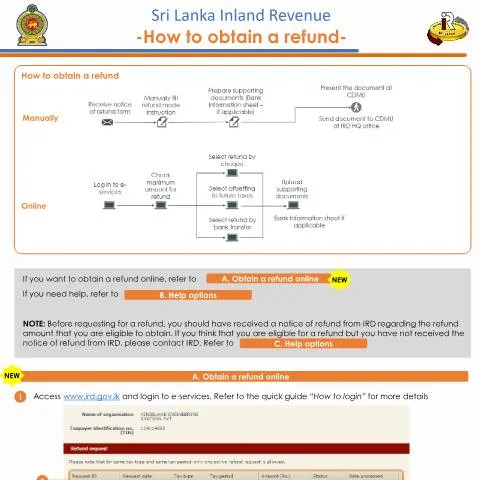
Filing a request for a tax refund involves a series of methodical steps, whether you choose to do so online or manually. The online method is preferred for its convenience and efficiency. Follow the steps outlined below:
Filing Online
- Access the website www.ird.gov.lk and log into the e-services portal. Refer to the quick guide titled “How to login” if you require assistance.
- Upon logging in, if you have previous refund transactions, a summary will be displayed. To initiate a new request, click on New.
- Select the appropriate Tax type relevant to your refund request.
- Input the Tax period code. The system will automatically display the start and end dates for your tax period.
- Click Continue to move to the next step.
Calculating the Refund Amount
At this stage, the system will indicate the indicative refund amount you are eligible to request. You have options at this point:
- If you wish to offset some of the refund against future tax liabilities, select the corresponding tax type and enter the appropriate amount.
- To receive your refund, indicate the amount you wish to receive via cheque or bank transfer.
The total refund amount displayed should not exceed the indicative refund you are eligible for.
Document Preparation: The Backbone of Your Refund Request
Completing the refund request is not solely about filling out forms; it also requires proper documentation. Ensure you have the necessary supporting documents prepared. These typically include:
- Original invoices or receipts for the amounts claimed.
- Tax return filings for the relevant period.
- Any additional financial documentation as required by the IRD.
Organizing these documents in advance will streamline your refund process and prevent any delays.
Unique Considerations and Exceptions in the Tax Refund Process
While the general procedure remains consistent, certain situations may necessitate additional considerations:
Foreigners and Tax Refunds
Foreign nationals residing in Sri Lanka may have unique tax obligations and potential refund scenarios. Generally, they must adhere to the same guidelines as residents; however, they may need to provide additional documentation regarding residency status and tax treaties, if applicable.
Minors and Tax Refunds
For minors seeking refunds, it’s advisable for a parent or legal guardian to submit the request on their behalf. This ensures that all required documentation and approvals are managed correctly.
Urgent Refunds
In cases where individuals or businesses face urgent financial needs, it may be possible to expedite the refund process. Contacting the IRD's Taxpayer Services Unit directly may provide guidance on how to prioritize your request.
What Distinguishes This Refund Form from Other Related Documents
It’s crucial to differentiate the tax refund request form from other forms, such as tax return filings or tax payment forms. The tax refund request form specifically targets situations where a refund is sought, while the other forms serve distinct functions in tax compliance and reporting.
Understanding these distinctions helps ensure that taxpayers file the correct documentation for their needs, minimizing the potential for errors or delays in processing.
Consequences of Neglect: Rights and Responsibilities
Filing for a tax refund carries specific rights and responsibilities. Taxpayers have the right to receive their refunds in a timely manner, provided they comply with all requirements. However, failing to submit the necessary documentation or to adhere to deadlines can result in complications.
- Obligations: Ensure all requested documents are submitted in original format where necessary. Keep track of deadlines and adhere to IRD guidelines.
- Consequences: Missing documents or late submissions can lead to delays in processing, or worse, the rejection of your refund request.
Post-Submission: What Happens Next?
Upon submitting your request, you will receive an acknowledgement. It is vital to take note of the Request ID, as this will be essential for any future correspondence with the IRD regarding your refund status.
As part of the process, you may need to submit the original physical copies of your invoices to the IRD during an interview or review stage. This can typically be done through an authorized representative if you are unable to attend in person. Always reference your Request ID when submitting these documents.
Additional Support: Resources and Assistance
Should you require further assistance during this process, the IRD offers several support options:
- Walk-in Support: Visit the Taxpayer Services Unit located at Sir Chittampalam A Gardiner Mawatha, Colombo 02, Monday to Friday from 8:30 am to 4:00 pm, excluding public holidays.
- Call Center Services: Reach out to the IRD Call Center at 1944, available Monday to Friday from 9:00 am to 7:00 pm, and Saturday from 9:00 am to 1:00 pm.
- Online Help: Utilize the online help prompts available throughout the e-services portal for additional guidance.
Successfully navigating the tax refund process in Sri Lanka requires diligence, organization, and a clear understanding of the requirements and steps involved. By following this comprehensive guide, taxpayers can enhance their likelihood of a smooth and efficient refund experience.
Understanding Tax Refund Eligibility in Sri Lanka
Eligibility for tax refunds in Sri Lanka is closely tied to various factors including the type of income, the tax bracket, and specific deductions claimed during the assessment year. Generally, taxpayers who have paid excess taxes relative to their tax liabilities or those who have made advance tax payments could be eligible for a refund. It is imperative to maintain accurate records of all income sources, deductions, and tax payments to substantiate claims for refunds.
Additionally, specific categories of individuals and entities, including expatriates, employees with multiple income streams, and businesses that overestimated their tax liabilities, may qualify for refunds. For instance, if an employee has tax deducted at source by multiple employers, they might find themselves in a position to claim a refund if their total annual income falls below the taxable threshold.
Moreover, taxpayers must ensure that they have filed their personal income tax returns as per the deadlines set forth by the Department of Inland Revenue (DIR). Failure to comply with the filing requirements could potentially forfeit their rights to claim a refund, even if they are otherwise eligible. Understanding the nuances of eligibility is crucial for taxpayers seeking refunds, as it forms the basis of the entire refund application process.
Necessary Documentation for Tax Refund Applications
When seeking a tax refund, accurate and complete documentation is vital. The primary document required is the completed Income Tax Return (ITR), which must be duly filed. This form serves as the foundation for the refund claim, and it should clearly reflect all income, deductions, and taxes paid. Along with the ITR, taxpayers may need to submit supportive documents such as:
- Tax Payment Receipts: Copies of receipts for tax payments made, including advance tax payments and any other relevant contributions.
- Pay Slips or Salary Certificates: These documents corroborate income declarations and tax deductions at source.
- Bank Statements: Recent bank statements may be requested to verify claims of income and tax payments.
- NIC (National Identity Card): A copy of the NIC is essential for identity verification.
It is advisable to maintain a checklist of all necessary documents and to ensure they are organized and easily accessible to expedite the refund process. The Department of Inland Revenue may also request additional documents based on the specifics of the claim, so being proactive in collecting all relevant paperwork can save time and avoid unnecessary delays.
Common Challenges and How to Overcome Them
While the process to obtain a tax refund in Sri Lanka may seem straightforward, various challenges can arise that may complicate the experience. One common issue is delays in processing times, often due to incomplete documentation or high volumes of applications during peak filing seasons. To mitigate this risk, taxpayers should submit their applications as early as possible and ensure that all forms are completed meticulously.
Another challenge involves discrepancies in tax records. This can arise when there are inconsistencies between the taxpayer's records and those maintained by the Department of Inland Revenue. In such cases, thorough documentation and a proactive approach in communicating with the DIR can help clarify any misunderstandings.
Moreover, taxpayers may experience issues related to the timing of refunds. Understanding the fiscal calendar and the review processes adopted by the DIR can help manage expectations regarding the timeline for refunds. Taxpayers should regularly follow up on their application status through the official channels provided by the DIR.
Lastly, there might be instances where the refund is not granted due to outstanding tax liabilities or other compliance issues. Taxpayers are encouraged to settle any dues promptly and consult with tax professionals for guidance on how to rectify their positions. By being informed and prepared, taxpayers can navigate these challenges more effectively and work towards receiving their due refunds.