The Significance of the New Paying Slip in Sri Lankan Tax Payments
As taxpayers in Sri Lanka navigate the complex landscape of tax obligations, the introduction of the new paying slip represents a pivotal shift in how payments are processed. This development aligns with the government's efforts to modernize the tax collection system, ensuring that citizens can fulfill their obligations with greater ease and efficiency. The new paying slip serves not only as a tool for payment but also as a critical component in the broader framework of tax compliance and administration.
Navigating the Regulatory Framework: A Brief Historical Context
To understand the significance of the new paying slip, one must consider the evolution of tax payment mechanisms in Sri Lanka. Historically, tax payments involved cumbersome processes often resulting in delays and confusion. The Inland Revenue Department (IRD) recognized these inefficiencies and, through the implementation of the Electronic Transaction Act, paved the way for digitized payment methods, including the new paying slip.
The new paying slip is a direct response to the longstanding need for a streamlined process. By adopting this tool, the IRD aims to enhance transparency, reduce errors, and ultimately foster a more compliant taxpayer base. The shift towards digital forms, facilitated by ICTA initiatives, underscores the government's commitment to improving public service delivery.
Understanding the Role of the New Paying Slip in Tax Payment Procedures
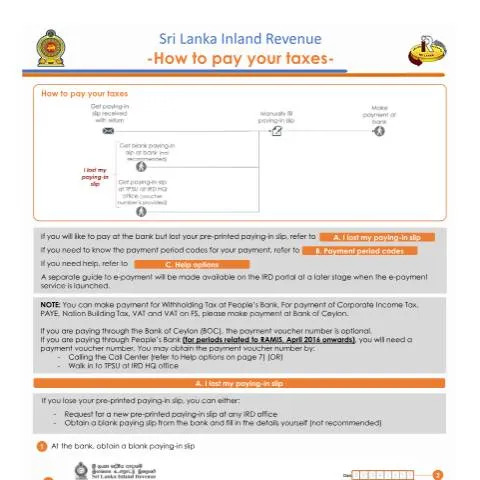
The new paying slip is integral to various tax payment categories, including Withholding Tax, Corporate Income Tax, and Value Added Tax (VAT). As a taxpayer, knowing when and how to use this document is crucial for timely compliance.
Upon receiving your tax assessment, the new paying slip must be utilized to make your payment at designated banks, such as the Bank of Ceylon or People's Bank. Each slip is pre-printed with necessary information, reducing the potential for errors during submission. However, if lost, taxpayers have the option to request a new slip from any IRD office or utilize a blank slip available at the bank, although this latter option is not recommended due to potential complications.
Step-by-Step Guide: Completing the New Paying Slip
Completing the new paying slip is straightforward, yet attention to detail is vital to avoid pitfalls. Below is a detailed breakdown of each required field:
- Taxpayer Identification Number (TIN): Essential for identifying the taxpayer.
- Payment Period Code: Corresponds to the specific tax period. Ensure this aligns with your tax assessment.
- Tax Type Code: Indicates the type of tax being paid, ensuring proper allocation of funds.
- Name and Address: Must match your official records to prevent complications.
- Payment Amounts: Clearly state the amounts for tax and any penalties, including both figures in numbers and words.
- Cheque Information: If paying via cheque, include the cheque number, bank code, and branch code.
- Contact Information: Provide a telephone number to facilitate any necessary follow-ups on your submission.
Key Dates: Payment Timelines and Deadlines
Awareness of payment deadlines is critical to maintain compliance and avoid penalties. The payment periods and due dates are set forth by the IRD and vary based on the type of tax. Here’s a summarized table of important timelines:
| Payment Type | Payment Period From | Payment Period To | Due Date |
|---|---|---|---|
| Withholding Tax | 01.01.2023 | 31.01.2023 | 15.02.2023 |
| Corporate Income Tax | 01.02.2023 | 28.02.2023 | 15.03.2023 |
| VAT | 01.03.2023 | 31.03.2023 | 15.04.2023 |
Post-Submission Process: What Happens Next?
After submitting your new paying slip and making the payment, it is essential to retain a copy for your records. This will serve as proof of payment in case of any discrepancies in the future. The IRD will process your payment, and taxpayers can verify their compliance through official channels.
If you encounter any issues with your submission or require assistance, the IRD provides several options for support. You can contact their Call Centre or visit the Taxpayer Services Unit (TPSU) at the IRD headquarters for direct assistance.
Common Challenges and Best Practices for Smooth Transactions
While the new paying slip simplifies the payment process, certain challenges may arise. Here are best practices to mitigate potential issues:
- Double-Check Information: Always review the entered data for accuracy, particularly the TIN and payment period codes.
- Keep Records: Store copies of your paying slips and payment confirmations for future reference.
- Stay Informed: Regularly check the IRD website for updates on tax regulations, payment periods, and potential changes to procedures.
- Utilize Support Services: Do not hesitate to reach out to the IRD's support resources for guidance in navigating any complexities.
Embracing Digital Transformation in Tax Payment
The introduction of the new paying slip is part of a larger initiative to embrace digital transformation within Sri Lanka's tax administration. This aligns with global trends towards simplifying public service processes and enhancing taxpayer experience.
In the coming years, the IRD aims to further streamline tax payment through additional digital services, reinforcing its commitment to efficiency and transparency. As taxpayers adapt to these changes, it is critical to stay informed about new developments and best practices in tax compliance.
Understanding the New Paying Slip System
The new paying slip system introduced by the Sri Lankan government aims to streamline the tax payment process. It is essential for taxpayers to understand how this system operates to ensure timely and accurate payments. The new paying slip is designed to be user-friendly and can be generated online through the official website of the Department of Inland Revenue (IRD) or printed directly from authorized kiosks.
When utilizing this system, taxpayers will need to provide their National Identity Card (NIC) number, which is a crucial identifier in all government-related transactions. After entering the necessary details, the system generates a unique paying slip that contains information about the type of tax being paid, the amount due, and payment deadlines. It's important to keep a copy of the paying slip for your records as it serves as proof of payment.
Additionally, taxpayers should be aware of the specific tax types that can be settled using the new paying slip, including income tax, value-added tax (VAT), and other direct taxes imposed by the IRD. Understanding the details of each category is vital, as different taxes may have unique requirements or deadlines that need to be adhered to.
Payment Methods and Options Available
The new paying slip system provides various payment methods to accommodate the diverse needs of taxpayers. Once you have generated your paying slip, you can choose from multiple payment options, including bank transfers, electronic payment gateways, and direct payments at designated bank branches. Each method has its own set of procedures and timelines that must be followed.
For bank transfers, you will need to visit your respective bank and provide them with the unique paying slip code that corresponds with your tax payment. This code is critical as it allows the bank to process your payment accurately and forward the information to the IRD.
For those who prefer electronic methods, payment can be made online through the designated payment portal linked with the IRD. This option is convenient and allows for real-time processing of payments, provided that the transaction is completed during business hours. Offline payments at bank branches may take longer to reflect in the taxpayer's account, so planning ahead is advisable for those nearing payment deadlines.
In addition, some banks may offer specific features such as installment plans or advance payment options for larger tax liabilities. It is recommended to check with your financial institution for these services if you anticipate a significant tax burden.
Common Challenges and Troubleshooting Tips
While the new paying slip system simplifies the tax payment process, some common challenges may arise. Understanding these issues and how to resolve them can greatly enhance a taxpayer's experience. One potential challenge is the system's accessibility during peak tax season. High traffic on the IRD website may result in slower processing times or temporary outages. In such cases, it is advisable to attempt access during off-peak hours or to use alternative means of obtaining your paying slip.
Another common issue pertains to discrepancies in the payment amount or information displayed on the paying slip. Taxpayers should cross-verify the details on the slip against their tax returns to ensure accuracy. If any discrepancies are found, it is important to contact the IRD immediately to rectify the situation before proceeding with the payment.
Additionally, taxpayers should be cautious of potential phishing attempts when making online payments. Always ensure that you are on the official IRD website or authorized payment portals before entering any personal or financial information. If in doubt, consider contacting the IRD for confirmation of the website’s authenticity.