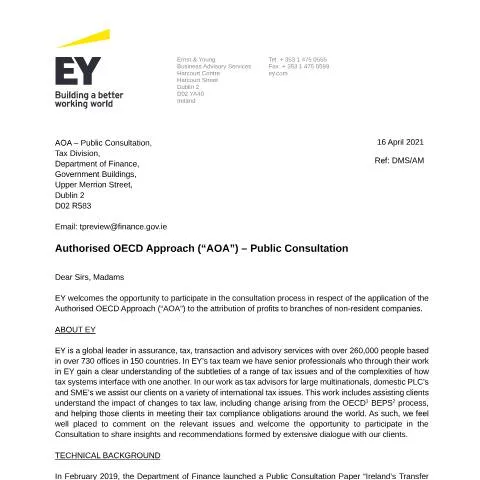
Understanding the AOA Consultation Document: A Critical Step for Non-Resident Companies
The Authorised OECD Approach (AOA) to the attribution of profits to branches of non-resident companies represents a significant shift in how tax obligations are determined in Ireland. The Department of Finance has embraced this framework, indicating a commitment to align with international standards in taxation.
This document serves a crucial role within the public consultation process, allowing stakeholders to express their views on the adoption of the AOA. Particularly, it aims to clarify how profits should be attributed to branches operating in Ireland. Engaging with this consultation is not merely a bureaucratic formality; it has real implications for the financial landscape and regulatory environment affecting corporations.
Who Should Engage with this Document?
Every non-resident company with branches in Ireland should be aware of this consultation. This includes:
- Multinational corporations with extensive operations in Ireland
- Small and Medium-sized Enterprises (SMEs) considering expansion
- Financial services firms, which may face unique challenges under these new guidelines
Each of these groups has distinct circumstances that could influence how they approach the AOA and what they might need to include in their submissions to the Department of Finance. Notably, companies should consider potential impacts on their tax liabilities and compliance costs moving forward.
Chronology of the Consultation Process
The timeline given for responses to the public consultation is vital for understanding the urgency and structure of the AOA implementation:
- March 16, 2021: The public consultation was officially launched, signaling the need for input from stakeholders.
- April 16, 2021: The deadline for submissions; responses must be submitted within this one-month window to ensure consideration by the Department of Finance.
- Post-Consultation Review: After April 16, the Department will compile feedback and incorporate relevant insights into the final decisions regarding the adoption of the AOA.
Understanding these dates is crucial for stakeholders wishing to influence the consultation process. Missing the deadline could mean missing out on a vital opportunity to shape tax policy that directly affects their businesses.
The Regulatory Framework: Context is Key
The introduction of the AOA is situated within a broader context of tax regulation in Ireland. The Taxes Consolidation Act governs many of the rules surrounding taxation for non-resident companies, specifically addressing how profits are taxed through Section 25.
Historically, the Coffey Review of 2016 highlighted significant discrepancies in existing transfer pricing rules, leading to the need for a public consultation that would solicit feedback on potential regulatory changes. This set in motion a process aimed at modernizing Ireland's tax framework, aligning it with international expectations set forth by the OECD.
A Deep Dive into the AOA Framework
Understanding the AOA requires examining what it entails for companies. At its core, the AOA is designed to provide a systematic approach to attributing profits to permanent establishments, based on the functions, assets, and risks undertaken by the branch. This will affect how taxable profits are calculated for non-resident companies with branches in Ireland.
Specific attributes of the AOA include:
- Functional Analysis: Companies must conduct a thorough assessment of the functions performed by their branches, identifying key activities and their contributions to the overall profitability.
- Documentation Requirements: There is a call for a streamlined documentation process, particularly for smaller enterprises, which can help reduce the compliance burden historically associated with transfer pricing.
- Engagement with the Financial Sector: The AOA consultation emphasizes close collaboration with stakeholders in industries like financial services to ensure tailored solutions reflect the unique challenges these entities face.
The emphasis on a functional analysis marks a shift from traditional asset-based assessments. This highlights the significance of understanding operational roles in profit attribution, allowing for a more equitable distribution of tax responsibilities based on actual business activities.
Navigating the Submission Process: Steps to Follow
Submitting responses to the consultation requires a careful approach. Stakeholders are encouraged to prepare their submissions by considering the following steps:
- Review the Consultation Document: Fully understand the context and questions posed by the Department of Finance.
- Gather Input from Relevant Stakeholders: Engage with internal stakeholders, tax advisors, and legal experts to ensure a comprehensive response is prepared.
- Draft Your Submission: Clearly articulate your position, including any recommendations or considerations specific to your industry.
- Submit Before the Deadline: Ensure all submissions are sent before April 16, 2021, to guarantee that your input is considered.
This organized approach can significantly enhance the impact of your response, ensuring that it is both comprehensive and well-received by the regulatory authorities.
Anticipated Outcomes and Future Implications
The implications of adopting the AOA are far-reaching. For non-resident companies operating in Ireland, the transition could affect:
- Tax liabilities: Changes to how profits are calculated may lead to higher or lower tax obligations.
- Compliance costs: Adjustments in documentation requirements could make compliance either more straightforward or more burdensome.
- Strategic business decisions: Companies may need to reassess their operational structures based on how profits are attributed under the AOA.
Understanding these outcomes will be crucial for companies to prepare for the changing regulatory landscape effectively.
Keeping Track of Your Submission: Monitoring Progress
After submitting responses, stakeholders are often left wondering about the progress and potential outcomes of their input. Here are some practical tips for monitoring your submission:
- Record Keeping: Maintain a copy of your submission and any communications with the Department of Finance.
- Follow-Up: Consider reaching out to the Department via email or phone after the submission deadline to inquire about the status of the consultation feedback.
- Stay Informed: Regularly check the Department of Finance's website for updates regarding the consultation process and any resulting policy changes.
Engaging in this follow-up can provide clarity on the adoption of the AOA and how it will impact your business operations.
Concluding Thoughts on the AOA Consultation Document
Engaging with the Authorised OECD Approach public consultation is not just a procedural formality; it is a critical opportunity for non-resident companies operating in Ireland to influence a pivotal change in tax policy. Understanding the nuances of this document, the timeline, and the implications of the AOA framework can set the stage for informed participation and strategic planning.
The outcomes of this consultation will likely shape the future of the tax landscape in Ireland, making it essential for all relevant stakeholders to engage proactively and thoughtfully.