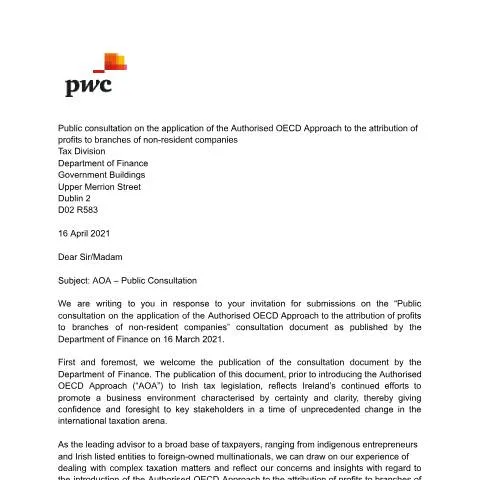
The Context of the Authorised OECD Approach Consultation
The introduction of the Authorised OECD Approach (AOA) into Irish tax legislation is a significant milestone for the country's taxation landscape. The public consultation document published by the Department of Finance on March 16, 2021, invites stakeholders to share their insights and responses on how this approach will be implemented concerning the attribution of profits to branches of non-resident companies. The relevance of this consultation cannot be understated, as it aims to establish a clear framework that aligns with international standards while considering the unique context of the Irish taxation system.
This consultation highlights Ireland's commitment to fostering a business environment characterized by certainty and clarity amidst a rapidly evolving global tax landscape. The responses collected will inform the final structure of the legislation, ensuring it meets the needs of various stakeholders, including indigenous businesses, foreign multinationals, and tax advisors navigating complex taxation matters.
Understanding the Authorised OECD Approach
The Authorised OECD Approach is designed to provide a coherent framework for allocating profits to different jurisdictions, particularly for branches of non-resident companies operating within Ireland. The AOA aims to enhance transparency and consistency in profit attribution, which ultimately builds taxpayer confidence and fosters a more robust economy.
To fully grasp the implications of the AOA, it is essential to understand its fundamental principles. The AOA is grounded in the arm's length principle, which posits that transactions between related parties should be priced as if they were conducted between unrelated parties. This fundamental concept is critical for determining how profits should be allocated across different jurisdictions.
Key Benefits of the Authorised OECD Approach
- Increased Certainty: By establishing a formal legal basis for the AOA, the legislation will provide businesses with a clearer understanding of their tax obligations, reducing the risk of disputes with tax authorities.
- Alignment with International Standards: The AOA is already widely accepted across many jurisdictions, making Ireland more attractive to foreign investors who are accustomed to this method of profit attribution.
- Enhanced Compliance: Clarity in the profit attribution process can lead to improved compliance rates, as companies will have a better understanding of how to adhere to tax regulations.
Who Engages in the Public Consultation?
This consultation is open to a wide range of stakeholders who have an interest in the implementation of the AOA. This includes, but is not limited to:
- Multinational Corporations: Companies with branches in multiple jurisdictions, including Ireland, that may be impacted by changes in profit attribution rules.
- Tax Advisors and Consultants: Professionals who provide guidance on tax compliance and strategy will have a unique perspective on the practical implications of the proposed changes.
- Industry Groups: Sectoral bodies representing specific industries may wish to provide feedback on how the AOA could affect their members.
- Government Agencies: Different branches of government, including the Revenue and other regulatory authorities, may also contribute to the discussion.
Engagement Strategies for Participants
Individuals and organizations looking to participate in the consultation process should consider the following strategies:
- Review the Consultation Document: Familiarize yourself with the content and objectives of the consultation, ensuring you understand the key issues at stake.
- Gather Relevant Information: Collect data, examples, and any relevant legal or financial documents that can support your position or concerns regarding the AOA.
- Prepare a Structured Response: Organize your thoughts into a coherent response that addresses specific questions posed by the Department of Finance, focusing on both the benefits and drawbacks of the proposed approach.
- Engage with Peers: Collaborate with other stakeholders to discuss insights and concerns, potentially leading to a more comprehensive response to the consultation.
Documentation and Requirements for Participation
In preparing a response to the public consultation, stakeholders should ensure they meet any specific documentation requirements outlined by the Department of Finance. This may include:
- Formal Submission Format: Adhering to any guidelines regarding the structure and format of submissions, including word count and required sections.
- Deadline Management: Timely submissions are crucial; thus, stakeholders should mark important dates on their calendars to ensure their responses are filed before the deadline.
- Reference Legal Frameworks: Citing relevant acts, such as the Taxes Consolidation Act 1997, can add weight to your argument and show a deep understanding of the implications of the AOA.
Essential Components of a Successful Submission
To create a compelling response, consider including the following elements:
- Executive Summary: A concise overview of your position, highlighting the key points you wish to convey.
- Detailed Analysis: A thorough examination of the potential impacts of the AOA on businesses, addressing specific questions posed by the consultation document.
- Recommendations: Constructive suggestions for how the AOA can be implemented to enhance its effectiveness while minimizing any adverse effects on stakeholders.
Navigating the Consultation Process
The public consultation process is an opportunity for stakeholders to influence how the Authorised OECD Approach will be integrated into Irish legislation. Familiarizing oneself with the procedural steps can enhance the effectiveness of your engagement:
- Acknowledgment of Submission: Ensure you receive confirmation that your response has been received by the Department of Finance, which could be crucial for follow-up.
- Follow-Up Engagement: Be open to further discussions or requests for clarification from the Department following your submission.
- Monitor Developments: Keep an eye on updates from the Department regarding the outcomes of the consultation and any subsequent legislation that may be proposed.
Potential Challenges and Considerations
While the introduction of the AOA is poised to bring about many benefits, stakeholders must also consider the potential challenges it may present:
- Complexity of Implementation: The transition to a new profit attribution framework may require significant adjustments in accounting practices and tax compliance systems for many businesses.
- Unintended Consequences: Care must be taken to avoid unexpected impacts, particularly for businesses that may not currently allocate profits according to the AOA or operate in jurisdictions lacking similar frameworks.
- Dispute Resolution Mechanisms: Clarifying how disputes arising from the AOA will be resolved is essential to maintain confidence among stakeholders and prevent lengthy tax disputes.
Strategies for Mitigating Challenges
To navigate potential challenges arising from the implementation of the AOA, businesses can consider the following approaches:
- Engage with Tax Advisors: Consulting with tax professionals experienced in international tax law can help businesses understand the implications of the AOA for their specific situation.
- Invest in Training: Educating staff on the new frameworks, accounting practices, and compliance requirements can ease the transition and reduce the likelihood of errors.
- Participate in Ongoing Dialogue: Stay engaged with the Department of Finance and other stakeholders to ensure your concerns are considered as the framework is developed.
The Role of the Public Consultation in Shaping Legislation
The feedback gathered from this public consultation is instrumental in shaping the final legislation concerning the Authorised OECD Approach. The process is not merely a formality; it serves as a vital dialogue between the government and stakeholders, ensuring that the final framework addresses the needs and concerns of those it impacts.
Through constructive engagement, stakeholders can help highlight potential pitfalls, suggest refinements to the proposed legislation, and ultimately contribute to a more robust taxation system in Ireland. This collaborative approach fosters a sense of ownership and commitment among stakeholders, encouraging them to adapt to and embrace the new framework once it is enacted.
Long-term Implications for Irish Taxation
The successful implementation of the AOA will have far-reaching implications for the Irish taxation system:
- Enhanced Global Competitiveness: By aligning with OECD standards, Ireland can position itself as a forward-thinking jurisdiction for tax policy, attracting further foreign investment.
- Improved Tax Base Stability: A clearer framework for profit attribution can lead to an enhanced tax base, ensuring that all companies contribute fairly to the national revenue.
- Ongoing Adaptation to Global Tax Trends: The AOA represents a broader trend towards transparency and accountability in international taxation, reflecting a global shift that Ireland must navigate to maintain its competitive edge.
Final Thoughts on Engaging with the Public Consultation
Engaging with the public consultation on the Authorised OECD Approach presents an invaluable opportunity for stakeholders to shape the future of Ireland's taxation framework. By preparing thoughtful, well-informed responses, participants can contribute to a more equitable and clear system that benefits both businesses and the government alike.
As the consultation progresses, stakeholders are encouraged to remain actively involved in discussions, share insights, and advocate for their interests to ensure that the final legislation reflects a balanced and effective approach to profit attribution for branches of non-resident companies.