Understanding the Role of the Disabled Drivers Medical Board of Appeal
In Ireland, the Disabled Drivers Medical Board of Appeal serves a crucial function in the landscape of disability support and benefits. Established in 1989, this independent board acts as an appeals body for individuals who have been refused a Primary Medical Certificate necessary for accessing the Disabled Drivers and Disabled Passengers Scheme (DDS). The DDS provides vital relief from Vehicle Registration Tax (VRT) and Value-Added Tax (VAT) for qualifying individuals, making it imperative that the appeals process is transparent, fair, and accessible.
The Chain of Procedures: From Application to Appeal
The journey to obtaining a Primary Medical Certificate typically begins with an application to the Health Service Executive (HSE). If a medical officer determines that the applicant does not meet the criteria for this certificate, the individual has the right to appeal that decision to the Disabled Drivers Medical Board of Appeal. This multi-step process ensures that there is a robust mechanism for individuals to contest decisions that have significant implications for their mobility and independence.
- Initial Application: Submit the application for a Primary Medical Certificate to the HSE.
- Decision Receipt: Await the decision from the HSE Principal Medical Officer or Senior Medical Officer.
- Appeal Process: If denied, file an appeal to the Disabled Drivers Medical Board of Appeal within 28 days of notification.
- Board Assessment: Await a meeting with three board members who will review the case based on medical criteria.
- Outcome Notification: Receive the decision of the board regarding the appeal.
This structured pathway allows applicants to navigate the system effectively, ensuring that they can assert their rights and seek the benefits they are entitled to. It's imperative for potential board members to understand this process as they will play an integral role in adjudicating such appeals.
Eligibility Criteria for Board Members: Who Can Serve?
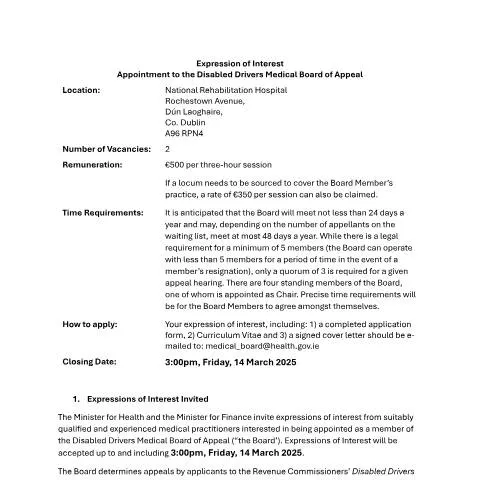
To become a member of the Disabled Drivers Medical Board of Appeal, candidates must demonstrate considerable qualifications and experience in the medical field. The Minister for Health, alongside the Minister for Finance, invites expressions of interest from suitably qualified medical practitioners. This ensures that the board consists of professionals who can make informed decisions on medical matters involving disability assessments.
Qualifications Required
- Medical degree from a recognized institution.
- Registration with the Medical Council of Ireland.
- Prior experience in assessing or treating disabilities, particularly those relevant to the criteria outlined for the Primary Medical Certificate.
- Demonstrable understanding of the Disabled Drivers and Disabled Passengers Scheme.
In addition to these qualifications, potential board members must also display integrity, empathy, and the ability to make difficult decisions, as they will be directly impacting the lives of individuals seeking essential mobility assistance.
Completing the Expression of Interest: A Step-by-Step Guide
Submitting an Expression of Interest for appointment to the Disabled Drivers Medical Board of Appeal is a significant step for eligible candidates. The application requires a careful compilation of several documents to provide a comprehensive view of the candidate’s qualifications and motivations.
Required Documentation
Candidates must prepare the following documents for submission:
- Completed Application Form: This form serves as the official record of the applicant’s interest.
- Curriculum Vitae: A detailed CV highlighting education, experience, and relevant qualifications.
- Cover Letter: A signed cover letter expressing interest in the position and outlining why the candidate believes they are suited for the role.
Once all documents are ready, applicants should compile them and submit them via email to the address specified in the invitation, ensuring they meet the closing date of 3:00 PM on the stipulated deadline.
Interviewing for a Position on the Board: What to Expect
After the submission of Expressions of Interest, shortlisted candidates may be invited for an interview to discuss their qualifications and vision for the board. This interview process is integral to ensuring that board members possess not only the requisite knowledge but also the commitment to fairness and transparency in their decision-making.
Key Focus Areas for Interviews
- Understanding of the DDS: Candidates should articulate the importance of the Disabled Drivers and Disabled Passengers Scheme and its impact on individuals with disabilities.
- Medical Criteria Familiarity: A thorough understanding of the specific medical criteria used for assessing applicants for a Primary Medical Certificate.
- Decision-Making Ability: Examples of past experiences or hypothetical scenarios demonstrating how candidates might approach difficult decisions.
This interview phase provides candidates the opportunity to showcase not only their qualifications but also their passion for advocating for individuals with disabilities.
The Appeals Process: A Closer Look
Once appointed, members of the Disabled Drivers Medical Board of Appeal will engage in a process that is deeply rooted in medical assessment and ethical considerations. The board receives appeals from individuals who challenge the decisions made by the HSE regarding their eligibility for a Primary Medical Certificate.
Hearing Structure and Member Roles
During an appeal hearing, a panel consisting of three board members will take part in the assessment. The appeal process typically involves the following steps:
- Initial Review: The board reviews the applicant's medical history and the reasons for the initial denial.
- Assessment Meeting: The applicant presents their case, often including new medical evidence or testimonials.
- Discussion and Deliberation: The board members discuss the case and come to a consensus regarding the applicant’s eligibility based on the established criteria.
- Decision Rendering: The board makes its decision, which is then communicated to the applicant in writing.
This thorough process is designed to ensure that every appeal is given proper consideration and that decisions are made based on the best available evidence and in accordance with legal standards.
Supporting Right to Appeal: The Importance of Advocacy
For individuals navigating the complexities of disability benefits, the possibility of appealing a denied application serves as a vital safeguard. The Disabled Drivers Medical Board of Appeal plays an essential role in advocating for these rights, ensuring that individuals have a fair chance to contest decisions that significantly affect their lives.
Common Scenarios for Appeal
While each case is unique, several common scenarios often lead to appeals:
- Insufficient Medical Documentation: An applicant may believe their medical evidence sufficiently demonstrates their eligibility but the HSE disagrees.
- Misinterpretation of Criteria: Sometimes, applicants feel that the criteria for the Primary Medical Certificate have been misapplied or misinterpreted.
- Emerging Conditions: In cases where a condition changes or worsens, individuals might appeal if their initial application was denied based on outdated information.
Each of these scenarios underscores the necessity for an independent review body like the Disabled Drivers Medical Board of Appeal to ensure that decisions are not just administrative but also compassionate and responsive to the needs of applicants.
Follow-Up and Keeping Track of Your Appeal
Once an appeal has been submitted and a hearing has taken place, it is essential for applicants to understand the follow-up process. Knowing how to keep track of one’s appeal can make a significant difference in the overall experience.
Tracking Progress and Responding to Decisions
Applicants can follow these steps to stay informed about their appeal status:
- Document Everything: Keep a record of all correspondence with the Board and any documents submitted.
- Request Updates: If a decision takes longer than expected, it is advisable for applicants to reach out to the Board for updates.
- Understand the Timelines: The Board typically aims to render decisions promptly, but understanding that complexities can arise helps manage expectations.
Upon receiving a decision, it is crucial for the applicant to carefully review the findings and consider next steps, whether that be acceptance of the outcome or potential further actions if the appeal does not resolve in their favour.
Conclusion: The Importance of the Disabled Drivers Medical Board of Appeal in the Irish Landscape
The Disabled Drivers Medical Board of Appeal serves as a vital institution within Ireland’s social support framework, enabling individuals with disabilities to challenge decisions that affect their access to essential mobility aids. By facilitating fair and thorough assessments of appeals, the Board ensures that the rights of disabled individuals are upheld and respected.
As this body continues to evolve with the changing landscape of disability support, its role remains critical in advocating for the needs and rights of those it serves—ensuring that every voice is heard and every case is given due consideration.
Understanding the Role of the Disabled Drivers Medical Board of Appeal
The Disabled Drivers Medical Board of Appeal operates under the auspices of the Department of Finance and plays a pivotal role in ensuring fairness and transparency in the assessment process for disabled drivers. Specifically, the Board reviews appeals against decisions made regarding medical suitability for the Disabled Drivers and Passengers Scheme. The Scheme offers essential benefits, including vehicle tax exemption and grants towards vehicle modifications for eligible individuals with disabilities.
The Board consists of a panel of medical professionals, including specialists in areas such as rehabilitation medicine, neurology, and orthopaedics. Their expertise is crucial in evaluating the medical conditions of applicants, ensuring that each case is assessed fairly based on the established criteria. Understanding the composition and function of the Board is vital for potential candidates expressing interest in appointment, as it highlights the necessity for a robust understanding of medical evaluations and the ability to apply this knowledge within a legislative framework.
Moreover, prospective Board members should be aware that the appeals process can involve complex interactions with claimants, medical professionals, and advocacy groups. Thus, individuals seeking to join the Board must possess not only clinical knowledge but also strong communication skills and a commitment to advocating for the rights of disabled individuals. This multifaceted understanding enhances their capacity to contribute effectively to the Board's deliberations and outcomes.
Application Process for the Disabled Drivers Medical Board of Appeal
The application process to the Disabled Drivers Medical Board of Appeal involves several critical steps designed to ensure that only qualified individuals are appointed. Interested candidates must first submit an Expression of Interest, which details their qualifications, relevant experience, and motivations for joining the Board. Here’s a detailed breakdown of the process:
Submission of Expression of Interest: Candidates are required to complete an Expression of Interest form, which can typically be found on the Department of Finance's official website. This document should be comprehensive, highlighting not only your medical qualifications but also your understanding of the legislative environment surrounding disability rights in Ireland.
Assessment of Applications: Once submitted, the applications are reviewed by a selection committee. This committee evaluates each submission based on educational background, clinical experience, and relevance to the Board's objectives. It’s advisable to clearly articulate any previous experience related to disability assessments or participation in similar boards.
Interview Process: Shortlisted candidates will be invited for an interview with the selection committee. This step is crucial as it allows candidates to demonstrate their interpersonal skills and ability to engage in discussions regarding sensitive medical and legal issues. Preparing for this interview by understanding common scenarios faced by the Board and how to approach them will be beneficial.
Final Selection: Successful candidates will be notified and appointed based on the needs of the Board, including the diversity of expertise required and current vacancies. Note that it’s essential to maintain awareness of the Board’s ongoing projects and initiatives, as demonstrating this knowledge can set you apart during the selection process.
Ongoing Training and Development: Once appointed, members are expected to engage in continuous professional development. This may involve attending workshops or training seminars related to disability rights and medical assessment criteria, ensuring that Board members remain updated on the latest practices and legislative changes.
Understanding this process can significantly improve the chances of a successful application and ensure that candidates are well-prepared for their role within the Board.
The Importance of the Disabled Drivers Medical Board of Appeal in Promoting Inclusion
The Disabled Drivers Medical Board of Appeal is not merely a functional body for processing applications; it plays a critical role in promoting social inclusion and accessibility for people with disabilities in Ireland. By ensuring that the medical assessments for eligibility in the Disabled Drivers and Passengers Scheme are conducted with integrity and fairness, the Board upholds the rights of disabled individuals and fosters an environment where they can participate fully in society.
One of the core missions of the Board is to eliminate barriers that disabled individuals face in accessing vehicular transport, which is often a lifeline for independence and mobility. By providing a clear and transparent appeals process, the Board ensures that individuals have the right to contest decisions that may adversely impact their quality of life. This not only reinforces the principles of justice and fairness but also cultivates public confidence in the state’s commitment to supporting disabled citizens.
Furthermore, the Board serves as a platform for advocacy and awareness-raising. Appointed members are often involved in broader discussions about disability rights, contributing their insights and recommendations to policy-makers. Their expertise can influence changes in legislation, helping to create a more inclusive society where disabled individuals are empowered to access essential services, including transportation.
For prospective members of the Board, understanding its role in influencing societal attitudes towards disability is paramount. It presents an opportunity to be part of a transformative process that not only evaluates individual cases but also addresses systemic issues related to disability access and inclusion.
Through this understanding, candidates can better articulate their motivations for seeking appointment and demonstrate their commitment to the overarching goals of the Board. This focus on inclusion and advocacy further enhances the appeal of the role, making it a significant opportunity for those passionate about making a difference in the lives of disabled individuals in Ireland.