Understanding the Application Process for the Disabled Drivers Medical Board of Appeal
When considering a position with the Disabled Drivers Medical Board of Appeal, the application form serves as a crucial tool. It is not merely a document but a representation of the applicant's qualifications and intentions. The process begins with a clear intention to contribute to an essential area of public service that aids individuals with disabilities, allowing them to receive the support they rightfully deserve.
The Role of the Disabled Drivers Medical Board of Appeal
The Disabled Drivers Medical Board of Appeal is an integral part of the Department of Health, tasked with reviewing appeals from individuals who seek to qualify for disability assistance in relation to driving. The board's function is to ensure that those who are entitled to benefits receive them in a fair and just manner. This involves a rigorous examination of medical standards and qualifications of those asserting their need for such assistance.
Critical Steps in Completing the Application Form
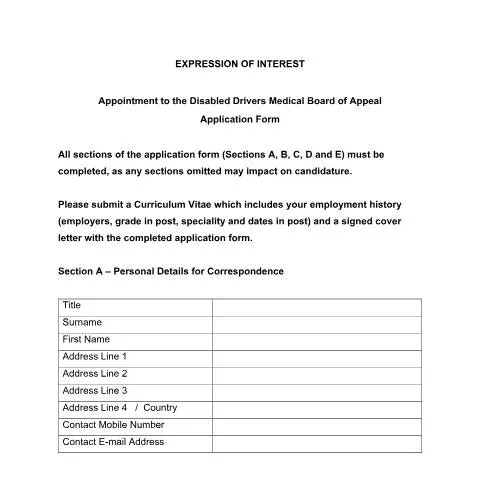
Filling out the Expression of Interest Application Form requires meticulous attention to detail. The form is divided into several sections, each designed to extract the necessary information to assess the applicant's suitability for the board. Here are the sections you will encounter:
- Section A: Personal Details for Correspondence
- Section B: Irish Medical Council Registration
- Section C: Post Graduate Education relevant to the Expression of Interest
- Section D: Experience relevant to the Expression of Interest
- Section E: General Declaration
Section A: Personal Details for Correspondence
This section captures essential information that facilitates communication between applicants and the board. It includes your title, surname, first name, and contact details. Ensure accuracy in providing your address, as this will be the primary location for correspondence.
Section B: Irish Medical Council Registration
Being registered with the Irish Medical Council is a prerequisite for consideration. Candidates must confirm their registration status and declare that they are not subject to any investigations that might tarnish their professional credibility. This is pivotal; any discrepancies can lead to disqualification from the process.
Section C: Post Graduate Education
Documenting relevant postgraduate qualifications is vital. This section should reflect your commitment to the medical field and relevance to the board’s operations. Include the awarding body and date of qualification to substantiate your educational background.
Section D: Experience Relevant to the Expression of Interest
Here, applicants must summarize their relevant experience in no more than 400 words. This summary should align with the person specification outlined in the accompanying information booklet. Highlighting specific cases or experiences that demonstrate your understanding of the issues faced by disabled drivers can significantly strengthen your application.
Section E: General Declaration
This section serves as a formal commitment to the truthfulness of the information provided. The declaration is significant as it reinforces the integrity of the application process. Misrepresentation can lead to serious legal implications and disqualification from the appointment.
Submission: What Comes Next?
Once the form is completed, along with a signed cover letter and a current Curriculum Vitae, it should be submitted to the Department of Health by the specified deadline. It's essential to keep a copy of all documents submitted for personal records. Following submission, applicants should monitor the process closely.
Navigating Potential Issues: What If Something Goes Wrong?
In the event of an incomplete application, missing documentation, or potential refusals, applicants should be prepared to address these challenges. The Department of Health may contact you for clarification or additional information, which means being responsive is crucial.
- Ensure you have all required documents before submission.
- Respond promptly to any requests for further information.
- If refused, consider your options for appeal or reapplication.
Follow-Up: Ensuring Your Application is on Track
Monitoring the progress of your application is key. After submission, applicants can follow up with the Department of Health to inquire about their application status. Keeping a professional tone and providing application details can facilitate this process. It’s advisable to wait a reasonable period before reaching out, generally around 4 to 6 weeks after submission.
Conclusion: The Importance of Thorough Preparation
Engaging with the Disabled Drivers Medical Board of Appeal is more than a procedural obligation; it is a commitment to enhancing the lives of individuals with disabilities. By preparing thoroughly, understanding each component of the application form, and actively following the process, you can maximize your chances of success in this vital role. The impact of your contribution can resonate deeply within the community, ensuring that disabled drivers receive equitable consideration and support.
Understanding the Role of the Disabled Drivers Medical Board of Appeal
The Disabled Drivers Medical Board of Appeal (DDMBA) plays a crucial role in the assessment and determination of eligibility for the Disabled Drivers and Disabled Passengers Scheme in Ireland. This board consists of medical professionals who evaluate applications from individuals seeking to benefit from these schemes, which provide financial assistance and other support for disabled drivers.
The primary function of the DDMBA is to review medical evidence submitted by applicants to ensure they meet the qualifying criteria set out in legislation. This includes assessing the physical and medical condition of applicants, particularly in relation to how their disability affects their ability to drive safely and use a vehicle. The board's decisions can significantly impact the lives of applicants, providing them with essential mobility support.
It's essential for those interested in contributing to the DDMBA to fully understand the board's responsibilities. The role demands a comprehensive understanding of medical guidelines and regulations concerning disabilities and driving capabilities. Members must also be prepared to engage in detailed evaluations and discussions regarding complex medical cases.
Application Process for Board Appointment
The application process for appointment to the Disabled Drivers Medical Board of Appeal requires careful attention to detail and a clear understanding of the qualifications needed for board membership. Interested individuals must complete an Expression of Interest (EOI) form, which serves as a preliminary step in the selection process.
The Expression of Interest form typically requires applicants to provide detailed personal information, including their qualifications, professional experience, and reasons for seeking appointment to the board. It’s important to emphasize any relevant medical expertise or background, as this will be a significant factor in the selection process.
Once submitted, the EOI will be reviewed by the relevant authorities, including the Department of Transport, which oversees the DDMBA. Candidates who meet the initial criteria may be invited for an interview, where they can further demonstrate their suitability for the role. During this stage, potential members should be prepared to discuss their views on disability assessments, driving safety, and the responsibilities of the board.
Continuing Professional Development for Board Members
Members of the Disabled Drivers Medical Board of Appeal are expected to engage in ongoing professional development to stay current with advancements in medical knowledge, disability assessment practices, and legal obligations within the realm of mobility for disabled individuals. This commitment to lifelong learning ensures that board members can make informed decisions and contribute effectively to the broader discussion surrounding disability and driving.
Professional development opportunities may include attending workshops, seminars, and conferences focused on disability rights, medical evaluation techniques, and changes in relevant legislation. Networking with other professionals in the field can also provide valuable insights and foster collaboration among board members and medical practitioners.
Moreover, the DDMBA may recommend specific training programs to its members to enhance their understanding of the complexities associated with various disabilities and their impact on driving capabilities. This training is vital for ensuring that decisions made by the board are based on the most current evidence and best practices.