Navigating the Expression of Interest for the Disabled Drivers Medical Board of Appeal
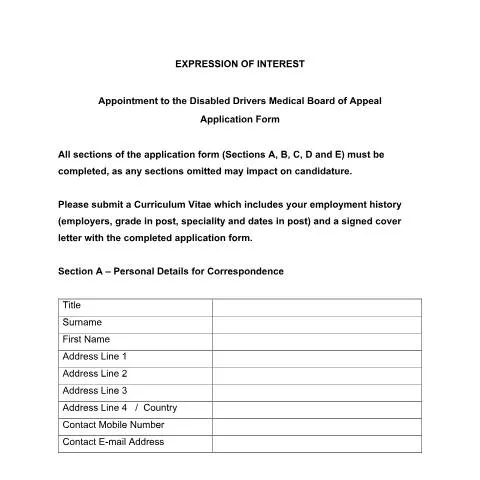
The Expression of Interest - Appointment to the Disabled Drivers Medical Board of Appeal (FA59) application form represents a crucial step for medical professionals eager to contribute their expertise in this specialized field. Understanding this form goes beyond mere completion; it's about recognizing the weight of your application and the role you aim to fulfill within the Board.
Understanding the Significance of This Appointment
The Disabled Drivers Medical Board of Appeal plays a pivotal role in determining the eligibility of drivers with disabilities for various support mechanisms. The board's decisions can significantly impact the lives of individuals who require special consideration due to their medical conditions. Therefore, aspiring members must demonstrate impeccable qualifications and a commitment to upholding the integrity of the appeals process.
Eligibility and the Core Requirements
One of the foremost elements to consider is the necessity for applicants to be registered with the Irish Medical Council at the time of application. This serves as a foundational criterion that underscores the board's commitment to maintaining high standards of medical practice. Additionally, applicants must affirm that they are not under investigation by any licensing body, ensuring that only qualified and trustworthy candidates are appointed.
Deciphering Sections of the Application Form
Each section of the FA59 form is meticulously designed to assess different facets of an applicant's qualifications and experiences.
- Section A – Personal Details for Correspondence: This section requires comprehensive personal information to ensure that the Department of Health can contact you effectively regarding your application status.
- Section B – Irish Medical Council Registration: Confirmation of registration and absence of investigations is mandatory here, reinforcing the necessity for ethical and responsible practice.
- Section C – Post Graduate Education: It’s crucial to list relevant qualifications, showcasing your educational background and specific training pertinent to the Board's work.
- Section D – Experience relevant to the Expression of Interest: This section allows you to articulate your relevant experience succinctly, with a focus on how it aligns with the board's requirements.
- Section E – General Declaration: A self-declaration assures the committee of your integrity and eligibility for the role.
Spotlighting Common Pitfalls in Form Completion
When filling out the FA59 form, attention to detail is paramount. Omitting any section can lead to delays or outright refusals. Common pitfalls include:
- Leaving contact information incomplete, which can inhibit communication during the vetting process.
- Failing to adequately summarize relevant postgraduate qualifications, which might not highlight your suitability effectively.
- Neglecting to declare any potential conflicts of interest that could affect your credibility.
Processing Applications: What Happens Next?
Once submitted, the application will undergo a thorough review by the Department of Health. It is crucial to understand how to navigate this process:
- Initial Review: Applications are screened for completeness and adherence to the eligibility criteria.
- Interview Stage: Those who meet the initial criteria may be invited for an interview, where their qualifications and fit for the role will be evaluated further.
- Notification: Successful candidates will receive formal notification, while those not selected may also be informed, often with the option to apply again in the future.
Strategies for Following Up on Your Application
It's prudent to keep track of your application status. You can do this by:
- Contacting the Department of Health via the official communication channels provided in the application guidelines.
- Keeping a log of any correspondence to ensure clarity in communication.
Understanding the Unique Role of the Disabled Drivers Medical Board of Appeal
This Board is not merely a committee; it serves as an essential arbiter in the lives of many disabled drivers. Decisions made here can affect eligibility for essential services, including vehicle adaptations and financial support. Thus, the integrity and professionalism of its members are of utmost importance.
Applicants to the Board should be keenly aware of the gravity of the role they seek. It is not just about acting as a decision-maker; it also involves demonstrating compassion and understanding towards applicants who may be navigating difficult circumstances.
Defining Your Experience: What to Highlight
When summarizing your relevant experience in Section D, focus on aspects that directly align with the responsibilities of the Board. Here are some key points to consider:
- Previous involvement with disability services or medical boards.
- Experience in assessing medical conditions and their implications on driving capabilities.
- Any roles that required ethical decision-making, particularly in sensitive situations.
What Distinguishes This Form from Other Application Processes?
Many administrative procedures exist within the Department of Health, but the FA59 form is unique in its focus. Unlike general medical application forms that might cater to a broad audience, this particular form is designed for those with a specific mandate. It is essential to differentiate it from:
- Standard job application forms for medical professionals, which may not require the same level of specialized knowledge.
- Forms for applying to other medical boards that do not specifically focus on disability issues.
Historical Context and Regulatory Framework
The establishment of the Disabled Drivers Medical Board of Appeal is rooted in a regulatory framework designed to protect the rights and needs of disabled individuals. The Constitution of Ireland and related statutes highlight the government’s commitment to support inclusivity. Understanding this context can provide applicants with insights into the Board's operations and its relevance in contemporary society.
Handling Refusals or Incomplete Applications
In the unfortunate event of a refusal, understanding your options is essential. You may appeal the decision, but this process also requires a clear understanding of why your initial application was not successful. Ensure that you:
- Request detailed feedback on your application to identify specific areas for improvement.
- Consider reapplying, ensuring that you address any identified shortcomings.
Complex Cases: Special Considerations for Unique Backgrounds
Applicants from diverse backgrounds or those with unique qualifications may face added scrutiny. For instance:
- International medical professionals may need to provide additional documentation to verify their qualifications.
- Those with non-traditional career paths should clearly articulate how their experiences translate to the roles within the Board.
Final Tips for a Standout Application
As you prepare your FA59 application, consider the following suggestions to enhance your submission:
- Be Concise and Relevant: Tailor your CV and cover letter to emphasize the most relevant experiences to the Board’s mission.
- Demonstrate Commitment: Highlight any previous work or volunteer experience that shows your dedication to supporting individuals with disabilities.
- Proofread: Ensure that your application is free of errors to maintain professionalism.
By taking these factors into account, your application stands a better chance of being viewed favorably, reflecting not just your qualifications, but also your passion for the role.
Understanding the Role and Importance of the Disabled Drivers Medical Board of Appeal
The Disabled Drivers Medical Board of Appeal (DDMBA) plays a pivotal role in ensuring that individuals with disabilities are treated fairly and equitably regarding their eligibility for the Disabled Drivers and Disabled Passengers Scheme. Established under the provisions of the Finance Act, this independent body reviews decisions made by medical assessors concerning the fitness of applicants to drive a motor vehicle. The DDMBA is essential in maintaining a transparent and consistent approach to disability assessments.
Applicants who have been refused a medical certificate or whose applications have been deemed invalid have the right to appeal through the DDMBA. The Board's decisions can significantly impact the financial support disabled drivers receive, including vehicle adaptations and grants. Understanding the Board's functions is crucial for applicants, as it allows them to navigate the appeal process with greater efficacy. The Board consists of qualified medical professionals who assess each appeal based on the evidence presented, ensuring that applicants have a fair opportunity to present their case.
Moreover, the DDMBA serves to harmonize the interpretation of medical guidelines across the board, reducing the discrepancies that may arise from varying opinions among medical assessors. This is crucial for maintaining trust in the system and ensuring that all individuals with disabilities have equal access to the benefits afforded to them under Irish law.
Step-by-Step Guide to Completing the Application Form (14C1FDF0 FA59 4CC8 A891 F618)
Completing the application form for the Disabled Drivers Medical Board of Appeal (14C1FDF0 FA59 4CC8 A891 F618) can seem daunting, especially for those unfamiliar with government forms. However, a systematic approach can simplify the process and increase your chances of a successful appeal. Here is a detailed step-by-step guide to help you navigate this application.
1. Gather Necessary Documentation
Before accessing the form, ensure you have all required documentation readily available. This includes:
- Your full name and address, including your Eircode.
- Your Personal Public Service Number (PPSN), which is essential for identification.
- Details of your previous application, including any medical certificates, and letters from the Department of Health.
- Any additional medical evidence that supports your appeal, such as reports from specialists or other healthcare providers.
2. Accessing the Application Form
The application form can typically be downloaded from the official website of the Department of Finance or the relevant government department. Ensure you are using the most current version of the form to avoid any complications. If you prefer, you may also request a hard copy by contacting the DDMBA directly.
3. Filling Out the Form
When completing the form, pay careful attention to the following sections:
- Personal Information: Enter your personal details accurately, ensuring that all information matches your official identification documents.
- Details of Previous Application: Clearly outline the reason for your appeal, referencing any relevant decisions made by the medical assessors.
- Medical Evidence: Provide a detailed account of any additional medical evidence you are submitting with the application, including the relevance of each document.
4. Reviewing Your Application
Before submitting, review your application thoroughly. Ensure that all sections are completed and that you have included all necessary documentation. It may be helpful to have a friend or family member review your application to catch any errors or omissions.
5. Submitting the Application
Once your application is complete, submit it as directed on the form. You may need to send it by post to the specified address or submit it electronically, depending on the instructions provided. If you choose to send it by post, consider using registered mail to ensure it is delivered and to obtain a receipt. This can be useful in case of any disputes regarding submission dates.
Common Challenges and How to Overcome Them in the Appeal Process
Many individuals face challenges during the appeal process for a Disabled Drivers Medical Board of Appeal application. Understanding these common hurdles can help applicants prepare effectively and navigate the process with confidence.
1. Gathering Sufficient Medical Evidence
One of the most significant challenges is often the necessity of providing adequate medical evidence to support the appeal. Many applicants may feel overwhelmed by the complexity of medical documentation. To overcome this issue:
- Consult with your Healthcare Provider: Engage your primary care physician or specialist in understanding what specific medical evidence is needed. They are best positioned to provide the appropriate documentation that aligns with the criteria set by the DDMBA.
- Clarify Requirements: If you are unsure about what constitutes sufficient evidence, contact the DDMBA directly. They can offer guidance on acceptable forms of evidence and any specific formats they require.
2. Understanding Medical Terminology
Medical terms can be confusing, and this can lead to misinterpretations of both the requirements for the application and the medical documents required. To address this:
- Educate Yourself: Take the time to understand the basic medical terminology relevant to your condition. This will aid in deciphering medical reports and understanding the nature of your appeal.
- Seek Assistance: If the terminology proves challenging, consider asking a knowledgeable family member or friend for help, or consult with support organizations that specialize in disability advocacy. They often provide resources and can assist in clarifying complex terms.
3. Managing Emotional Stress
The process of appealing a decision can be emotionally taxing, particularly for individuals already facing challenges due to disabilities. To manage this stress:
- Seek Support: Connect with support groups or organizations that specialize in disability advocacy. They can provide both emotional support and practical advice on navigating the process.
- Practice Self-Care: Engage in activities that promote relaxation and well-being, such as mindfulness, exercise, or hobbies that you enjoy. Taking care of your mental health will enable you to approach the appeal process with a clearer mind.
4. Adhering to Timelines
Adhering to application timelines is crucial, but many applicants struggle with meeting deadlines, especially when additional documentation is required. To improve your time management:
- Create a Timeline: As soon as you begin the application process, create a timeline that includes all necessary deadlines. Include when certain documents need to be gathered, when to fill out the form, and when to submit it.
- Utilize Reminders: Use calendar tools or apps to set reminders for each step in the process to ensure you stay on track and avoid any last-minute rushes.