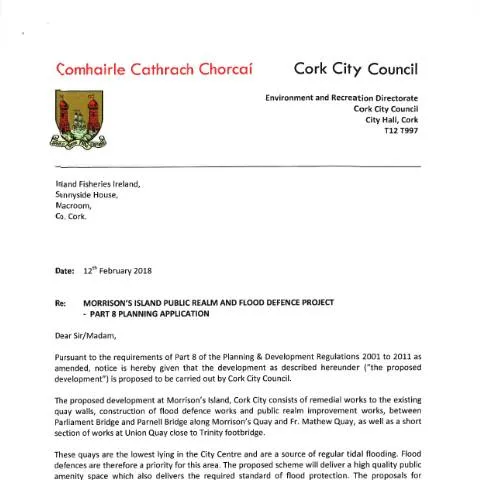
Understanding the Cork City Council Flood Defence Works Notice
The Cork City Council Flood Defence Works Notice, specifically concerning the Morrison’s Island project, serves as an essential resource for local residents, stakeholders, and interested parties. This document outlines the proposed developments and improvements aimed at enhancing flood protection while also upgrading public spaces in the area. Understanding its contents and implications is crucial for anyone impacted by or involved in the planning and execution of these works.
Scope and Objectives of the Proposed Development
The notice details a series of remedial works on Morrison’s Island, focusing on several key objectives:
- Flood Defence: The primary aim is to construct flood defence works that effectively mitigate the risk of tidal flooding, which has historically plagued the low-lying quays in the city center.
- Public Realm Improvements: Enhancements to public spaces are intended to create a more inviting and functional environment for residents and visitors alike.
- Heritage Preservation: The project seeks to respect and highlight the rich history of Morrison’s Island, ensuring that any developments harmonize with its heritage.
By combining flood prevention measures with improvements to public amenities, the initiative aims to contribute to the overall regeneration of the area.
Navigating the Procedural Landscape
It is vital for interested parties to understand the procedural context surrounding the planning application. This includes:
- Part 8 of the Planning & Development Regulations: The notice is issued under Part 8, which allows local authorities to carry out certain types of development with specific procedures that must be followed.
- Public Consultation: The document invites submissions and observations from the public, emphasizing community involvement in the planning process.
- Deadline for Submissions: Observations must be submitted by 4:00 PM on the specified deadline, ensuring timely consideration in the planning process.
Understanding these procedural elements helps residents and stakeholders engage effectively with the planning process.
Key Elements and Interpretations
Several significant components of the notice warrant careful consideration:
- Integrated Public Realm and Flood Defence Project: This dual focus is indicative of a modern approach to urban planning that considers both environmental and social factors.
- Visual Impact Minimization: Raising ground levels while ensuring the smooth integration of flood defences reflects a commitment to aesthetic considerations alongside functional needs.
- Accessibility Considerations: Traffic management and cycling facilities emphasize a shift toward more sustainable and accessible urban environments.
Engaging with these key elements aids in understanding the project’s broader implications for the community.
Anticipated Benefits to the Community
The proposed development is expected to yield numerous benefits, including:
- Enhanced Safety: Improved flood defences are paramount for safeguarding the community against potential flooding events.
- Community Engagement: The project encourages local involvement, fostering a sense of ownership and pride in public spaces.
- Economic Revitalization: By upgrading public areas, the project aims to attract more visitors and businesses, contributing to the local economy.
By highlighting these advantages, the notice positions the flood defence works as a vital investment in the future of Morrison’s Island and its residents.
Pitfalls and Common Misinterpretations
While the notice is designed to provide clarity, several pitfalls could lead to misunderstandings:
- Assuming Automatic Approval: Community members should not assume that submissions will lead to immediate changes or approvals; each is considered in the context of the broader planning framework.
- Overlooking the Importance of Feedback: The invitation for public submissions is not merely a formality; active community participation can significantly influence outcomes.
- Misinterpreting the Timelines: It is crucial to adhere to specified deadlines and engagement processes to ensure voices are heard in a timely manner.
Awareness of these pitfalls is essential for effective participation in the planning process.
Engagement Strategies for Residents
Residents interested in participating actively in the process can employ several strategies:
- Stay Informed: Regularly check updates from Cork City Council and related organizations regarding the project.
- Submit Observations Thoughtfully: When providing feedback, clarity and constructive suggestions will enhance the impact of submissions.
- Engage with Neighbours: Discussions among community members can lead to collective submissions that reflect shared concerns and aspirations.
By following these strategies, residents can play a pivotal role in shaping the future of their community.
Concluding Remarks on Future Development
The notice from Cork City Council regarding the Flood Defence Works encapsulates a significant step towards enhancing both flood resilience and public space quality in Morrison’s Island. As the community engages with this document, it is imperative to recognize the collaborative nature of urban development. The project's success will ultimately rely on active participation, constructive dialogue, and a shared vision for the area’s future. Stakeholders and citizens alike are encouraged to approach this opportunity with diligence, ensuring that the voices of the community are reflected in the planning process.
Understanding the Planning Process for Flood Defence Works
When it comes to flood defence projects in Ireland, the planning process is governed by several regulations and frameworks. Specifically for Cork City Council, the planning application for flood defence works must follow procedures outlined in the Planning and Development Act 2000. Applicants should familiarize themselves with key provisions to ensure compliance and smooth progression of their applications.
The planning application notice for flood defence works typically involves submitting a detailed proposal, which includes environmental assessments, engineering reports, and community impact statements. It is crucial for stakeholders to clearly articulate the necessity of the project, addressing both current vulnerabilities and future risks associated with flooding in the area.
In accordance with the local development plan, Cork City Council assesses how the proposed works align with existing land-use policies, potential impacts on biodiversity, and the overall environmental sustainability of the project. Additionally, community consultation plays a significant role, and applicants are often encouraged to engage with local residents and stakeholders to gather insights and address any concerns prior to the formal submission.
Once the application is submitted, Cork City Council will conduct a thorough review, which includes public notices and opportunities for public submissions. To ensure a comprehensive understanding of the community's perspective, applicants should be prepared to address any issues that arise during this review process. A properly prepared planning application can significantly enhance the chances of approval.
Funding Opportunities for Flood Defence Initiatives
Securing funding for flood defence works can be a complex endeavor, but it is essential for the successful implementation of such projects. Various avenues are available to applicants, including governmental grants, EU funding, and partnerships with private entities.
The Department of Housing, Local Government and Heritage is a primary source of funding for flood risk management initiatives, often through specific programmes designed to support local authorities in their efforts. Applicants should monitor announcements regarding funding calls and ensure they prepare the necessary documentation in alignment with the funding requirements.
Additionally, Cork City Council may have internal budget allocations for flood defence projects; therefore, it is advisable to engage with local officials early in the planning process to evaluate possible funding sources. Applicants may also explore opportunities for co-funding arrangements with local businesses or community groups, which can help share the financial burden and foster local support for the initiatives.
Furthermore, EU funding mechanisms, such as the European Regional Development Fund (ERDF) or the LIFE Programme, can provide additional resources for flood defence projects. Applicants must demonstrate the project's alignment with relevant EU policies and objectives, ensuring that the proposals meet the criteria established by the funding bodies.
Long-term Implications of Flood Defence Works on Local Communities
Implementing flood defence works has significant long-term implications for local communities in Cork. While the immediate goal is to mitigate flood risks, it is essential to consider broader socio-economic impacts and how these projects can enhance community resilience over time.
One key aspect is the improvement of local infrastructure resulting from flood defence projects. By investing in robust flood protection systems, communities can experience enhanced property values, improved safety, and greater attractiveness for businesses and residents alike. Furthermore, strategic flood defence works can lead to increased investment in urban development and renewal, as areas previously deemed at risk become viable for further economic activities.
Community engagement and education are also vital components of successful flood defence initiatives. By involving local stakeholders in discussions about flood risks and protection measures, councils can foster a culture of awareness and preparedness. Educational programs about flood risks and response strategies can empower residents, thereby enhancing overall community resilience.
It is also essential to consider the environmental impacts of flood defence works. While some methods may provide immediate protection, they could inadvertently disrupt local ecosystems or alter natural water flow. Balancing the need for human safety with environmental stewardship can be a challenging aspect of flood defence planning. Therefore, comprehensive environmental impact assessments are critical to understanding and mitigating potential adverse effects.
Overall, the successful implementation of flood defence works in Cork necessitates a collaborative approach that considers not only the technical aspects of planning and construction but also the long-term social and environmental outcomes for local communities.