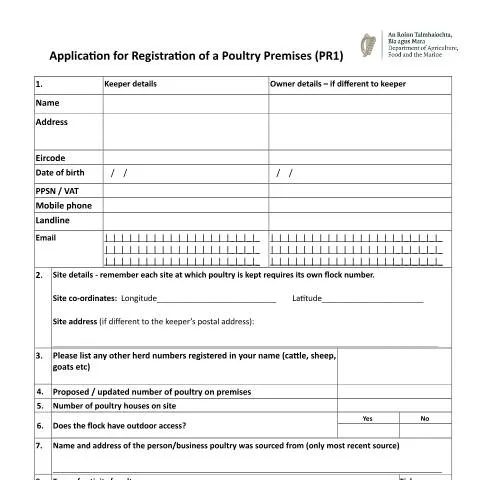
Understanding the Poultry Registration Landscape
In the vibrant world of poultry farming in Ireland, keeping track of various regulations and requirements is crucial for any poultry keeper. Whether you are engaging in small-scale backyard farming or operating a commercial poultry business, the Application for Registration of a Poultry Premises (PR1) is an essential document that plays a pivotal role in compliance with the law. This registration is not merely a bureaucratic necessity; it lays the groundwork for ensuring animal welfare, food safety, and public health.
The need for this form is enshrined in the Control on Places where Poultry are Kept Regulations 2014, specifically outlined under S.I. 114 of 2014. This regulation mandates all poultry keepers to register their premises, thus facilitating effective monitoring and management of poultry health and welfare across the country. Understanding the intricate details of this form will ensure you navigate the process smoothly and meet all requirements.
Who Needs to Register and Why?
The obligation to complete the PR1 form extends to all individuals or businesses involved in keeping poultry, regardless of the scale of operation. This requirement applies to various categories of poultry, including but not limited to:
- Backyard poultry keepers
- Commercial egg producers
- Poultry businesses distributing live birds, meat, or eggs
- Pet owners with birds kept for leisure
- Institutions such as zoos and aviaries
Understanding your legal obligations as a poultry keeper begins with the submission of this form. Failure to register can lead to significant repercussions, including fines, restrictions on poultry operations, or even legal action against the keeper. In an industry where biosecurity and food safety are paramount, registration is more than just a formality; it's a commitment to responsible farming practices.
Navigating the Registration Process: A Step-by-Step Guide
Completing the PR1 form involves several steps that require careful attention to detail. Each section of the form has specific requirements that must be fulfilled.
Step 1: Gather Necessary Information
Before you even start filling out the form, it's vital to have all the necessary information at your fingertips. This includes:
- Your personal details: Full name, address, and contact information.
- Site details: Exact location where the poultry is kept, including Eircode for precise identification.
- Details of the poultry type and quantity: This includes species and the number of birds being kept.
- Information about prior registrations if applicable.
Gathering comprehensive information in advance will streamline the application process and help prevent any delays.
Step 2: Complete Each Section of the Form
The PR1 form consists of several key sections that must be addressed:
| Section | Description |
|---|---|
| Keeper Details | Include your contact information and PPSN. |
| Site Details | Provide GPS coordinates, address, and any other relevant details. |
| Proposed Number of Poultry | Declare how many birds you intend to keep. |
| Poultry Use | Select the purpose: personal consumption, commercial sale, etc. |
| Keeper Declaration | A binding declaration of compliance with regulations. |
Taking time to fill out each section accurately is crucial. Misrepresentation or omissions can lead to application denial or future penalties.
Step 3: Review and Submit
Once you have completed all sections, conduct a thorough review. Ensure all questions have been answered, and the declaration is signed and dated. Incomplete applications are a common cause of delays.
The completed form must be submitted to your local Department of Agriculture, Food and the Marine (DAFM) office, specifically the Regional Veterinary Office. The submission can be made in person or by mail, and it is advisable to retain a copy for your records.
The Importance of Compliance: What Happens After Registration?
Upon successfully registering your poultry premises, you gain a flock number essential for any poultry operations. This number is critical for tracing purposes and is a requirement for any official inspections or biosecurity assessments that may arise.
You will also be expected to follow through with certain commitments outlined in the Keeper Declaration, which includes:
- Maintaining accurate records of poultry movements.
- Complying with animal welfare standards.
- Reporting any health issues to the DAFM promptly.
Failure to adhere to these obligations can lead to significant consequences, including revocation of your registration or legal action.
Dealing with Refusals or Errors: Your Rights and Next Steps
In the unfortunate event that your application for registration is refused, it is essential to understand your rights and the steps you can take to appeal this decision. The DAFM is required to provide you with reasons for the refusal, which could range from incomplete information to non-compliance with specific regulations.
Steps to Follow if Your Application is Refused
- Request Feedback: Contact the DAFM to gain clarity on the reasons for refusal.
- Correct the Issues: If the refusal stems from missing information or errors, rectify these and resubmit promptly.
- Appeal: If you believe the refusal was unjust, you may have options to appeal the decision. Seek guidance from the DAFM on how to proceed with the appeal process.
It is vital to act swiftly, as delays could affect your ability to keep poultry legally and may have financial implications.
The Role of the PR1 Form in the Wider Regulatory Framework
The PR1 form is not just an isolated document; it is part of a broader framework designed to ensure the health and welfare of both poultry and the public. Registration under the Control on Places where Poultry are Kept Regulations 2014 ensures that all poultry keepers are held to consistent standards that protect animal welfare and public health.
Key Regulatory Frameworks and Their Interconnections
- Animal Remedies Act and Regulations: This legislation outlines the necessary standards for the use of animal medicines and the requirements for maintaining health records.
- Food Safety Authority of Ireland (FSAI): The FSAI provides guidelines on food safety that poultry keepers must adhere to when selling eggs or meat.
- Health and Welfare Legislation: This legislation mandates humane treatment and care of all animals, including poultry.
Understanding these interconnections can help poultry keepers navigate their legal responsibilities more effectively, ensuring compliance and promoting best practices within the poultry industry.
Anticipating Future Changes: The Evolving Nature of Poultry Regulations
The legislative landscape surrounding agriculture, including poultry farming, is continually evolving. Keepers must stay informed about any changes that may affect their operations, including amendments to existing regulations and the introduction of new ones.
Engagement with local farming communities, attending workshops hosted by the DAFM, and subscribing to agricultural newsletters are excellent ways to stay updated. Being proactive in understanding future changes can help you adjust your practices in a timely manner.
Final Checks Before Submission: Ensuring Accuracy and Completeness
Before you finalize your PR1 submission, here is a checklist to ensure that everything is in order:
- Is the form signed and dated?
- Have all sections been completed with accurate information?
- Have you included any additional documentation required by the DAFM?
- Is a copy of the completed form retained for your records?
This checklist will further increase your chances of a successful application and ensure compliance with all relevant poultry regulations.
By grasping the critical aspects and procedural requirements associated with the Application for Registration of a Poultry Premises, you not only fulfill your legal obligations but also contribute to the integrity and safety of Ireland’s poultry industry. The PR1 form serves as a gateway to responsible poultry keeping, fostering a healthier environment for both poultry and consumers alike.
Understanding the Poultry Registration Process in Ireland
When it comes to poultry farming in Ireland, registration is not just a bureaucratic hurdle; it’s a necessity under the European Union's and Irish laws to ensure biosecurity and traceability in food production. The Department of Agriculture, Food and the Marine (DAFM) oversees the registration process, which is designed to safeguard public health and ensure compliance with food safety standards.
Fill in your form directly online
No printing: type your details into the boxes of the official form, tick, then download the PDF ready to send.
- 1Type into the form boxes
- 2Tick in one click
- 3Save and download the PDF
The application for the registration of a poultry premises generally requires a detailed understanding of your operational structure, the types of poultry you intend to keep, and your biosecurity measures. The registration process ensures that your operation aligns with various health and safety regulations, including the Animal Health and Welfare Act 2013, which mandates certain standards for livestock management.
In order to register your poultry premises, you will need to complete the required form accurately, which includes providing information such as:
- Your PPSN (Personal Public Service Number) for identification.
- Details of the ownership structure of your poultry farm.
- The Eircode of your premises to facilitate official inspections.
- A description of the poultry housing and equipment, including biosecurity measures in place.
It's important to note that registration must be completed before you commence business operations. Delays in registration can lead to complications, including fines or even the prohibition of trading poultry products.
Key Requirements and Compliance for Poultry Premises Registration
Once you've submitted your application for the registration of a poultry premises via the appropriate form (such as Form AG1 for poultry registration), there are several compliance requirements you must meet to maintain your registration status. Understanding these requirements can help streamline your operations and minimize the risk of regulatory issues down the line.
Firstly, the premises must meet specific standards regarding hygiene and biosecurity. This includes:
- Regular cleaning and disinfection of equipment and housing facilities.
- Implementation of rigorous pest control measures to prevent infestations.
- Establishing protocols to manage animal health, including vaccination schedules and health monitoring.
Secondly, all poultry operations must maintain accurate and up-to-date records. This includes:
- Records of poultry births, deaths, and sales.
- Details of feed supplies and veterinary treatments administered.
- Documented biosecurity practices and any incidents of disease.
Regular inspections by DAFM officials will be conducted to ensure compliance with these requirements. Non-compliance can lead to serious consequences, including suspension of your registration or even legal action. It's advisable to keep a compliance checklist and schedule regular internal audits to ensure that you meet the necessary standards continuously.
Renewing Your Poultry Registration: What You Need to Know
Poultry premises registration in Ireland is not a one-time process; it requires ongoing compliance and periodic renewal. As with other regulatory frameworks, the DAFM has set specific guidelines for the renewal of your registration, which is essential to ensure that your operation remains legitimate and compliant with current laws.
Typically, you will be reminded by the DAFM when your registration is nearing its expiration. However, it is prudent to monitor your registration status and plan for renewal proactively. Here are some key steps you should follow:
- Review and update all records related to your poultry operation, ensuring they reflect current practices and conditions.
- Submit any required forms or documentation, such as updated Form AG1, well in advance of the expiration date.
- Consider any changes in legislation or regulations that may affect your operation, and make necessary adjustments to comply with new requirements.
Renewal submissions typically require a fee, which may vary depending on the size and type of your operation. Make sure to check the latest fees on the DAFM website or contact them directly for clarification. Furthermore, your renewed registration will be contingent upon a successful inspection by DAFM officials, so ensuring your premises meet all necessary standards is vital.
Failing to renew your registration in a timely manner can result in severe disruptions to your business operations, including the legal inability to sell poultry products. Therefore, it's advisable to set reminders for renewal deadlines in advance for seamless business continuity.