The Significance of Registration for Duck Egg Production in Ireland
In the vibrant landscape of Irish agriculture, ensuring the quality and safety of food products is paramount. The registration of a duck egg production unit plays a crucial role in maintaining high standards within the food production hierarchy. This application, managed by the Department of Agriculture, Food and the Marine, isn't merely a bureaucratic step; it's a commitment to hygiene, safety, and compliance with both EU and national regulations. The implications of this registration extend far beyond immediate legalities, impacting public health, consumer trust, and the reputation of Irish produce.
Understanding the context in which this document operates is essential. The registration aligns with Regulation (EC) No. 852/2004 concerning food hygiene, and Regulation (EC) No. 853/2004, which lays down specific rules for food of animal origin. As such, the implications are twofold: compliance with legal frameworks and the inherent responsibility producers have toward consumers.
Who Should Submit This Application?
While one might think that only large-scale producers need to register, the reality is that any individual or entity looking to establish a duck egg production unit must complete this application. This includes:
- Small-scale farmers: Those operating on a local level with a focus on direct sales.
- Commercial producers: Larger operations that supply retail outlets and wholesalers.
- Organic producers: Any producer aiming for organic certification must also abide by these regulations.
- New entrants: Individuals entering the market must complete this registration before commencing production.
The Application Process: A Step-by-Step Approach
Completing the application for the registration of a duck egg production unit involves several crucial steps. Properly navigating these steps can ensure a smooth submission process and minimize delays.
Initial Preparation and Documentation
Before filling out the application, gather the necessary documentation, which includes:
- Details of the Production Unit: This includes a detailed sketch of the house(s) and a scaled map outlining the free-range land area if applicable.
- Salmonella Control Plan: A documented plan must be provided with the application, as it is a requirement for selling duck eggs.
- Existing Identification Numbers: Note any previous Department ID numbers associated with your poultry or agriculture operations.
Having these documents ready will facilitate a smoother application process.
Completing the Application Form
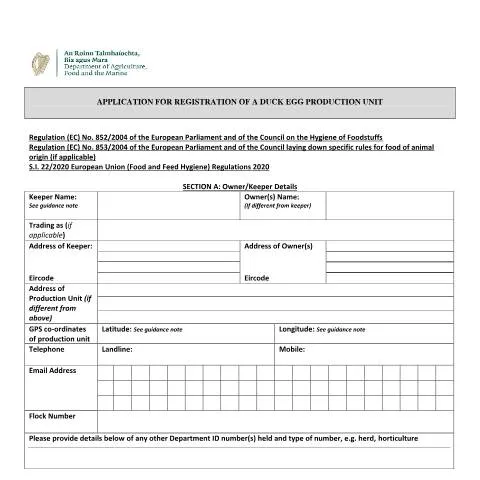
The form, aptly titled "Application for Registration of a Duck Egg Production Unit," requires specific information regarding the owner or keeper, the production unit, and operational details.
Section A: Focuses on the owner/keeper details, including names, addresses, and contact information. Be mindful of providing accurate Eircode and GPS coordinates for the production unit, as this information is critical for regulatory inspections.
Section B: Demands comprehensive information on the poultry houses on site, such as internal dimensions, species housed, and maximum capacity per house. Inaccuracies or omissions can lead to delays or rejection.
Section C: Involves general information about the food business operation, including other products sold, retail details, and membership in quality assurance schemes.
Submission and Follow-Up
Once the application is filled out completely, it should be submitted to the designated address:
Poultry Section, 2nd Floor Administration Building, Feedingstuffs, Fertiliser, Grain and Poultry Division, Department of Agriculture, Food & the Marine, Backweston Campus, Celbridge, Co. Kildare, W23X3PH.
Post submission, keeping communication channels open is essential. Should you have queries, contact the department at +353 (0)1 5058884 or via email at [email protected]. It's also wise to note reference numbers and maintain a record of submitted documents for future reference.
What Happens After Submission?
After submission, the application undergoes a thorough assessment by departmental officials. This process is not immediate, and understanding the timeline can help manage expectations.
Evaluation and Compliance Checks
Officials will verify the accuracy of the information provided. This includes:
- On-site Inspections: Depending on the scale and nature of the operation, inspectors may visit the production unit to ensure compliance with hygiene and safety regulations outlined by the EU and national legislation.
- Documentation Review: The submitted salmonella control plan and other documents are scrutinized for completeness and compliance.
If any discrepancies arise during the evaluation, the department will reach out for clarification or additional information.
Receiving the Outcome
Once the evaluation is complete, you will receive a notification regarding the application's outcome. If approved, you’ll be registered as a duck egg producer, allowing you to operate legally in compliance with regulations. In case of a refusal, expect clear guidelines on the reasons for denial, which could stem from:
- Incomplete application forms.
- Non-compliance with hygiene standards.
- Lack of a proper salmonella control plan.
Managing Challenges: What If Issues Arise?
Navigating the regulatory landscape can be fraught with challenges. Understanding the options you have if problems arise is crucial for maintaining your business trajectory.
Addressing Application Denials
If your application is denied, take the following steps:
- Request Clarification: Reach out to the department for specific reasons behind the denial. Understanding the issues can provide a pathway to rectifying them.
- Amend and Resubmit: Once you have clarity, amend your application accordingly. Ensure that all documentation is complete and accurate before resubmission.
- Consult with Experts: If needed, seek advice from agricultural consultants or legal advisors specializing in food safety regulations.
Rectifying Incomplete Applications
In the event of an incomplete application, the department will typically return the application to you, highlighting the missing information. To expedite the process:
- Conduct a Checklist Review: Before resubmitting, go through a checklist of required documents to ensure nothing is missing.
- Incorporate Feedback: If the department provided feedback, ensure you address it in your resubmission.
Unique Aspects of the Duck Egg Production Registration
Understanding what sets this application apart from other forms can help applicants avoid confusion and streamline the process.
Distinctions from Other Poultry Registrations
While there are similarities between various poultry registration forms, the application for duck egg production has unique elements, including:
- Specific Salmonella Control Requirements: Unlike other poultry forms, the duck egg application places significant emphasis on the salmonella control plan, which is vital for safety compliance.
- Direct-to-Consumer Sales Regulations: If your operation includes direct sales to consumers, there are additional guidelines and compliance measures to follow that may not apply to other types of poultry products.
- Production Specifications: The form requires detailed information regarding housing conditions and species specifics, which may not be as rigorous in general poultry registrations.
Compliance and Regulatory Framework
The operation of duck egg production units is governed by a robust legal framework designed to ensure food safety and quality standards.
Legal Underpinnings
The registration process is primarily informed by several key regulations:
- Regulation (EC) No. 852/2004: Focuses on the hygiene of foodstuffs, establishing necessary hygiene standards for producers.
- Regulation (EC) No. 853/2004: Outlines the specific rules for food of animal origin, which includes duck eggs.
- S.I. 22/2020: The European Union (Food and Feed Hygiene) Regulations 2020 sets out national legislative requirements that align with EU regulations.
These regulations not only facilitate safe food production but also protect consumer interests and health.
Looking Forward: Future Production Units and Changes
The registration process is not static; it evolves with changes in regulations and industry standards.
Planning for Future Expansion
If you plan to expand or modify your production unit, it is essential to notify the Department of Agriculture, Food and the Marine in advance. Here are considerations for future production units:
- Submit a Separate Application: Any new production unit will require a distinct application form.
- Understand Structural Requirements: Future expansion must adhere to existing regulations regarding hygiene and welfare standards.
Navigating the complexities of registration for a duck egg production unit is crucial for not only legal compliance but also for upholding the integrity of the Irish agricultural sector. By understanding the nuances of the application process and the implications of registration, prospective producers can ensure their operations are safe, compliant, and ready to contribute to the vibrant food landscape in Ireland.
Fill in your form directly online
No printing: type your details into the boxes of the official form, tick, then download the PDF ready to send.
- 1Type into the form boxes
- 2Tick in one click
- 3Save and download the PDF
Understanding the Registration Process for Duck Egg Production Units
In Ireland, the production of duck eggs is governed by specific regulations to ensure food safety and traceability. The first step in this process is the registration of your duck egg production unit with the relevant authorities, which is primarily handled by the Department of Agriculture, Food and the Marine (DAFM). This registration is crucial for any individual or business intending to produce duck eggs for sale.
To register a duck egg production unit, you will need to complete the appropriate application form. This is typically Form EGG1, which requires details about your production processes, the number of ducks involved, and compliance with health and safety regulations. It is essential to ensure that your premises are suitable for the production of eggs and that they meet the biosecurity standards set by the DAFM to prevent the risk of avian diseases.
Additionally, you will be asked to provide your Personal Public Service Number (PPSN), which serves as your primary identifier throughout the registration process. You may also need to submit evidence of compliance with the European Union regulations concerning the production and marketing of eggs, such as those outlined in Regulation (EC) No 589/2008. This may include information on animal welfare standards, feed quality, and the traceability of your products.
The application process typically involves an initial inspection of the premises by a DAFM official. This inspection will evaluate whether your operation is compliant with existing regulations, focusing on areas like hygiene practices, flock health, and storage conditions for the eggs. Once your unit is approved, you will receive a unique registration number, which must be displayed on all packaging of your duck eggs, aligning with the traceability requirements in the food industry.
Financial Implications and Support for Duck Egg Producers
Starting a duck egg production unit can involve significant financial investment, and understanding the potential costs is critical for aspiring producers. While the initial registration itself may have minor costs associated with administrative fees, the ongoing operational expenses can add up quickly. These costs include purchasing or leasing land, building facilities that meet biosecurity and welfare standards, feed costs, and veterinary care for your ducks.
Fortunately, there are various support mechanisms available for farmers and producers in Ireland. The DAFM offers schemes that may assist with initial setup costs or ongoing operational expenses under the Common Agricultural Policy (CAP). For example, the Targeted Agricultural Modernisation Scheme (TAMS) provides financial support for investments in farm safety and efficiency, which could be beneficial for duck egg producers.
It's also worthwhile to explore local enterprise offices (LEOs), which may offer grants or funding opportunities for agricultural initiatives. Producers can tap into these resources to alleviate some financial burdens while investing in sustainable practices that enhance productivity and animal welfare.
Moreover, consider joining local farmers' cooperatives or associations specializing in egg production. These groups can provide valuable networking opportunities, access to shared resources, and collective marketing strategies, which can enhance both your operational efficiency and profitability.
Marketing Duck Eggs: Strategies for Success
Once your duck egg production unit is up and running, effective marketing strategies are vital for ensuring your products reach consumers. Understanding your target market is key; duck eggs appeal to specific consumer segments including gourmet chefs, health-conscious individuals, and those seeking alternative egg sources due to dietary restrictions or preferences.
Online marketing can play a crucial role in expanding your reach. Establishing a strong online presence through a dedicated website and social media channels can help build brand awareness. Use platforms like Instagram or Facebook to share engaging content about your production practices, nutritional benefits of duck eggs, and recipes featuring your products.
Additionally, consider participating in farmers' markets or local food fairs, which not only provide a direct sales channel but also enhance community engagement and customer loyalty. Offering tastings and samples can introduce potential customers to the unique taste and quality of duck eggs.
Collaboration with local restaurants, cafés, and specialty food stores can also be a fruitful avenue. Establishing partnerships with chefs who value locally sourced ingredients can facilitate a steady demand for your products while enhancing your brand's reputation.
Finally, don't underestimate the power of customer feedback. Engage with your customers to learn their preferences and suggestions for improvements. This feedback can be invaluable for refining your production practices and marketing strategies, ensuring that you stay competitive in the ever-evolving food market.