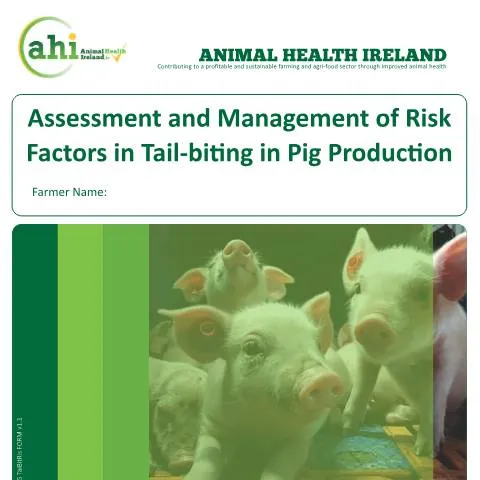
Understanding the Tail-Biting Risk Factor Assessment Form
In the realm of pig farming, effective management of animal behavior is crucial for maintaining herd health and productivity. The Pigs — Sample Form Used for Completion of Tail Biting Risk Factor Assessment is an essential tool employed by farmers and veterinarians to evaluate and mitigate the risk of tail biting among pigs. This form serves a pivotal role in the National Pig Health Programme overseen by the Department of Agriculture, Food and the Marine. Through this assessment, farmers gain insights into the environmental and behavioral factors that may lead to aggressive behaviors, thus ensuring better welfare for their livestock.
The Importance of Timing: When to Use the Assessment Form
The timing of completing the Tail-Biting Risk Factor Assessment Form is integral to its effectiveness. The assessment should be conducted periodically, particularly before moving pigs to a new pen or after significant changes in their environment, such as changes in feed or pen design.
- Initial Assessment: Conduct an assessment as soon as pigs are moved to a new facility or when introduced to new social groups.
- Regular Reviews: Implement assessments every few months to track changes in behavior and pen dynamics.
- Post-Incident Analysis: Following any incidents of tail biting, an immediate assessment is necessary to determine contributing factors and to make adjustments accordingly.
Ultimately, farmers should view this assessment as an ongoing process rather than a one-time task. The continual evaluation helps in adjusting management practices to minimize risks associated with tail biting.
Who Should Fill Out This Assessment?
While the Tail-Biting Risk Factor Assessment Form is designed for use by pig farmers, it is also a collaborative tool involving veterinarians and animal welfare experts. Below are the key profiles of individuals who should be involved in the completion of this form:
- Farm Managers: Responsible for overseeing day-to-day operations and ensuring that animal welfare protocols are in place.
- Veterinarians: Provide professional insights into animal health and behavior, ensuring that the assessment is comprehensive and reflects best practices.
- Animal Welfare Officers: Ensure compliance with animal welfare regulations and can provide additional context on behavioral assessments.
In some scenarios, it may be beneficial to involve staff members who handle the pigs directly, as they can provide valuable insights on pig behavior and environment.
The Form and Its Sections: A Detailed Breakdown
The Tail-Biting Risk Factor Assessment Form is divided into multiple sections, each targeting specific aspects of pig management. Understanding these sections aids in accurate completion and effective data collection.
Section A: Environmental Evaluation
This section focuses on the physical environment of the pigs, assessing factors like pen size, bedding materials, and available enrichment options. Each item is crucial for understanding how the environment contributes to or mitigates the risk of tail biting.
- PEN ID: Unique identifier for tracking specific pens.
- Pen Dimensions: Length and width should be recorded to determine space adequacy.
- Bedding Quality: Evaluate the types of bedding used, categorizing them as optimal, sub-optimal, or marginal.
Section B: Behavioral Observations
In this section, farmers are required to document pig behavior during a 5-minute observation period. Key behaviors to note include:
- Damaging Behaviour: Including chewing or biting directed towards other pigs.
- Aggressive Biting: Document instances of aggressive interactions to assess the social dynamics of the herd.
Recording these behaviors helps identify potential triggers for tail biting and can guide management decisions.
Section C: Health and Welfare Metrics
This segment evaluates the health status of the pigs, including vaccination history and overall health assessments. Questions such as whether all pigs can feed simultaneously and the effectiveness of vaccination programs are key to understanding health-related risks.
- Vaccination Programme: Evaluates whether current vaccination practices are adequate.
- Feeding Dynamics: Determines if resource competition among pigs might be provoking aggressive behaviors.
Submitting the Assessment: Channels and Processes
Once the Tail-Biting Risk Factor Assessment Form is completed, submitting the form is the next step. The submission process is streamlined to ensure that evaluations are taken into account without delay.
- Online Submission: The Department of Agriculture, Food and the Marine often encourages digital submissions through their dedicated portal, ensuring rapid processing.
- Paper Submission: If a physical copy is preferred, it can be mailed to the appropriate departmental office. Ensure that all information is clearly legible to avoid any processing delays.
- In-Person Submission: Farmers can also choose to drop off completed forms at local Department offices for immediate processing.
Farmers should retain copies of their submissions for record-keeping and future reference, particularly for follow-up assessments.
The Impact of Neglecting the Assessment
Failing to complete and submit the Tail-Biting Risk Factor Assessment can have significant consequences. Neglect may lead to:
- Increased Risk of Aggressive Behaviors: Without a regular assessment, underlying issues may go unnoticed, exacerbating the problem of tail biting.
- Health Issues: Tail biting can lead to infections and overall poor health among pigs, resulting in financial losses.
- Regulatory Penalties: Farmers may face scrutiny or penalties from veterinary health authorities for failing to take necessary actions to safeguard animal welfare.
Therefore, the assessment is not merely a bureaucratic requirement but a crucial aspect of responsible pig farming.
Regulatory Background: The Framework Supporting the Assessment
The Tail-Biting Risk Factor Assessment Form is anchored in a broader regulatory framework aimed at safeguarding animal health and welfare in Ireland. The Animal Health Ireland initiative, along with the Department of Agriculture, Food and the Marine, has established guidelines and programs that necessitate the use of such assessments.
- Animal Health and Welfare Act 2013: This legislation mandates that farmers maintain high standards of animal welfare and provides the basis for assessments like this one.
- National Pig Health Programme: A collaborative effort involving numerous stakeholders, aiming to improve pig health and welfare across Ireland.
The existence of these regulations underscores the importance of conducting thorough risk assessments and highlights the role of farmers in upholding these standards.
Final Thoughts: Enhancing Pig Welfare Through Assessment
Completing the Tail-Biting Risk Factor Assessment Form is a proactive measure that pig farmers can take to enhance the welfare of their animals. By identifying potential risk factors and implementing effective management strategies, farmers can reduce the incidence of tail biting and promote healthier, more productive herds.
As part of a continuous improvement approach, farmers are encouraged to not only complete the form but also to engage in ongoing training and education regarding animal behavior management. This commitment to excellence will ultimately benefit the entire pig farming industry.
Understanding Tail Biting in Pigs: The Importance of Risk Factor Assessment
Tail biting is a significant welfare concern within pig farming, not only due to its impact on the health and wellbeing of pigs but also because it can lead to economic losses for farmers. The practice involves pigs chewing on the tails of other pigs, which can result in injuries and infections. As part of the welfare assessment, farmers must identify and mitigate risk factors contributing to this behavior. Understanding the underlying causes of tail biting can involve various elements, such as environmental conditions, management practices, and social interactions among pigs.
It is essential for farmers to conduct a thorough risk factor assessment using the appropriate sample forms provided by the Department of Agriculture, Food and the Marine. A well-structured assessment will allow farmers to pinpoint specific areas of concern, allowing targeted interventions to reduce the likelihood of tail biting incidents. This proactive approach can improve animal welfare and enhance the overall productivity of the farm.
Completing the Tail Biting Risk Factor Assessment Form: Step-by-Step Guidance
When filling out the Tail Biting Risk Factor Assessment Form, farmers should approach the task methodically to ensure accuracy and comprehensiveness. Below are the key steps involved in the completion of the form:
- Gather Relevant Information: Before beginning the assessment, compile all necessary data related to the pig herd. This includes pen layouts, social dynamics, feeding practices, and any historical incidents of tail biting. Having this information at hand will facilitate a more straightforward and precise assessment.
- Identify Risk Factors: As you complete the form, focus on identifying specific risk factors that may contribute to tail biting. These can include factors such as housing density, the availability of enrichment activities, and herd management practices. Be thorough and consider both environmental and social dimensions.
- Rate Risk Levels: The assessment form typically includes a rating system for various risk factors. Be honest in your evaluations, as accurate ratings are vital for formulating effective mitigation strategies. A higher risk rating indicates a more significant need for intervention.
- Provide Contextual Details: Where applicable, include contextual details or observations about the social interactions between pigs. For example, if certain animals display aggressive behavior towards others, this information can help authorities understand the herd dynamics that may contribute to tail biting.
- Review and Submit: Once you have completed the assessment, review the form for any errors or omissions. After ensuring all sections are filled out accurately, submit the form to the relevant authority, such as your local veterinary office or the Department of Agriculture, Food and the Marine. Keep a copy for your records, as it may be useful for future assessments or visits.
Mitigation Strategies Following the Assessment: Ensuring Long-term Solutions
Upon completing the Tail Biting Risk Factor Assessment, it is essential to implement effective mitigation strategies based on the identified risk factors. Here are several key strategies that farmers can adopt to reduce the instances of tail biting:
- Enhance Environmental Enrichment: Providing pigs with adequate environmental enrichment can significantly reduce stress and boredom, both of which are known to contribute to tail biting. This can include items such as straw, toys, and varied feeding strategies that stimulate natural foraging behaviors.
- Optimize Stocking Density: Overcrowding can lead to increased aggression and stress among pigs. Review your housing arrangements and ensure that pigs have sufficient space to move around comfortably. The ideal stocking density may vary based on the facility’s design and the age and weight of the pigs.
- Monitor Social Structures: Pigs are social animals, and understanding their social hierarchy can help in managing their interactions. Regular monitoring of social behavior can identify potential aggressors or at-risk individuals that may need to be separated or closely monitored.
- Adjust Feeding Practices: Implementing a balanced feeding regimen can prevent competition and aggression at feeding times. Ensure that feed is easily accessible to all pigs and consider the use of feeding devices that minimize competition.
- Regular Health Checks: Frequent health assessments can help catch any underlying health issues that may contribute to behavioral problems, including tail biting. Work closely with your veterinarian to establish a routine health monitoring program.
By following these strategies, farmers can create a more stable and healthy environment for their pigs, reducing the risk of tail biting and promoting overall animal welfare.