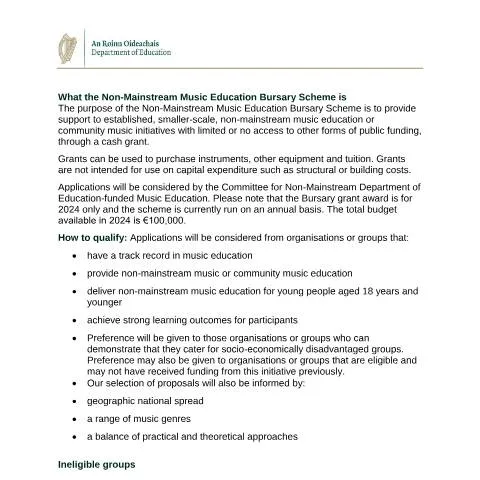
Navigating the Non-Mainstream Music Education Bursary Scheme
The Non-Mainstream Music Education Bursary Scheme stands as a significant opportunity for community-focused music initiatives in Ireland that often struggle to find funding elsewhere. This bursary is not merely a financial lifeline, but a means to enrich the musical education landscape for young people across the nation. Understanding how to effectively navigate this scheme can lead to substantial benefits for organisations that align with its goals.
Key Concepts for Successful Applications
To effectively engage with the bursary, it’s essential to grasp the foundational concepts behind the scheme. Here are some key aspects to consider:
- Non-Mainstream Definition: The term 'non-mainstream' refers to music education initiatives that do not follow conventional teaching norms. This can include community music projects, workshops, and alternative teaching methods.
- Cash Grant Utilisation: The bursary provides a cash grant that can be used for instruments, equipment, and tuition, but not for capital expenditures like building costs.
- Annual Budget Constraints: For the fiscal year 2024, the total budget is capped at €100,000, meaning the distribution of these funds can be competitive.
Understanding Eligibility Criteria
Engaging with the bursary scheme necessitates a clear understanding of who qualifies for funding. To be considered, organisations must meet specific criteria:
- Demonstrate a history in music education.
- Provide non-mainstream music education aimed at individuals aged 18 and younger.
- Show strong evidence of positive learning outcomes among participants.
- Preference is given to organisations working with socio-economically disadvantaged groups.
- Avoid eligibility for previous funding under this scheme as a factor for selection.
Funding Exclusions: Who Should Not Apply
While many organisations may benefit from the bursary, it’s equally crucial to recognise who is excluded from eligibility. The following groups are ineligible:
- For-profit companies and professional performing groups.
- Schools and educational institutions.
- Music education partnerships actively receiving music generation funding at the time of application.
- Individuals younger than 18 years old.
Strategic Planning for Application Success
Strategically planning your application enhances the likelihood of success. Here are insights into how to prepare effectively:
- Articulate Objectives: Clearly define the goals of your music education initiative. Include details on how it aligns with the bursary’s aims.
- Demonstrate Impact: Provide evidence of past successes and how your initiative has benefited participants. Testimonials and case studies can greatly strengthen your application.
- Outline Funding Use: Clearly specify how the funds will be allocated. Transparency regarding budget usage is crucial.
- Show Community Engagement: Detail how your initiative interacts and engages with the local community, particularly with socio-economically disadvantaged groups.
Connection with Other Funding Sources and Documentation
Understanding how the Non-Mainstream Music Education Bursary Scheme fits within the broader funding landscape is vital. This scheme does not exist in isolation and may complement other funding sources. Key points for consideration include:
- Collaboration Opportunities: Explore potential partnerships with organisations that may have received other forms of funding, ensuring that your project remains standalone and eligible.
- Documentation Requirements: Familiarise yourself with required documentation, such as proof of previous funding usage or evidence of educational outcomes from prior projects.
Common Misinterpretations and How to Avoid Them
Misunderstandings about the bursary's guidelines can lead to wasted efforts. Here are some frequent misinterpretations and how to sidestep these pitfalls:
- Assuming All Music Education Initiatives Qualify: Only non-mainstream projects are eligible, so ensure your initiative fits this criterion.
- Underestimating the Importance of Community Focus: A strong community engagement strategy is not just beneficial but essential for receiving funding.
- Confusing Non-Mainstream with Experimental: While innovative approaches are welcome, they must still adhere to the educational framework expected by the bursary committee.
Practical Examples of Fund Utilisation
To further comprehend the potential impact of the bursary, consider the following hypothetical scenarios that illustrate different ways organisations might effectively utilise the funding:
| Organisation Type | Use of Funds | Expected Outcomes |
|---|---|---|
| Community Music Group | Purchasing instruments for workshops | Increased youth participation in music activities |
| Local Music School | Tuition subsidies for low-income students | Greater access to quality music education |
| After-School Arts Programme | Equipment for recording and producing music | Enhanced learning experience and practical skills development |
Building a Compelling Application Narrative
An application’s narrative is vital; it must tell a compelling story about the vision and impact of your music education initiative. Consider the following elements when crafting your narrative:
- Your Mission: Clearly articulate your organisation’s mission and how it aligns with the aims of the bursary.
- Participant Stories: Share stories from past participants to illustrate the positive impact your programme has had on their lives.
- Future Aspirations: Discuss your plans for the future, including how you will build on the success of the received funding.
Understanding the Non-Mainstream Music Education Bursary Scheme
The Non-Mainstream Music Education Bursary Scheme is a unique initiative aimed at supporting music education in Ireland, particularly for students and educators engaged in less conventional forms of music. This scheme is funded by the Department of Education and is designed to provide financial assistance to both individuals and institutions that promote non-mainstream music education. It recognizes the importance of diverse musical genres and encourages the development of skills in areas that may not typically receive institutional support.
To qualify for the bursary, applicants must demonstrate a commitment to music education outside of traditional frameworks. This could include various genres such as folk, jazz, electronic, world music, or experimental forms. The scheme is particularly focused on fostering innovative teaching methods and supporting projects that engage underrepresented communities in music education.
Eligibility Criteria and Application Process
Eligibility for the Non-Mainstream Music Education Bursary Scheme is determined by several factors. Applicants must be based in Ireland and must show evidence of a strong commitment to non-mainstream music education. This could be in the form of past teaching experience, innovative projects undertaken, or collaborations with community organizations.
The application process involves submitting a completed bursary application form, along with supporting documentation that outlines your project, its goals, and its expected impact on the community or educational setting. It is essential to clearly articulate how the funding will be utilized. The review panel will assess applications based on clarity of purpose, potential impact, and the innovative nature of the proposed project.
Documentation may include a budget outline, timelines for project implementation, and letters of support from relevant stakeholders in the music community or educational institutions. The submission deadlines are typically set on an annual basis, and it is advised to check the Department of Education’s website for specific dates and additional guidelines.
Funding Allocation and Project Monitoring
Once awarded, the bursary funds can be allocated for various purposes, including but not limited to, purchasing instruments, hiring guest instructors, or facilitating workshops and community events. It is essential that recipients manage these funds responsibly and in accordance with the guidelines provided by the Department of Education. Adhering to the budget outlined in the application is critical, as any significant deviations may impact subsequent funding or eligibility for future bursaries.
Project monitoring is an integral part of the bursary scheme. Recipients are required to report on the progress of their funded projects at specified intervals. This may involve submitting progress reports detailing activities undertaken, participant engagement, and financial expenditures. These reports not only ensure accountability but also allow the Department of Education to gauge the effectiveness of the initiative and make informed decisions about future funding allocations.
Fill in your form directly online
No printing: type your details into the boxes of the official form, tick, then download the PDF ready to send.
- 1Type into the form boxes
- 2Tick in one click
- 3Save and download the PDF
Furthermore, recipients may be invited to participate in evaluation meetings and feedback sessions. This collaborative approach not only enriches the individual projects but also contributes to the overall improvement of the Non-Mainstream Music Education Bursary Scheme.
Networking Opportunities within the Non-Mainstream Music Community
One of the significant benefits of participating in the Non-Mainstream Music Education Bursary Scheme is the networking opportunities it presents. Recipients have the chance to connect with other educators, artists, and organizations dedicated to non-mainstream music. This networking can lead to collaborations, sharing of best practices, and the development of new initiatives that further enrich the music education landscape in Ireland.
Engaging with the broader non-mainstream music community can also provide additional resources and support for individual projects. Many recipients find that collaborating with local musicians or arts organizations enhances their projects and fosters a more inclusive approach to music education. The bursary scheme encourages such partnerships, promoting a sense of community among its participants.
Moreover, attending workshops, seminars, and networking events organized by the Department of Education or affiliated organizations can broaden horizons and inspire innovative approaches to music education. These events often feature discussions on trends in non-mainstream music, pedagogical methodologies, and opportunities for further funding, thus enriching the overall experience of the participants.
The Role of Assessment and Feedback in the Bursary Scheme
Assessment plays a crucial role in the success of the Non-Mainstream Music Education Bursary Scheme. After the completion of funded projects, recipients are required to undergo an assessment process, which aims to evaluate the outcomes and effectiveness of their initiatives. This process not only measures the impact on the participants and the community but also provides valuable insights for the Department of Education to refine and improve the scheme.
Feedback from project participants is also pivotal. Gathering data on participants' experiences, learning outcomes, and overall engagement helps in shaping future iterations of the bursary scheme. This emphasis on assessment ensures that the scheme remains responsive to the needs of the community and continues to support innovative educational practices.
Furthermore, recipients are encouraged to share their findings and experiences with the wider music education community. This sharing of knowledge can inspire new projects, foster collaborations, and contribute to a culture of continuous improvement within non-mainstream music education in Ireland.