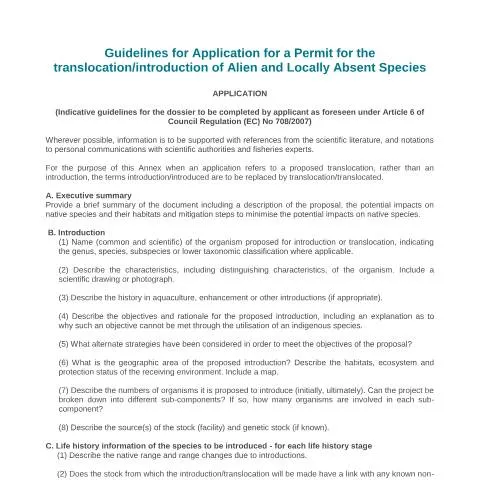
Navigating the Aquaculture & Foreshore Management Guidelines: An Overview
The Department of Agriculture, Food and the Marine (DAFM) has laid out comprehensive guidelines for those seeking to apply for permits related to aquaculture and foreshore management. Understanding these guidelines is crucial for anyone involved in the translocation or introduction of alien and locally absent species into Ireland's aquatic environments. The implications of these guidelines extend beyond regulatory compliance; they play a vital role in preserving Ireland's rich biodiversity while facilitating responsible aquaculture activities.
Key Components of the Guidelines
The document is structured to provide detailed instructions for applicants, ensuring all critical aspects of a permit application are addressed. Below are the primary sections that applicants must consider:
- Executive Summary: A brief summary detailing the proposal, potential impact on native species, and mitigation strategies.
- Introduction: Information about the species to be introduced, its characteristics, and the rationale for its introduction.
- Life History Information: Detailed ecological and biological data regarding the species, including growth rates, habitat preferences, and reproductive biology.
- Interaction with Native Species: A discussion of the potential impacts on native ecosystems, including competition and predation risks.
- Receiving Environment: Assessment of the environmental conditions where the introduction will occur, including water quality and habitat types.
- Monitoring and Management Plans: Plans for assessing the success of the introduced species and managing any potential negative impacts.
Understanding the Executive Summary
The executive summary is not merely a formality; it sets the tone for the entire application. This section should encapsulate the core elements of your proposal. It's imperative to succinctly convey:
- A clear description of the organism being introduced.
- The anticipated effects on local ecosystems, particularly native habitats and species.
- Specific mitigation strategies that will be implemented to minimise potential adverse impacts.
When drafting this section, use scientific literature to back up your claims and ensure that your proposal is framed within a well-supported ecological context. This will enhance credibility and demonstrate due diligence.
Delving into Species Characteristics
The introduction section requires in-depth details about the species intended for introduction or translocation. Below are critical aspects to cover:
- Scientific Classification: Clearly state the genus and species, including subspecies if applicable.
- Distinctive Characteristics: Include photographs or scientific illustrations to aid identification.
- History in Aquaculture: Provide a narrative on the history of the species in aquaculture and any previous introductions.
This section is crucial as it not only identifies the species but also builds a case for why its introduction is necessary, making the subsequent discussions about ecological impacts more meaningful and relevant.
The Importance of Life History Information
Understanding the life history of the species you are proposing for introduction is vital. This section should cover:
| Life Stage | Key Characteristics | Environmental Tolerances |
|---|---|---|
| Early Life Stage | Details such as growth rate and habitat preferences. | Temperature, salinity, and oxygen requirements. |
| Adult Stage | Feeding behavior and reproductive biology. | Optimal habitat conditions and any specific ecological requirements. |
This detailed examination is fundamental not only for understanding how the species will interact with the environment but also for anticipating any potential ecological disruptions. A clear understanding of the organism's physiology and life cycle will support your case for its introduction.
Evaluating Interactions with Native Species
One of the most critical aspects of the guidelines is assessing the potential interactions between the introduced species and native fauna. This section should answer:
- What native species could be affected by the introduction?
- Will there be competition for resources?
- What are the potential predation risks posed by the introduced species?
Describing the ecological niche overlap and the risks of hybridisation with native species is essential. This analysis not only identifies potential threats to biodiversity but also outlines contingency measures if adverse effects are observed.
Assessing the Receiving Environment
A comprehensive understanding of the receiving environment is crucial for the success of any introduction. Your application must include:
- Physical Conditions: Provide data on seasonal temperatures, salinity, and other water quality parameters relevant to the species.
- Species Composition: A detailed inventory of existing aquatic life in the area.
- Habitat Analysis: Identifying critical habitats that could be affected by the introduction.
This section requires a thorough environmental assessment to ensure that introduced species do not disrupt existing ecosystems. Make use of scientific studies to substantiate your findings and recommendations.
Establishing Robust Monitoring and Management Plans
Finally, the guidelines emphasise the importance of implementing monitoring and management plans to ensure the ongoing assessment of the introduced species’ impact. Here are key components to consider:
- Plans for regular environmental assessments to track the species' establishment and any negative effects.
- Establishing criteria for success and failure of the introduction.
- Strategies for intervention should negative impacts arise.
Incorporating these plans demonstrates a commitment to responsible management and the long-term sustainability of both the introduced and native species.
Conclusion: Crafting a Comprehensive Application
The guidelines provided by the Department of Agriculture, Food and the Marine serve as a vital resource for applicants looking to navigate the complexities of aquaculture and foreshore management in Ireland. By thoroughly understanding and addressing each component outlined in the guidelines, applicants can submit comprehensive and well-supported proposals that not only comply with regulatory requirements but also foster ecological harmony. As Ireland continues to balance aquaculture development with environmental stewardship, a well-crafted application will contribute significantly to this goal.
Understanding Aquaculture Permits in Ireland
The aquaculture sector in Ireland is governed by a complex framework of regulations designed to manage marine and freshwater environments sustainably. When applying for an aquaculture permit, it is crucial to understand which specific type of permit you need. In Ireland, aquaculture operations typically require a Marine Aquaculture Licence issued by the Department of Agriculture, Food and the Marine (DAFM), as well as a Foreshore Licence from the Department of Housing, Local Government and Heritage. These permits ensure that your activities align with environmental standards and community interests.
Before embarking on the application process, familiarize yourself with the Fisheries (Amendment) Act 1997 and the associated statutory instruments, as they lay the groundwork for aquaculture regulations. The Marine Institute and the Sea Fisheries Protection Authority (SFPA) also play essential roles in monitoring compliance with regulations and ensuring sustainable practices in aquaculture.
One of the first steps in the application process is conducting a thorough site assessment. You’ll need to provide detailed information about your proposed site, including its ecological characteristics, potential impacts on local wildlife, and any historical or cultural significance. A comprehensive Environmental Impact Assessment (EIA) may also be required, depending on the scale and type of your aquaculture activities.
Step-by-Step Application Process for Aquaculture Permits
Navigating the application process for aquaculture permits can be daunting, but breaking it down into manageable steps can simplify the journey. Here’s a detailed overview of the typical process involved:
- Pre-Application Consultation: It is advisable to engage in pre-application discussions with the DAFM and local authorities. These discussions can provide valuable insights and clarify any ambiguities regarding the requirements and potential challenges associated with your application.
- Prepare Required Documentation: You will need to gather various documents, including proof of your legal rights to the land or foreshore, details of your proposed aquaculture operation, and a comprehensive EIA if applicable. Pay particular attention to local planning regulations, as they can influence the outcome of your application.
- Submit Application: Complete the relevant forms, such as the Aquaculture Licence Application Form and the Foreshore Licence Application Form, and submit them along with your supporting documents. Ensure that all information is accurate and complete, as missing or incorrect details can lead to delays or rejections.
- Public Consultation Process: Once your application is submitted, there is usually a public consultation period during which local stakeholders can voice their opinions or concerns. This is an important step in ensuring community engagement and support.
- Assessment by Authorities: The DAFM and other relevant authorities will assess your application, considering both the ecological impact and socio-economic factors. This phase may involve site visits and consultations with other agencies.
- Decision Notification: You will receive a formal notification of the decision regarding your application. If granted, your permit will outline specific conditions you must adhere to during your aquaculture operations.
- Compliance Monitoring: After receiving your permit, you will be subject to ongoing compliance checks to ensure that your aquaculture practices align with the conditions set forth in your permit. Regular reporting may also be required, allowing authorities to monitor the impacts of your activities on the marine environment.
Impact of Climate Change on Aquaculture Operations
Climate change poses significant challenges to aquaculture operations in Ireland, affecting everything from water temperatures to fish health and food security. As temperatures rise, the habitats of various marine species may shift, potentially impacting biodiversity and the viability of certain aquaculture ventures.
It is essential to assess how climate change could affect your specific operations when applying for your aquaculture permit. For instance, fluctuating water temperatures can influence growth rates, disease outbreaks, and even the reproductive cycles of marine species. This necessitates an adaptive management approach that can respond to changing environmental conditions.
Moreover, to address these challenges, the Irish government is actively promoting research into sustainable aquaculture practices that are resilient to climate impacts. Integrating climate adaptation strategies into your operations could enhance your application’s success, showing that you’re committed to sustainable development. Engaging with local research institutions or industry associations can provide access to valuable data and best practices that can strengthen your case.
As you proceed with your application, consider including a section addressing how you plan to monitor and mitigate climate-related risks. This proactive approach not only demonstrates compliance with environmental regulations but can also position your aquaculture operation as a forward-thinking entity in the eyes of regulatory authorities.