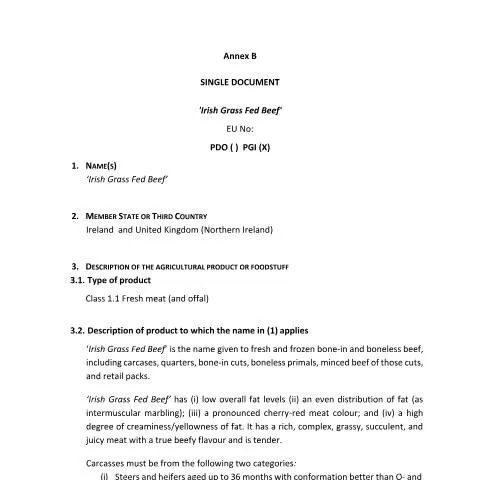
Understanding the PGI Application for Irish Grass Fed Beef
When embarking on the journey to market Irish Grass Fed Beef, producers must navigate the official channel of the PGI (Protected Geographical Indication) application. This vital document is not merely a formality; it is a crucial step toward ensuring that the high standards of quality associated with Irish grass-fed beef are upheld and recognized in the marketplace. Producers aiming to leverage the PGI status benefit from not only the protection of their brand but also the recognition of superior quality that comes from grass-fed agriculture in Ireland.
Who Must Submit the PGI Application?
The PGI application must be submitted by producers who wish to market their beef under the ‘Irish Grass Fed Beef’ designation. This typically includes:
- Farmers who rear cattle exclusively for this purpose.
- Processors involved in the slaughtering and packaging of the beef.
- Distributors and retailers looking to sell beef under the PGI label.
It’s crucial for these stakeholders to demonstrate adherence to strict criteria outlined in the application, showcasing their commitment to quality and sustainability in beef production.
Key Stages in Completing the PGI Application
Completing the PGI application involves several significant steps:
- Gather Documentation: Producers must compile a range of documents, including proof of farm compliance with grass-fed standards, descriptions of production processes, and evidence of geographical sourcing.
- Familiarize with Product Specifications: It is essential for producers to understand the specific standards that ‘Irish Grass Fed Beef’ must meet, such as the requirement for cattle to have a diet comprising at least 90% grass.
- Fill Out the PGI Application Form: The form, known as the Single Document, requires detailed descriptions of the product, including meat quality attributes and production methods.
- Submit for Review: Once completed, the application must be submitted to the Department of Agriculture, Food and the Marine (DAFM) for assessment.
Deadlines: Timing is Everything
Understanding the timeline for submitting the PGI application is essential for producers. The application process is open year-round; however, producers should plan their submissions strategically. Here’s what to consider:
- Application Preparation: Allocate sufficient time for gathering paperwork, as this can take several weeks. Engage with experts or consultants if necessary to ensure all criteria are met.
- Submission Period: As there is flexibility in the submission timeframe, ensure you are aware of any specific reviews or checks conducted by the DAFM that may affect processing times.
- Review Duration: After submission, the review process can take several months, depending on the completeness of the application and the current workload of the DAFM.
The key takeaway is to not leave submissions to the last minute, as complications can arise that may delay approval.
Submission Channels: Navigating the Process
Producers can submit their PGI applications through various channels, each with unique benefits:
| Submission Method | Description | Pros | Cons |
|---|---|---|---|
| Online Submission | Using the DAFM's online platform to submit the application. | Fast processing, easy tracking of application status. | Requires a MyGovID for access. |
| Paper Submission | Mailing the completed application form to the DAFM. | Accessible to those without reliable internet access. | Longer processing times and potential for lost mail. |
| In-Person Submission | Bringing the application directly to a DAFM office. | Face-to-face assistance available for questions. | Requires travel and time. |
Choosing the right submission method can influence the overall efficiency of your application process. Assess your specific circumstances to determine the most suitable approach.
What Happens After Submission?
Once the PGI application is submitted, it enters a review phase where the DAFM evaluates the details provided. Here’s how the subsequent process unfolds:
- Initial Screening: The DAFM conducts a preliminary check for completeness and adherence to specified requirements.
- Detailed Assessment: A more thorough review assesses the product’s alignment with PGI standards, including geographical sourcing and production practices.
- Notification: Producers receive feedback on their application. If approved, they will gain the right to market their beef as ‘Irish Grass Fed Beef’. If rejected, detailed reasons will be provided.
It is essential to remain engaged during this phase, as the DAFM may reach out for additional information or clarification regarding specific points in your application.
Responding to Challenges: Refusals and Additional Information Requests
In instances where an application is refused or additional information is required, producers should not view this as an insurmountable obstacle. Instead, it presents an opportunity to refine the application. Here are steps to take:
- Review Feedback Thoroughly: Understand the reasons for refusal to address specific concerns effectively.
- Gather Additional Evidence: If additional information is requested, ensure that you provide comprehensive and clear documentation to support your case.
- Engage with DAFM Directly: Don’t hesitate to reach out for clarification on feedback. Open lines of communication can often lead to a more effective resolution.
Unique Considerations for Different Producers
Producers come from diverse backgrounds and have unique circumstances that may impact their PGI application. Here’s a closer look at various scenarios:
- New Entrants to the Market: For those new to beef production, it may be beneficial to engage in training or advisory services offered by agricultural bodies. Understanding the PGI process can be overwhelming without prior experience.
- Small Scale versus Large Scale Producers: While both categories are eligible for PGI, the scale of operations may dictate different approaches to meeting compliance and documentation standards. Small-scale producers might leverage community support networks for assistance.
- International Producers: Producers from outside Ireland looking to gain PGI status must navigate additional regulatory frameworks. Understanding EU regulations and aligning your practices with those expected by the DAFM is critical.
Final Steps to Market Your PGI Irish Grass Fed Beef
After receiving approval for the PGI application, producers can confidently move to market their beef. However, this phase requires careful strategy:
- Labeling and Marketing: Ensure that all products are labeled in accordance with PGI requirements. Transparency in sourcing and production will enhance consumer trust.
- Consumer Education: Engage with consumers about the benefits of PGI Irish Grass Fed Beef. Education can drive demand and foster a loyal customer base.
- Quality Assurance: Maintain high standards consistently to ensure that the product continues to meet PGI requirements over time. Regular audits and checks can help uphold quality.
By following these steps, producers can effectively position their Irish Grass Fed Beef in the marketplace, leveraging the distinct advantages offered by PGI status. This is not just about compliance; it’s an opportunity to champion the quality and sustainability inherent in Irish agricultural practices.