Understanding the Revised Regulations for Off-Site Milling in Irish Whiskey Production
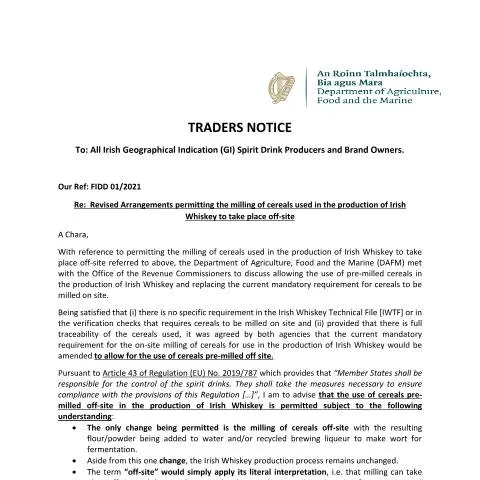
The production of Irish Whiskey is steeped in tradition, yet the industry is not static. One of the latest developments, as outlined in the Geographical Indications - Spirit Drinks traders notice, introduces revised arrangements for milling cereals used in whiskey production. This change is particularly significant for producers and brand owners who are navigating the intricate landscape of Irish whiskey regulations.
The Context Behind the Change
The Department of Agriculture, Food and the Marine (DAFM) collaborated with the Office of the Revenue Commissioners to assess the longstanding requirement for cereals to be milled on-site during the whiskey production process. The revised notice indicates that there are now provisions that allow for milling to occur off-site, provided that specific conditions are met. This development can greatly enhance operational efficiencies for whiskey producers.
Key Points from the Traders Notice
- The only change permitted is the milling of cereals off-site, and their subsequent use in the whiskey production process.
- The milled flour or powder must be combined with water or recycled brewing liqueur to create the wort for fermentation.
- All other processes outlined in the Irish Whiskey Technical File (IWTF) remain unaffected by this change.
- Milling can take place at a different location than brewing, fermentation, and distillation processes, as long as traceability is ensured.
- This amendment took effect immediately on 28 June 2021.
Who Benefits from This Change?
This alteration opens new avenues for various stakeholders within the Irish whiskey ecosystem:
Producers and Brand Owners
For producers, this flexibility can lead to cost savings and operational efficiencies. By sourcing pre-milled cereals, they can streamline their production processes and possibly enhance the quality of the final product through better milling techniques.
Regulatory Agencies
From the standpoint of regulatory bodies, this approach facilitates compliance with EU regulations while still ensuring that the integrity of Irish whiskey is upheld. The change allows for an efficient tracking system to maintain the high standards expected in this industry.
Implementing the Changes: A Step-by-Step Guide
For those involved in the production of Irish whiskey, understanding how to implement these changes effectively is crucial. Here’s how to proceed:
- Assess Current Production Methods: Review your existing processes to identify how off-site milling can be integrated.
- Engage with Suppliers: Identify suppliers that can provide pre-milled cereals while ensuring traceability.
- Maintain Traceability: Establish a reliable system for tracking the source of your milled cereals to comply with the new regulations.
- Adjust Production Plans: Adapt your production schedules and methods to incorporate pre-milled cereals effectively.
- Communicate with Regulatory Bodies: Should you have any queries regarding the implementation, reach out to [email protected] for guidance.
Understanding the Legal Framework
The decision to permit off-site milling is underpinned by the regulatory environment established by the Regulation (EU) No. 2019/787. This regulation places responsibility on member states to ensure compliance with spirit drinks production standards. Here’s how it intertwines with the new arrangements:
Key Regulatory Principles
- The regulation emphasizes the importance of traceability in spirit production.
- Member states must ensure that any amendments to production practices are consistent with established quality measures.
- The Irish Whiskey Technical File remains a critical document outlining production standards that must be adhered to despite the new changes.
Navigating Common Procedures and Queries
The transition to off-site milling may raise several procedural questions among whiskey producers. Here are some of the most pertinent issues and clarifications:
What Changes are Mandatory?
While the notice allows for off-site milling, it is vital to remember that all other production processes must remain consistent with the IWTF guidelines. This includes fermentation and distillation, which must occur on the island of Ireland.
Traceability and Record-Keeping
Producers must maintain rigorous records to document the source of their milled cereals. This includes documentation from suppliers and tracking the movement of materials throughout the production process.
Impact on Quality Control
Quality control measures must be enhanced to account for the change in sourcing practices. Regular testing of ingredients, including pre-milled cereals, is essential to uphold the standards expected in Irish whiskey production.
Limitations of the Revised Arrangements
While the new notice provides flexibility, there are limitations that producers must acknowledge:
Exclusions from the Notice
- The allowance for off-site milling does not imply that all components of whiskey production can occur off-site.
- There is no alteration to the specific processes that must take place on the island as mandated by the IWTF.
- Compliance with existing health and safety regulations must continue to be prioritized.
Potential Risks
Engaging suppliers for pre-milled cereals may introduce risks if not managed correctly. Producers should ensure that they only engage with reputable suppliers that can demonstrate clear traceability and compliance with the relevant standards.
Looking Ahead: The Future of Irish Whiskey Production
The introduction of off-site milling represents a significant shift in the operational landscape for Irish whiskey producers. By streamlining production processes, the industry can continue to innovate while maintaining the heritage and quality that Irish whiskey is renowned for.
As producers embrace these changes, it’s crucial to foster a culture of compliance and quality that will allow Irish whiskey to thrive in an increasingly competitive global market. This revised arrangement not only reflects a responsive and adaptive regulatory framework but also signals an exciting time for the future of Irish whiskey production.
Understanding Geographical Indications for Irish Whiskey
Geographical indications (GIs) are essential components of the food and drinks industry, particularly in the context of Irish whiskey. A GI is a sign used on products that have a specific geographical origin and possess qualities or a reputation that are due to that origin. In Ireland, the term "Irish whiskey" is protected under EU regulations, ensuring that only spirits produced according to specific criteria in designated areas can be labeled as such.
To qualify as Irish whiskey, the spirit must be distilled and matured in Ireland for a minimum of three years in wooden casks. It must also adhere to specific regulations outlined in the Spirits Drinks Regulation (EU) No. 110/2008. This legal framework includes stipulations about the ingredients, distillation processes, and maturation, which are crucial for maintaining the integrity and reputation of Irish whiskey.
When traders engage in the milling of cereals off-site, it is essential they adhere to the notified geographical indications to ensure the quality of the final product remains uncompromised. This involves understanding the sourcing of grains, the milling process, and the consequent impact on the flavor profiles of the whiskey produced. Traders must also ensure compliance with the relevant legislation to protect the integrity of the GI status of Irish whiskey.
The Process of Notification for Off-Site Milling
When traders wish to conduct off-site milling of cereals intended for use in Irish whiskey production, they must submit a formal notification to the relevant authorities, primarily the Department of Agriculture, Food and the Marine (DAFM). This notification is a crucial step in maintaining transparency and accountability in the production chain.
The notification process typically requires detailed information about the milling facility, including its location, the type of equipment used, and the specific cereals being milled. Additionally, traders must demonstrate how this off-site milling will comply with the standards set forth by the GI regulations, ensuring the integrity of the flavor and character of the final product.
Upon receiving the notification, the DAFM may conduct inspections to verify that all processes align with the requisite standards. This involves assessing the conditions under which milling occurs, with particular attention paid to hygiene, traceability, and adherence to the specified timelines in the production process. Any deviations from the notified procedures can lead to significant repercussions, including the potential loss of GI status.
Implications of Non-Compliance and the Importance of Record-Keeping
Failure to comply with the regulations surrounding the geographical indication of Irish whiskey, particularly in the context of off-site milling, can have serious consequences for traders. Non-compliance may lead to legal penalties, including fines or the disqualification of products from being labeled as Irish whiskey. This not only impacts the financial health of businesses involved but also poses a risk to the reputation of Irish whiskey as a whole.
To mitigate such risks, traders are strongly encouraged to maintain precise records of their milling processes. This documentation should include details on the source of the grains, the milling dates, the conditions under which milling took place, and any subsequent handling of the milled cereals. Such meticulous record-keeping not only aids in compliance during inspections but also serves as a valuable tool for maintaining quality assurance throughout the production process.
Furthermore, traders should cultivate strong relationships with their suppliers and milling facilities. Open communication can help ensure that all parties are informed of the regulations and committed to upholding the standards necessary for producing authentic Irish whiskey. By prioritizing compliance and maintaining rigorous documentation, traders can safeguard their products' GI status and contribute to the ongoing success and reputation of Irish whiskey in the global market.