Understanding the Significance of Equine Viral Arteritis Notification
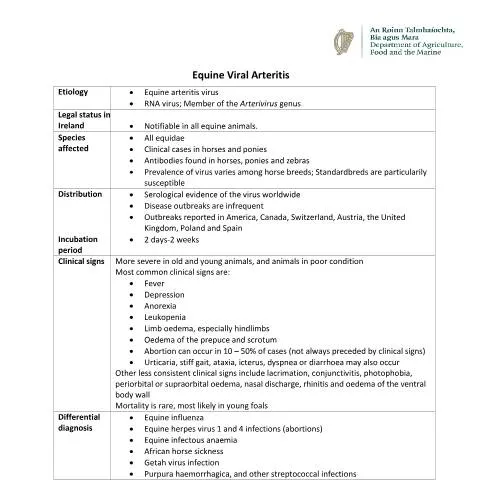
Equine Viral Arteritis (EVA) holds a prominent place in the veterinary landscape of Ireland. This condition, caused by the Equine arteritis virus, poses various risks not only to equine health but also to the broader equine industry. Under current legislation, all cases of EVA are notifiable. This means that prompt action must be taken when a suspected case arises, which underscores the importance of a thorough understanding of the notification requirements. With the potential for serious clinical impacts, it is vital that all stakeholders—breeders, owners, and veterinarians—are familiar with their obligations.The Notification Process: Steps and Stakeholders
The interconnection between veterinary practitioners and the Department of Agriculture, Food and the Marine cannot be overstated regarding EVA notification. Anyone dealing with equines has a role in ensuring the health of the population.Who Must Notify?
Equine owners, trainers, and veterinarians are all responsible for notifying the authorities if they suspect EVA in a horse. Since the virus can infect all equidae, vigilance is necessary. The notification should be made as soon as any potential clinical signs are noted, which include fever, depression, and limb oedema, especially in vulnerable animals.What to Include in Your Notification
When notifying the Department, it is crucial to provide comprehensive information to facilitate efficient follow-up. The notification should typically include:- The location of the affected animal
- The owner’s contact information
- Details of clinical signs observed
- Any relevant history, including vaccination status
The Consequences of Non-Compliance
Neglecting to notify the Department could have severe repercussions not only for the individual equine but also for the entire equestrian community. EVA is a notifiable disease, and failing to comply could lead to penalties or further complications arising from uncontrolled outbreaks.Legal Obligations and Potential Penalties
Under the relevant legislation, non-compliance with notification requirements can lead to legal repercussions. This includes potential fines or sanctions imposed on those who fail to fulfill their obligations. Therefore, the importance of compliance cannot be overstated—both from a legal standpoint and a public health perspective.Impact on Equine Health and Industry
A lack of timely notification could exacerbate potential outbreaks, leading to economic losses for breeders and owners alike. Given that abortion rates associated with EVA can be as high as 50%, the implications for breeding operations can be substantial. Furthermore, the health of the equine population may be compromised, leading to broader community health issues.Completing the Notification Requirements: What You Need to Know
Once the decision to notify has been made, the next step is completing the notification requirements accurately. The process is relatively straightforward but requires attention to detail.Filling Out the Notification Form
While there isn’t a specific form dedicated to EVA notifications like in other diseases, the information gathered typically mirrors the data required for animal health notifications. This can often be submitted through various channels:- Online platforms through MyGovID
- Traditional mail
- In-person at local veterinary offices
Documentation and Additional Information
In addition to basic identification and contact details, if available, any medical records or previous test results should be submitted alongside the notification. This context aids the Department in assessing the situation comprehensively.Submission Channels: Online versus Traditional Methods
With advancements in technology, submitting notifications has become more accessible. However, understanding the nuances of various submission channels can help you choose the best route.Online Submission via MyGovID
Utilizing MyGovID provides a fast and secure method to submit notifications. Given that this platform is designed for Irish citizens to engage with government services, it offers streamlined access and verification.Postal Submission: Pros and Cons
Sending notifications via traditional mail is still an option for those who prefer it. However, it is advisable to consider:- Delays in postal processing which could impede timely notification
- The risk of loss or misdelivery of important documents
In-Person Notifications
For urgent cases or when in doubt, visiting a local veterinary office can facilitate immediate communication with authorities. This allows for real-time guidance and clarifications concerning the notification process.Navigating Potential Issues: Errors and Missing Information
Mistakes happen, and missing information can lead to complications. It’s essential to understand how to handle these situations effectively.What If You Realise You Made a Mistake?
In the event of an error in your notification, it is crucial to contact the Department immediately. Providing corrected information swiftly can prevent misunderstandings or delays in response.Handling Missing Information
If you are unable to provide specific details at the time of notification, state this explicitly in your submission. Be transparent about the missing information and follow up as soon as it becomes available. This open communication promotes trust and expedites the resolution process.Distinguishing EVA from Similar Conditions: A Critical Understanding
Equine Viral Arteritis can often be confused with other diseases affecting equidae, making a clear understanding of its distinguishing features essential.Clinical Signs Comparison
EVA presents with a unique set of clinical signs that differ from other viral infections. For example, while both EVA and equine influenza can cause fever and respiratory issues, EVA is more likely to lead to severe limb oedema and abortions. A table summarizing key differences may prove helpful:| Condition | Common Symptoms | Unique Features |
|---|---|---|
| Equine Viral Arteritis | Fever, depression, limb oedema, abortion | Venereal transmission; abortion can occur without preceding symptoms |
| Equine Influenza | Fever, cough, nasal discharge | Highly contagious; primarily respiratory |
| Equine Herpes Virus | Respiratory issues, abortive cases | Different strains; some are specific to abortion |
Ensuring Compliance: The Importance of Awareness and Education
The complexities surrounding EVA notification can be daunting; however, awareness and education can greatly alleviate these concerns.Resources for Further Learning
The Department of Agriculture, Food and the Marine provides resources and guidelines to help equine owners and veterinarians navigate the notification process. Engaging in local veterinary meetings or seminars can also enhance understanding and preparedness.Building a Network of Support
Engaging with fellow equine stakeholders can foster a community of support and knowledge-sharing. Whether through local equestrian clubs or online forums, building connections helps to create a shared understanding of the importance of EVA awareness and compliance.Monitoring for Future Outbreaks: The Role of Communication
Staying updated on the latest developments regarding EVA will benefit the entire equine community. Effective communication channels between owners, veterinarians, and the Department play a crucial role in disease management.Staying Informed
Regularly checking updates from the Department’s website or subscribing to relevant newsletters can keep you informed about any changes in regulations or emerging threats.Proactive Measures for Disease Prevention
Implementing strict biosecurity measures on your premises helps to limit the risk of outbreaks. Regular vaccinations and health checks can also contribute to a healthier equine population. In conclusion, understanding the notification requirements surrounding Equine Viral Arteritis is an essential responsibility for anyone engaged with equine animals in Ireland. By following the outlined procedures and remaining vigilant, we can protect not only our animals but the entire equine community from potential outbreaks.Understanding Equine Viral Arteritis (EVA)
Equine Viral Arteritis (EVA) is a contagious viral infection caused by the equine arteritis virus (EAV). This infection primarily affects horses, ponies, and donkeys and can lead to varying levels of disease severity. Some horses may show no symptoms, while others can experience fever, swelling, respiratory issues, and even reproductive problems. The virus can be transmitted through respiratory secretions, direct contact, and, significantly, through semen during breeding. EVA is of particular concern in breeding operations due to its potential to cause abortions in infected mares.
The clinical signs of EVA may include fever, lethargy, conjunctivitis, nasal discharge, swelling of the limbs, and in stallions, swelling of the scrotum and testicles. It's important for horse owners and breeders to recognize the signs early, as prompt identification can help prevent the spread of the disease. In some cases, horses may become asymptomatic carriers, shedding the virus intermittently without showing any clinical signs. This poses an ongoing risk for the overall horse population.
The impact of EVA is not just limited to individual horses; it has broader implications for the equine industry in Ireland, particularly in breeding and sales. Outbreaks can lead to significant economic losses, affecting not only breeding operations but also the health status of the entire equine population. As such, proper understanding of EVA, its transmission routes, and effective management practices are crucial for horse owners and breeders in Ireland.
Notification Requirements for Equine Viral Arteritis in Ireland
In Ireland, the notification of suspected or confirmed cases of Equine Viral Arteritis is a critical component of managing and controlling outbreaks. Under the Animal Health and Welfare Act 2013, horse owners, veterinarians, and breeders have a legal obligation to report suspected cases of EVA to the Department of Agriculture, Food and the Marine (DAFM).
The notification process begins with the identification of clinical signs consistent with EVA. If a horse is suspected to be infected, the observing veterinarian must complete a notification form detailing the clinical signs and relevant information about the horse, such as its identification details and history of travel or contact with other horses. This form must be submitted to the DAFM as soon as possible. Timely reporting is essential to minimize the risk of further transmission and ensure that appropriate control measures are implemented.
Upon receiving a notification, the DAFM may launch an investigation. This typically involves testing samples from the suspected horse, including blood and respiratory secretions, to confirm the presence of EAV. If the virus is confirmed, additional measures may be taken, including quarantining affected premises, tracing contacts, and potentially vaccinating at-risk horses to control the outbreak. It is also vital for horse owners to keep comprehensive health records and vaccination histories to facilitate the reporting process.
Preventive Measures and Vaccination Strategies Against EVA
Vaccination is a significant strategy in preventing Equine Viral Arteritis and maintaining the health of the equine population in Ireland. The vaccine available for EVA provides solid protection against the virus and is particularly recommended for stallions and mares involved in breeding. Vaccination not only helps protect individual horses but also contributes to herd immunity, reducing the risk of outbreaks in the wider equine community.
Before vaccinating, horse owners should consult with their veterinarian to assess the specific risks associated with EVA in their area and the horses' particular circumstances. The timing of vaccination is also crucial; it should ideally be administered before the breeding season to ensure maximum immunity during the period of highest risk.
In addition to vaccination, horse owners should implement biosecurity measures to mitigate the risk of EVA transmission. This includes practices such as isolating new arrivals, minimizing contact between different groups of horses, and maintaining cleanliness in stables and surrounding areas. Regular health checks and monitoring for symptoms of EVA are also essential components of an effective prevention strategy. By combining vaccination with sound biosecurity practices, horse owners and breeders can significantly reduce the risk of Equine Viral Arteritis and ensure the health and welfare of their horses.