The Importance of Understanding the 'Digital Age of Consent'
In the context of Ireland's evolving digital landscape, the concept of a 'digital age of consent' has emerged as a pivotal topic of discussion. As children grow up in an increasingly online world, the question arises: at what age should they be allowed to provide consent for their personal data to be processed? This question is not merely academic; it has far-reaching implications for the rights, protection, and overall well-being of children in the digital arena.
Who Initiates the Consultation?
The Department of Justice, Home Affairs and Migration is leading the consultation process to gather evidence and insights on data protection safeguards specifically for children. Stakeholders, ranging from parents to educators and child protection advocates, are invited to participate in the discussion. Their contributions aim to shape policies that safeguard the digital rights of minors.
Unpacking the Consultation Document
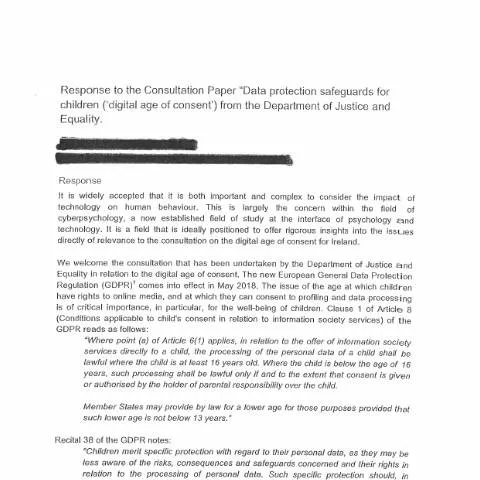
The consultation document titled "Data Protection Safeguards for Children" provides a framework for understanding the complexities surrounding the digital age of consent. It highlights the necessity of finding a balance between protecting children’s data and allowing them the autonomy to interact with the digital world. This document serves as an essential tool for gathering diverse opinions and considerations, which will ultimately inform legislative decisions.
The Role of Various Stakeholders
- Parents and Guardians: They provide essential context regarding their children’s digital interactions and their capacity to understand consent.
- Educators: They can offer insights into how children comprehend digital risks and the educational measures needed to empower them.
- Child Advocates: These organizations help articulate the rights of children and the implications of potential policies.
Submission Channels: Navigating the Process
Once stakeholders have prepared their responses to the consultation document, they can submit their feedback through various channels. Understanding these avenues is vital for ensuring that their voices are heard.
Online Submission
For those comfortable with digital interfaces, submitting feedback online is the most straightforward method. The Department of Justice provides an online portal for this purpose. Submissions made via this channel can be tracked and are often acknowledged promptly.
Paper Submission
For individuals or organizations preferring traditional methods, feedback can be submitted via post. This method may take longer for acknowledgment but is essential for those who may not have reliable internet access.
In-Person Consultations
In certain cases, the Department may hold public meetings or focus groups, providing a chance for stakeholders to discuss their perspectives directly. These engagements are invaluable for fostering a richer dialogue.
Evaluating the Processing of Responses
Once feedback is collected, the Department undertakes a meticulous evaluation process. This involves categorizing responses, identifying key themes, and assessing the impact of the information gathered. The goal is to ensure that all perspectives are considered in the final recommendations.
Tracking Your Submission
Transparency is crucial in this process. Stakeholders can request updates on the status of their submissions. Tracking mechanisms, whether online or through direct communication with the Department, help maintain engagement throughout the consultation period.
Understanding the Legislative Context
The digital age of consent is intricately linked to broader legislative frameworks, particularly the General Data Protection Regulation (GDPR). Article 8 of the GDPR outlines the parameters for processing personal data of minors, establishing a baseline for consent across member states.
Comparison with Other Regions
| Region | Minimum Age for Consent | Notes |
|---|---|---|
| EU (GDPR) | 16 years | Member States can lower this to 13. |
| USA (COPPA) | 13 years | Enforces parental consent for children under this age. |
| Germany | 14 years | Protection laws differ significantly from other nations. |
Addressing Challenges and Implications
As the consultation progresses, various challenges will emerge. One notable concern is finding an appropriate balance between safeguarding children’s interests and respecting their autonomy. For instance, if the age of consent is set too high, it may inadvertently restrict children's engagement with digital platforms that are essential for their development.
Immediate Consequences of Age Decisions
Setting an optimal digital age of consent has profound implications. A lower age might empower children, enabling them to make choices about their data, while a higher age could protect them from potential exploitation but may also limit their access to beneficial online resources.
Confronting Errors and Omissions
During the submission process, stakeholders may face challenges such as incomplete responses or misunderstandings about the requirements. It is crucial to address these issues proactively.
What to Do in Case of Mistakes
If a stakeholder realizes they have submitted an incomplete or incorrect response, they should contact the Department immediately. Prompt communication can facilitate amendments or resubmissions, ensuring that their views are accurately represented.
Practical Guidance for Participants
Engaging in this consultation means understanding not only the content of the document but also the potential outcomes and implications for stakeholders. This can be particularly beneficial for parents and guardians who are navigating their children's digital interactions.
Understanding Your Rights and Obligations
Participating in the consultation grants stakeholders certain rights. However, it also imposes obligations to provide accurate and thoughtful feedback. Stakeholders should:
- Ensure their feedback is well-informed and constructive.
- Be aware of the implications of their submissions.
- Consider how proposed policies might affect not only their own children but also the broader community.
Exploring the Form's Rubrics: A Detailed Examination
The consultation document includes various sections that require careful attention when submitting feedback. Each rubric is designed to capture specific aspects of the stakeholder experience.
Key Sections to Focus On
- Personal Information: Ensure accuracy in providing names, contacts, and affiliations.
- Feedback Sections: These sections typically prompt responses to specific questions. Stakeholders should provide detailed, relevant examples to support their views.
- Concluding Remarks: This is an opportunity to summarize your thoughts and reinforce your main points.
Next Steps After Submission
Once feedback has been submitted, stakeholders may wonder about the subsequent steps. The Department typically reviews all responses and consolidates them into a report that informs future policy decisions.
Anticipating Outcomes
While it’s impossible to predict the exact outcomes of the consultation, participants can expect to see adjustments in policy proposals that reflect the input received. The collective feedback will play a crucial role in shaping the digital rights landscape for children in Ireland.
A Final Note on Engagement
The collaboration between various stakeholders in this consultation is vital. As the digital landscape continues to evolve, ongoing dialogue and engagement will be necessary to ensure that children’s rights and safety are prioritized.
Understanding the Digital Age of Consent: Implications for Children and Parents
The concept of a digital age of consent is integral to protecting children's privacy in an increasingly digital world. In Ireland, the General Data Protection Regulation (GDPR) mandates that children under 16 must seek parental consent before their personal data is processed. However, this raises questions about the responsibilities of parents and guardians, as well as the platforms that cater to young users.
Parents are often confronted with the challenge of navigating the digital landscape, where children are likely to engage with numerous online services. Understanding the implications of the digital age of consent requires parents to educate themselves about their rights and obligations regarding their children's online activities. This includes a thorough understanding of what data is being collected, how it is used, and the potential risks involved.
Additionally, advocates argue for a more unified approach to data protection laws concerning minors, emphasizing that online platforms should have clearer guidelines and tools for verifying parental consent. The importance of transparency in data handling cannot be overstated, as it fosters trust between service providers and families.
In light of these considerations, authorities, including the Data Protection Commission (DPC), are tasked with assessing how effectively the current framework serves to protect children’s online privacy. It is vital to involve children in discussions about their rights and encourage their understanding of digital literacy, empowering them to navigate the online space safely.
The Role of Schools in Promoting Digital Literacy and Online Safety
Educational institutions are pivotal in shaping children's understanding of digital citizenship. Schools in Ireland are increasingly recognizing the importance of integrating digital literacy into their curricula. This involves teaching students not only how to use technology but also the ethical implications of their online actions, which aligns with the principles of data protection safeguards.
By incorporating lessons about the digital age of consent and privacy rights into subjects like Social, Personal, and Health Education (SPHE), schools can equip students with the knowledge needed to make informed decisions in their digital interactions. For instance, workshops can be organized to demonstrate how personal data is collected and used, fostering a critical mindset about the apps and platforms they engage with.
Furthermore, collaboration between schools and parents can enhance the effectiveness of these initiatives. Parent-teacher meetings can serve as forums to discuss digital safety, where resources and strategies can be shared to ensure that families are on the same page regarding their children's online presence. In this manner, schools can act as a bridge to foster discussions that extend beyond the classroom and into the home, creating a well-informed community that prioritizes the safety of young digital users.
Future Trends in Data Protection for Minors: What Lies Ahead?
The landscape of data protection is constantly evolving, particularly in light of rapid technological advancements. As Ireland continues to adapt to these changes, several trends are emerging that could reshape how the digital age of consent is implemented and enforced.
One significant trend is the increasing use of artificial intelligence (AI) and machine learning in online platforms, which raises new concerns about data handling and privacy. The ability of these technologies to analyze user behavior could lead to more personalized experiences for children, but it also raises questions about consent and the potential for exploitation of their data. Future regulations might need to address how AI systems interact with minors, establishing stricter guidelines on what constitutes valid consent in these contexts.
Moreover, there is a growing advocacy for enhancing transparency requirements. Stakeholders, including tech companies and regulatory bodies, may soon face pressure to provide clearer data usage policies, specifically catered to children and their guardians. This could manifest as simplified terms of service agreements that are easier for parents and children to understand, ensuring informed consent is genuinely informed.
Finally, with the rise of global internet usage, international cooperation on data protection for minors is crucial. Ireland must stay aligned with broader EU directives while considering the unique aspects of its legal framework. This collaborative approach will help in establishing consistent standards that protect children's rights across borders, ensuring that regardless of where a child accesses online services, their data is safeguarded effectively.