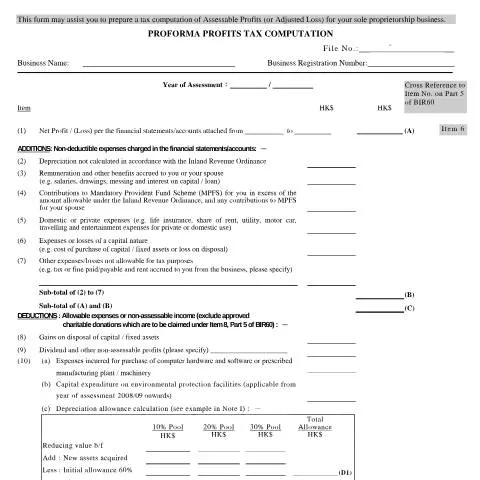
Understanding the Role of the Proforma Profits Tax Computation (IR 957A)
For sole proprietors operating in Hong Kong, navigating the tax landscape can be particularly challenging, especially when it comes to calculating profits tax obligations. The Proforma Profits Tax Computation (IR 957A) serves a vital role in this process, assisting business owners in determining their assessable profits or adjusted losses. This document is not just a formality; it is pivotal in ensuring compliance with the Profits Tax Ordinance and avoiding potential penalties.
Who Needs to Submit the IR 957A?
This form is specifically designed for sole proprietorships in Hong Kong. Sole proprietors must use the IR 957A if they are required to file a profits tax return. It is essential to recognize the nuances of what constitutes a sole proprietorship and the implications for tax obligations. Here’s a closer look:
- Sole Proprietor Definition: An individual who runs a business on their own, assuming all profits and liabilities.
- Relevant Situations: Individuals trading in goods, offering services, or engaging in any form of business activity.
The IR 957A is crucial for these individuals to report their income accurately and ensure that they are paying the correct amount of tax.
Decoding the Structure: What’s Inside the Form?
The Proforma Profits Tax Computation consists of various sections designed to capture essential financial information. Understanding the layout can streamline the completion process:
- Net Profit (Loss): The starting point for calculations, derived from financial statements.
- Additions and Deductions: Specific non-deductible expenses and allowable deductions must be calculated to arrive at assessable profits.
- Depreciation Allowances: A detailed breakdown is provided for claiming allowances on machinery, plant, or other fixed assets.
This structure aids sole proprietors in assembling financial data systematically, ensuring accurate tax computation.
Preparation Essentials: Gathering Documentation
Completing the IR 957A effectively requires meticulous preparation. Business owners should gather relevant documentation to support their claims:
- Financial Statements: These should include profit and loss accounts, balance sheets, and any supplementary notes.
- Records of Non-Deductible Expenses: Documentation for items like personal expenditures or excess contributions to retirement schemes must be compiled.
- Deductions Evidence: Proof of allowable expenses, such as receipts and invoices, should also be organized.
By having these documents ready, sole proprietors can fill out the form with greater accuracy and confidence.
Navigating the Submission Channels: Online, Paper, or In-Person?
The Hong Kong Inland Revenue Department (IRD) offers multiple submission channels for the IR 957A, catering to the preferences of different business owners:
| Submission Method | Advantages | Considerations |
|---|---|---|
| Online Submission | Convenient and quicker processing times; less paperwork. | Requires a valid e-Tax account and internet access. |
| Paper Submission | Traditional method, suitable for those less comfortable with technology. | Longer processing times and potential for postal delays. |
| In-Person Submission | Immediate confirmation of receipt; opportunity for queries. | Requires travel and may involve waiting in line. |
Choosing the right method can significantly affect the efficiency of the submission process.
Key Dates: The Calendar of Tax Obligations
Understanding the timeline surrounding the IR 957A is crucial for compliance. The following key dates are essential:
- Assessment Year: The tax year runs from 1 April to 31 March of the following year.
- Filing Deadline: The IRD typically sets a deadline for submitting the IR 957A within one month of issuing a tax return notice.
Missing these deadlines can result in penalties or interest on unpaid taxes, making it imperative for sole proprietors to mark their calendars.
Identifying Your Situation: Unique Profiles and Exceptions
Different sole proprietors may have unique circumstances affecting their tax obligations. Here are a few profiles and exceptions to consider:
- New Business Ventures: New businesses may have different rules regarding the reduction of taxable income in initial years.
- Non-Resident Business Owners: Non-resident proprietors must understand local tax obligations and potential double taxation treaties.
- Seasonal Businesses: Those operating seasonal ventures may need to demonstrate income fluctuations accurately.
Understanding these profiles can help sole proprietors navigate their specific obligations effectively.
Tracking the Submission: Following Up with the IRD
After submitting the IR 957A, it’s essential to monitor the processing of your return. Here are some steps to ensure your submission is being handled:
- Receive Acknowledgment: If submitting online, ensure you obtain a confirmation receipt. For paper submissions, consider registered mail for tracking.
- Check Processing Status: Business owners can contact the IRD directly or check through their online services for status updates.
- Respond to Queries: The IRD may reach out for clarification or additional documentation. Timely responses are crucial to avoid delays.
Proactive management of the submission process can foster a smoother experience with the tax authorities.
Comparing the IR 957A with Related Forms
It’s easy to confuse the IR 957A with other tax forms issued by the IRD. Understanding the distinctions can streamline your tax filing:
| Form | Used For | Key Differences |
|---|---|---|
| IR 957A | Profits Tax Computation for sole proprietors. | Specifically tailored for sole proprietorships, detailing profit calculations. |
| IR 56B | Employer’s Return of Remuneration and Pensions. | Focuses on employee remuneration rather than business profits. |
| IR 4 | Profits Tax Return for corporations. | Covers corporate tax obligations and includes different allowances and deductions. |
Understanding these differences can prevent errors and facilitate smoother compliance with tax regulations.
The Aftermath: What Happens Post-Submission?
Once the IR 957A is submitted, several outcomes are possible. It’s beneficial to know what to expect:
- Assessment Notice: The IRD will issue an assessment based on the submitted information, which will indicate the tax amount owed or any potential refunds.
- Audit Possibilities: In some cases, the IRD may select your return for audit, which could require additional documentation and verification.
- Appeals Process: If a sole proprietor disagrees with the assessment, they have the right to appeal through the IRD’s processes.
Understanding these outcomes can prepare solo entrepreneurs for the next steps in their tax journey.
Conclusion: The Importance of Accuracy and Compliance
Completing the Proforma Profits Tax Computation (IR 957A) is not merely a procedural step; it is an essential task that can significantly impact a sole proprietor’s financial responsibilities. The accuracy in filling out this form is paramount, as it directly influences tax obligations and compliance standing with the IRD. By taking the time to understand its role, structure, and submission process, business owners can ensure they meet their tax responsibilities effectively.
Overall, being meticulous and informed about the Proforma Profits Tax Computation process can empower sole proprietors to navigate the complexities of Hong Kong's tax landscape successfully.
Understanding the Proforma Profits Tax Computation for Sole Proprietorships
In Hong Kong, the Proforma Profits Tax Computation is a critical document for sole proprietors aiming to comply with the Profits Tax regulations as stipulated under the Inland Revenue Ordinance. Unlike corporations, sole proprietorships face unique challenges and responsibilities regarding tax computation, primarily because the profits of the business are treated as the personal income of the proprietor.
The computation process for sole proprietorships begins with the need to maintain accurate records of all business income and allowable expenses. This includes revenue generated from sales, service income, and other business-related earnings. Moreover, expenses that are wholly and exclusively incurred in the course of business operations can be deducted. It’s essential to keep all receipts and documentation as the tax authorities may ask for these during an audit. Common deductible expenses include rent, salaries, office supplies, and utility costs.
The calculation of the total assessable profits is performed on the basis of the accounting period, which generally runs from 1 April to 31 March. As a proprietor, it is vital to ensure that the profits are reported for the correct tax year. Once the profits have been computed, the applicable profits tax rate, which is generally 16.5% for corporations, is different for unincorporated businesses, with the first HKD 2 million of profits taxed at 8.25% in the 2023/2024 year.
To facilitate the preparation of the Proforma Profits Tax Computation, the Inland Revenue Department (IRD) provides specific guidelines and forms, including the IR56B, which is relevant for employers reporting salaries and payments made to employees. Understanding how to navigate these forms and accurately report income and expenses is paramount for compliance and avoiding penalties.
Common Challenges and Considerations for Sole Proprietors
Sole proprietorships in Hong Kong often encounter several challenges when it comes to filing their Proforma Profits Tax Computation. One of the most significant hurdles is the accurate categorization of income and expenses. Proprietors may sometimes blur the lines between personal and business expenses, leading to discrepancies in their tax filings. It’s advisable to establish separate banking and accounting systems for personal and business finances to mitigate this risk.
Additionally, the absence of a standardized accounting system can lead to difficulties in tracking the business's financial performance. Many sole proprietors underestimate the importance of maintaining a structured bookkeeping system. Utilizing accounting software can significantly simplify this process, as it can automate calculations and generate reports that align with the IRD requirements.
Another concern for sole proprietorships is the deadline for submission of the Profits Tax return. The IRD typically issues tax returns in April, and the completed return must be submitted by the specified deadline, traditionally within one month. Missing this deadline can result in penalties, including late filing penalties that can escalate quickly. To avoid this, it is wise for sole proprietors to set reminders and prepare their documentation well in advance.
Besides, sole proprietors might consider seeking professional advice when tackling their tax computations, especially when it comes to more complex issues such as capital allowances and potential deductions. Engaging a tax consultant or accountant familiar with the specifics of the Hong Kong tax regime can provide insights that enhance compliance and potentially reduce tax liabilities.
Leveraging E-Services for Proforma Profits Tax Computation
The Hong Kong Inland Revenue Department has increasingly embraced e-services, streamlining the process for sole proprietors to file their Proforma Profits Tax Computation. The use of the eTax platform allows users to prepare their tax returns online, providing a more efficient method to ensure compliance and improve accuracy in reporting. The eTax service guides users through the necessary steps and automatically calculates tax liabilities based on the information provided.
Moreover, eTax offers the convenience of accessing prior year records, which can be incredibly beneficial for sole proprietors preparing their current year's computation. By reviewing previous submissions, they can ensure consistency and accuracy in reporting, which can be critical in defending against any potential inquiries from the IRD.
If you encounter difficulties navigating the eTax system, various resources, including tutorials and help sections, are available on the IRD website. Additionally, the option to submit queries directly to the IRD via their online platform can alleviate concerns and provide clarity on specific aspects of the computation process.
Furthermore, it’s essential for sole proprietors to stay updated with any changes to tax legislation or guidelines issued by the IRD, as these can impact how the Proforma Profits Tax Computation should be approached. Subscribing to alerts from the IRD or participating in workshops conducted by tax professionals can provide valuable insights and keep you informed of your responsibilities.