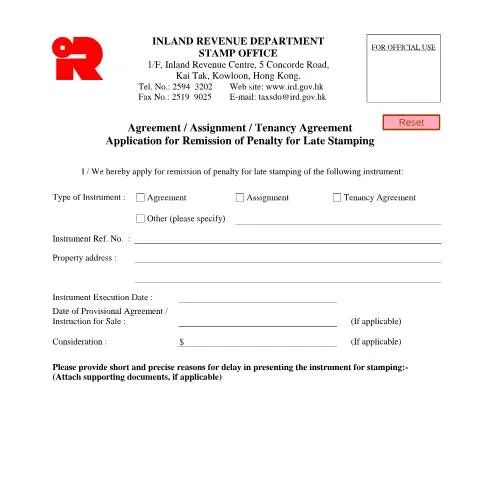
Navigating the IRSD 127(E): A Guide to Remission Applications
In the bustling financial landscape of Hong Kong, timely compliance with administrative tasks is essential. The Application for Remission of Penalty for Late Stamping, known by its reference code IRSD 127(E), serves as a vital tool for those who have unfortunately missed the deadline for stamping agreements or tenancy contracts. This document is a lifeline, allowing applicants to explain their unique situations and seek relief from penalties that could otherwise impose a significant financial burden.
Your Circumstances: Who Should Consider This Form?
The IRSD 127(E) is not a one-size-fits-all solution; it caters to a diverse range of applicants who find themselves in various circumstances. Understanding the profiles of potential applicants is crucial:
- Individual Tenants: Those who have entered into tenancy agreements and failed to submit their documents within the stipulated time.
- Property Buyers: Homebuyers who have signed agreements for property purchases but encountered delays.
- Corporations: Companies or legal entities that may have missed deadlines due to administrative oversights or changes in management.
- Legal Representatives: Professionals acting on behalf of clients whose documents require stamping.
Each profile comes with its own set of challenges and considerations, making the understanding of this form and its usage critical for ensuring compliance and seeking remission effectively.
The Context Behind the IRSD 127(E)
The backdrop to the IRSD 127(E) is found within the framework of the Stamp Duty Ordinance. This legislation outlines the need for stamping various agreements and transactions related to property. Failing to stamp these documents on time can lead to penalties, which can accumulate quickly, creating financial stress for the parties involved.
A historical overview reveals the evolution of the stamp duty system in Hong Kong, where the government has been keen to maintain administrative order and ensure revenue collection. The Inland Revenue Department (IRD) provides specific guidelines for late submissions, recognizing that not all delays are equal and that genuine circumstances can lead to missed deadlines.
Understanding the Form: Breakdown of Sections
The structure of the IRSD 127(E) is designed to capture crucial information succinctly. Here’s a detailed look at the key sections:
- Type of Instrument: Applicants must specify whether the document relates to an agreement, assignment, or tenancy agreement. This classification is critical for the IRD to process the remission correctly.
- Instrument Reference No: This unique identifier is essential for tracking the associated documents. Incomplete or incorrect entries can delay processing.
- Property Address: Accurate property details must be provided, as they relate directly to the nature of the agreement.
- Execution Date: Documenting when the agreement was executed is vital for determining the timing of the potential penalty.
- Consideration: This section details the financial aspect of the agreement, which is necessary for calculating any associated stamp duties.
Each segment of the form presents unique challenges and opportunities for error. Applicants must ensure they understand the requirements for each area to avoid unnecessary complications.
Filling Out the Form: Tips for Success
As with any official document, accuracy is paramount. Here are some practical tips to guide applicants through the completion of the IRSD 127(E):
- Clear Handwriting: Ensuring that all entries are legible can prevent misinterpretation by IRD officials.
- Document Attachments: If applicable, include supporting documents that substantiate the reasons for the delay in stamping. This can significantly bolster an application.
- Check for Completeness: Before submission, evaluate the form to ensure all fields are filled correctly.
- Retain Copies: Keeping a copy of the completed form and any attachments can be beneficial for future reference.
Submitting Your Application: Steps to Follow
The submission process for the IRSD 127(E) requires careful attention to detail to ensure a smooth experience:
- Review Your Application: Conduct a thorough review of the completed form to minimize the chances of errors.
- Choose Your Submission Method: Applications can be submitted in person at the IRD's offices or through mail. Consider the method that is most convenient and reliable.
- Follow Up: After submission, keep an eye on your application status. Follow-ups can be crucial for ensuring that your request is processed promptly.
The Aftermath: What Happens Next?
Upon submission of the IRSD 127(E), applicants await a decision from the IRD. Understanding the potential outcomes is essential:
- Approval: If the application is approved, the penalty may be waived, relieving the applicant of the financial burden.
- Rejection: In cases where the application is denied, applicants will receive an explanation, allowing them to understand the reasons and possibly reapply with additional information.
- Appeal Process: If dissatisfied with the outcome, applicants have the right to appeal. Familiarizing oneself with this process can provide a pathway for recourse.
Common Complications and How to Avoid Them
As with any administrative process, applicants may encounter complications while dealing with the IRSD 127(E). Below are insights into some common challenges and strategies for addressing them:
| Challenge | Solution |
|---|---|
| Incorrect Information | Double-check all entries against original documents before submission. |
| Missing Supporting Documents | Prepare all necessary attachments ahead of time to ensure a complete application. |
| Delays in Processing | Regularly check with the IRD for updates and ensure there are no outstanding requirements. |
| Miscommunication with the IRD | Maintain a record of all correspondence for clarity and follow-up. |
Encouraging Compliance Through Proactivity
Filing the IRSD 127(E) may seem daunting, but it serves a crucial purpose in maintaining compliance with Hong Kong’s stringent administrative landscape. By being proactive—whether through timely submissions, thorough preparation, or understanding the nuances of the form—individuals and corporations can navigate the complexities of stamp duty regulations effectively.
In conclusion, the Application for Remission of Penalty for Late Stamping is more than just a form; it represents an opportunity for relief from financial penalties tied to delays in compliance. By understanding its purpose, filling it out correctly, and knowing what to expect after submission, applicants can effectively manage their responsibilities and avoid unnecessary complications.
Understanding the Penalty System for Late Stamping in Hong Kong
In Hong Kong, the Stamp Duty Ordinance governs the imposition of penalties for the late stamping of documents such as agreements, assignments, and tenancy agreements. Firstly, it is essential to grasp the rationale behind this penalty system. The primary intention is to encourage timely compliance with the stamping requirement, which is crucial for the proper collection of Stamp Duty revenue by the government.
The penalties for late stamping can be categorized into two main aspects: the late stamping fee and interest accrued on the outstanding duty. It is important to note that the exact penalty may vary based on how late the document is stamped after the initial due date. For instance, the penalty can escalate significantly if the document remains unstamped for an extended period. Generally, documents should be stamped within 30 days from the date of execution to avoid severe penalties.
When assessing whether to apply for remission of penalty, applicants should carefully review their circumstances surrounding the delay. The Inland Revenue Department (IRD) may consider factors such as the reasons for the delay, the applicant's previous compliance history, and whether the applicant took reasonable steps to ensure timely stamping. Each case is evaluated on its own merits, so providing substantial documentation to support your application is vital.
Fill in your form directly online
No printing: type your details into the boxes of the official form, tick, then download the PDF ready to send.
- 1Type into the form boxes
- 2Tick in one click
- 3Save and download the PDF
Steps for Filing an Application for Remission of Penalty
Filing an application for remission of penalty for late stamping involves a precise procedure that must be followed to enhance the likelihood of a favorable outcome. Here are the steps to effectively navigate the application process:
- Gather Relevant Documentation: Before initiating your application, compile all relevant documents supporting your case. This may include the original agreement or tenancy document, correspondence related to the delay, and any other pertinent information that illustrates your reasons for late stamping.
- Complete the Application Form: The application for remission should be made in writing. While there isn't a specified form for this application, a well-structured letter addressed to the Commissioner of Inland Revenue can be effective. Include your particulars, such as full name, contact information, and the details of the document in question.
- State the Grounds for Remission: Clearly articulate the reasons behind the late stamping. Whether it was due to unforeseen circumstances, negotiation delays, or other genuine factors, ensure that your explanation is concise and supported by evidence. Emphasizing your previous compliance record may also bolster your case.
- Submit Your Application: Send your application letter along with the necessary documentation to the IRD’s Stamp Duty Office. Ensure that you keep copies of everything submitted for your records.
- Await Response: After submission, you will need to await the IRD's response. Generally, the IRD will process applications within a reasonable timeframe, though it is advisable to follow up if you do not receive feedback within a few weeks.
Appeals Process in Case of Rejection
Should your application for remission be rejected, don’t despair. Hong Kong's administrative framework provides an avenue for appeal, though it is crucial to understand the steps involved in this process.
The first step is to formally request a review of the decision. This can be done by writing to the IRD outlining your reasons for contesting the rejection. Include additional documentation or evidence that may support your case and clarify any misunderstandings that may have resulted in the initial decision.
If the IRD upholds its decision, you have the right to appeal to the Board of Review (Inland Revenue Ordinance). This independent body reviews cases related to taxation and administrative decisions made by the IRD. To lodge an appeal, you must submit a formal notice within a stipulated timeframe, typically within 30 days from the date of the decision being appealed.
The appeals process involves a hearing where both you and the IRD will present your arguments. It is advisable to seek legal assistance during this process, especially if the case involves complex legal interpretations of the law. After the hearing, the Board will issue a decision, which may either uphold or overturn the IRD's original ruling.
Understanding this appeals process is vital, as it provides an opportunity for taxpayers to ensure that their circumstances are properly considered and that they receive a fair evaluation of their request for remission.