Understanding the Estate Duty Affidavit: A Comprehensive Guide
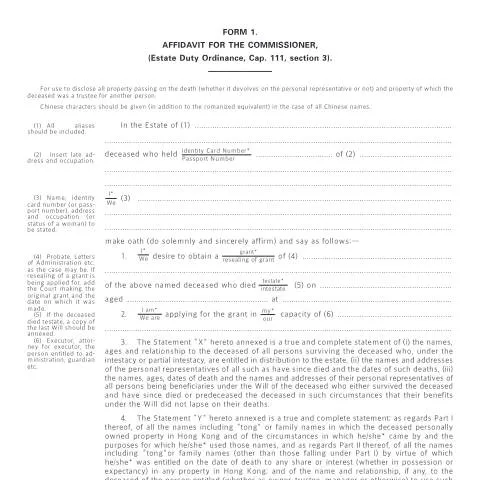
When navigating the intricate waters of estate management in Hong Kong, the Affidavit for the Commissioner (IRED 1) plays a pivotal role. This document is not merely a formality; it is a fundamental component in determining the estate duty due on the deceased's property. An understanding of this affidavit is crucial for anyone involved in estate administration, whether as a personal representative or an interested party.
Historical Context of the Estate Duty Framework
The concept of estate duty in Hong Kong dates back to the early 20th century, reflecting the region's colonial legacy. The Estate Duty Ordinance was enacted to impose a tax on the property of individuals who pass away. The Affidavit for the Commissioner is a formal declaration required under this ordinance, ensuring that all pertinent information related to the deceased’s estate is disclosed accurately.
Changes in legislation have shaped the current structure of estate duty, particularly in response to evolving societal norms and economic conditions. The Basic Law of the Hong Kong Special Administrative Region provides the legal framework for such taxation, highlighting the importance of transparency and accountability in estate matters.
The Stakes Involved: Importance of the Affidavit
Completing the Affidavit for the Commissioner is not just an administrative task; it carries significant implications for all parties involved. The affidavit serves multiple crucial purposes:
- Legal Compliance: Failing to submit the affidavit or submitting incorrect information can result in penalties or delays in the distribution of the estate.
- Taxation Clarity: The affidavit provides the necessary details for calculating the estate duty, ensuring that the correct amount is assessed based on the assets left behind.
- Beneficiary Rights: Accurate disclosures help in establishing the rights of beneficiaries, ultimately facilitating a smoother inheritance process.
Navigating the Form: Detailed Breakdown of the Affidavit
The affidavit comprises multiple sections that require careful attention. Each section addresses specific aspects of the deceased's estate and must be filled out with diligence. Below is a detailed examination of the key sections of the form:
| Section | Description | Common Pitfalls |
|---|---|---|
| Identifying the Deceased | Provide the deceased's full name, identification number, and other relevant details. | Omitting aliases or incorrect identification numbers can lead to legal complications. |
| Grant Application | State the type of grant being applied for, whether it's a grant of representation or resealing. | Misunderstanding the type of grant can result in the wrong application being submitted. |
| Property Disclosure | Detail all properties owned by the deceased at the time of death. | Failure to include all assets or misreporting their values can lead to tax penalties. |
| Transfer of Assets | Outline any gifts made by the deceased within three years prior to death. | Overlooking transfers made for less than full consideration can complicate duty calculations. |
Who Submits the Affidavit? Parties Involved
Typically, the responsibility for submitting the affidavit falls to the personal representative of the deceased’s estate, often the executor named in a will or administrator appointed by the court. However, the following scenarios can complicate matters:
- Multiple Executors: In cases where there are multiple executors, agreement among them is essential before submission.
- Foreign Nationals: If the deceased was not a Hong Kong resident, additional documentation may be required to clarify their estate's status.
- Minors and Dependents: Special considerations must be made for minors or dependents named in the will as beneficiaries.
The Timeline: From Submission to Resolution
The process timeline for handling the affidavit involves several key stages:
- Preparation: Gather all necessary documents and information concerning the deceased's estate.
- Submission: Complete and submit the affidavit to the Estate Duty Office within the stipulated timeframe, typically within six months of the date of death.
- Review: The Estate Duty Office will review the affidavit, which may involve inquiries for clarification.
- Assessment: Once approved, an assessment of the estate duty will be conducted, leading to a tax determination.
- Finalization: Payment of the estate duty must be made, after which the estate can be distributed according to the will or applicable laws.
Unique Considerations: Complex Scenarios
While the general process may seem straightforward, specific circumstances often require additional attention:
- Deceased with Foreign Assets: Additional disclosures and possibly different jurisdictions may come into play, complicating estate duty calculations.
- Disputes Among Beneficiaries: If disagreements arise, it may delay the affidavit's acceptance and the subsequent distribution of the estate.
- Claims Against the Estate: Outstanding debts or claims can influence the estate’s net value and necessitate thorough documentation.
Electronic Submission: Embracing Digital Services
In keeping with modern technological practices, the Estate Duty Office encourages the use of e-services for affidavit submission. Electronic filing provides several advantages:
- Efficiency: Faster processing times and streamlined communication with the Estate Duty Office.
- Accessibility: Allows for easier tracking of the status of the submitted affidavit.
- Security: Enhanced data security measures are typically in place for online submissions.
However, paper submissions remain an option for those preferring traditional methods, albeit with longer processing times.
Final Thoughts on the Affidavit for the Commissioner
Completing the Affidavit for the Commissioner is a significant step in estate administration, carrying legal and financial ramifications. Awareness and understanding of the requirements, coupled with meticulous attention to detail, can mitigate risks and foster a smoother process for all stakeholders involved. As such, ensuring compliance with all statutory obligations under the Estate Duty Ordinance is paramount for the successful resolution of any estate.
As you engage in this process, remember that professional legal advice is often invaluable, especially in complex scenarios. Seeking expert guidance can assist in navigating the nuances of estate duty law and ensure that all parties fulfill their roles appropriately.
Understanding the Affidavit Process in Hong Kong
In Hong Kong, an affidavit is a sworn statement made in writing, used in various legal contexts, including court proceedings and administrative matters. The process of creating and submitting an affidavit is overseen by the Commissioner for Oaths, who is authorized to administer oaths and affirmations. Understanding the structure and requirements for an affidavit is crucial for individuals and entities engaging with the legal system.
Typically, an affidavit must clearly state the facts relevant to the issue at hand. It should be structured in a logical manner, often beginning with an introduction that identifies the deponent (the person making the affidavit) and their qualifications or reasons for making the statement. Each fact should be laid out in numbered paragraphs to facilitate easy reference, and any supporting documentation should be referred to and attached as exhibits.
Fill in your form directly online
No printing: type your details into the boxes of the official form, tick, then download the PDF ready to send.
- 1Type into the form boxes
- 2Tick in one click
- 3Save and download the PDF
It’s important to note that the affidavit must be signed in the presence of the Commissioner for Oaths, who will then endorse the document with an official seal. This seal confirms that the affidavit has been made under oath and is legally binding. Failure to adhere to these requirements can result in the affidavit being deemed invalid, which could significantly impact the underlying legal matter.
Common Scenarios Requiring an Affidavit in Hong Kong
Affidavits can be necessary in a variety of situations across different legal contexts. Below are some common scenarios where individuals or businesses may be required to produce an affidavit:
- Court Proceedings: In civil litigation, affidavits are often submitted as evidence to support motions or applications. They serve to establish facts that the court needs to consider in its decisions.
- Family Law Matters: Affidavits are frequently used in family law cases, such as divorce proceedings, where a party may need to provide evidence regarding assets, child custody, or other relevant matters.
- Company Registration: Businesses may be required to submit affidavits during the incorporation process or when making changes to company records, such as declaring compliance with local regulations.
- Proving Identity or Status: Individuals may need to provide affidavits to verify their identity, marital status, or other personal circumstances, especially when dealing with government agencies or during property transactions.
Each of these scenarios may have specific requirements regarding the contents and format of the affidavit, emphasizing the importance of consulting legal guidance to ensure compliance with local laws.
Legal Considerations and Potential Pitfalls
When preparing an affidavit for submission in Hong Kong, it is essential to be aware of several legal considerations and potential pitfalls that can arise during the process. A common mistake is the inclusion of hearsay evidence—statements made by someone other than the deponent, which are not admissible in court unless they fall under specific exceptions. To avoid issues, it’s prudent to limit the affidavit to the personal knowledge of the deponent, thereby enhancing its credibility.
Additionally, individuals must ensure that they are not inadvertently committing perjury. This occurs when someone knowingly makes a false statement under oath. The consequences of perjury in Hong Kong are severe, potentially leading to criminal charges and significant penalties, including imprisonment. Therefore, it’s imperative to verify all factual statements contained within the affidavit and to be completely honest in the assertions made.
Furthermore, given the bilingual requirements in Hong Kong, it may also be necessary to provide translations of the affidavit if it includes terms or language not commonly understood or if it will be used in an environment where both English and Chinese are required. This ensures that all parties involved can fully understand the contents of the affidavit, thereby reducing the chances of disputes arising from misunderstandings.