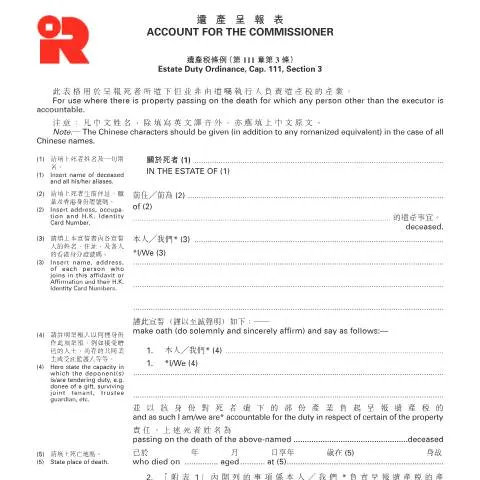
Navigating the Estate Duty Landscape: The IRED 12 Form
In the complex world of estate management, the Account for the Commissioner, known by its form code IRED 12, plays a crucial role. This document becomes particularly significant when dealing with properties that require the assessment of estate duty for which someone other than the executor is accountable. Understanding the nuances of this form can be pivotal for individuals involved in estate settlements. Here, we delve into the intricacies of this form, laying out everything from its purpose to the submission processes and potential outcomes.
The Role of IRED 12 in Estate Duty Compliance
The IRED 12 form serves as an official account to the Commissioner of Estate Duty, essentially a declaration of duty for properties passing on the death of an individual. It is critical for those who find themselves responsible for properties that are not directly managed by the estate executor. This may include individuals who have received gifts or are surviving joint tenants.
Who Needs to Submit the IRED 12 Form?
- Individuals who inherit property but are not the appointed executors.
- Surviving joint tenants who have shared ownership with the deceased.
- Trustees or guardians who may manage the deceased's estate.
Understanding your capacity in relation to the deceased's estate is essential. Whether you are a donee of a gift, a surviving joint tenant, or a trustee, the IRED 12 form will be a vital part of your responsibilities.
Completion of the IRED 12 Form: Step-by-Step
Filling out the IRED 12 form requires careful attention to detail, as inaccuracies can lead to complications or delays in processing. Here’s a breakdown of the key sections to complete:
Key Information Required
- Name of the Deceased: Include all aliases as stated on official documents.
- Address and Details: Provide the deceased's last known address, occupation, and Hong Kong Identity Card (HKID) number.
- Affiant Information: Names, addresses, and HKID numbers of all individuals involved in the affidavit.
- Capacity of the Declarant: Clearly state your relationship to the deceased, whether as a donee, joint tenant, guardian, etc.
- Place of Death: Indicate where the deceased passed away.
- Affidavit/Statement Reference: If applicable, mention if an affidavit for the Commissioner has already been submitted.
Each field must be filled in precisely to ensure that the document meets the legal requirements.
Submission Channels: Where and How to File the IRED 12
Once the IRED 12 form is complete, you will need to choose your submission method. Hong Kong offers various avenues for filing this important document:
| Submission Method | Details | Advantages |
|---|---|---|
| Online Submission | Submit through the e-services platform of the Estate Duty Office. | Faster processing, 24/7 access. |
| Paper Submission | Print and mail the completed form to the Commissioner of Estate Duty. | Accessible for those less familiar with e-services. |
| In-Person Submission | Deliver the form directly at the Estate Duty Office. | Immediate confirmation of receipt. |
Choosing the right method depends on your comfort level with technology and your timeline. Online submissions are encouraged for their efficiency, but all methods will ensure your filing is received.
Understanding the Processing Timeline
Once submitted, how long should you expect to wait for feedback on your IRED 12 form? The processing time can vary based on several factors.
Timeline Overview
- Initial Processing: Typically, you can expect acknowledgment of your submission within 2 weeks.
- Review by the Estate Duty Office: Depending on the complexity of the estate, reviews can take anywhere from 4 to 8 weeks.
- Final Decision: If all is in order, a notification regarding any duty payable will be sent, generally within 2 months of submission.
Patience is essential during this process. If your form requires additional information, the Estate Duty Office will reach out directly to the contact provided in the submission.
Dealing with Complex Scenarios: Special Considerations
Certain situations may complicate the submission or processing of the IRED 12 form. Understanding these scenarios is crucial for those involved.
Cases Requiring Special Attention
- Non-resident Heirs: If the deceased's heirs are not residents of Hong Kong, they may need to provide additional documentation to facilitate the processing of the estate.
- Minors: Special provisions apply when minors are involved as beneficiaries. Legal guardians may need to sign on their behalf.
- Complex Estates: Estates involving businesses or multiple properties may require a more detailed account, often necessitating the assistance of legal professionals.
In these cases, consulting with an estate planning attorney can provide clarity and assistance in gathering the necessary documentation and ensuring compliance with local regulations.
After Submission: What Comes Next?
Once the IRED 12 form has been processed, several important outcomes may occur. Understanding these outcomes can help manage expectations and plan accordingly.
Potential Outcomes
- Duty Assessment: If the estate duty is applicable, the Commissioner will issue a notice detailing the amount due and the payment instructions.
- No Duty Required: In some instances, an estate may fall below the threshold for duty, resulting in no payment required.
- Request for Additional Information: Should the Estate Duty Office need further details, they will reach out, and prompt responses are advised to avoid delays.
Being proactive and responsive to any requests from the Estate Duty Office can significantly smooth the process and mitigate potential delays.
Final Thoughts: Navigating Estate Duty with Confidence
Completing and submitting the IRED 12 form is an essential step in the estate duty process for those responsible for managing property following a death. By understanding its role, the completion process, submission methods, and potential outcomes, individuals can confidently navigate this responsibility. Whether you’re an heir, trustee, or joint tenant, equipping yourself with knowledge about the IRED 12 form will empower you throughout the estate management journey.
Remember, estate duty laws can be intricate and subject to change. Staying informed and seeking professional guidance when needed will always serve you well in fulfilling your responsibilities effectively.
Understanding the Role of the Commissioner in Hong Kong
The Commissioner in Hong Kong is a pivotal figure in the administrative spectrum of the region, specifically related to the assessment and collection of taxes. The position exists within the framework of the Inland Revenue Department (IRD), tasked primarily with ensuring compliance with the tax laws under the Basic Law of the Hong Kong Special Administrative Region. The Commissioner is responsible for overseeing the application of various tax legislation, which includes the Income Tax Ordinance, the Property Tax Ordinance, and the Estate Duty Ordinance.
Fill in your form directly online
No printing: type your details into the boxes of the official form, tick, then download the PDF ready to send.
- 1Type into the form boxes
- 2Tick in one click
- 3Save and download the PDF
In this role, the Commissioner has the authority to conduct audits and investigations into taxpayers' accounts, ensuring accuracy and transparency in the reporting of taxable income. This authority extends to various sectors, including individuals, corporations, and partnerships, highlighting the importance of maintaining comprehensive and accurate financial records. The Commissioner also plays a crucial role in advising the Secretary for Financial Services and the Treasury on matters related to tax policy and administration, thus influencing the fiscal landscape of Hong Kong.
Filing Obligations and Procedures with the Commissioner
Understanding the filing obligations with the Commissioner is crucial for both individuals and corporations operating in Hong Kong. Upon the end of each tax year, which runs from April 1 to March 31, taxpayers are required to submit their income tax returns. The standard form used for individual income tax filing is the BIR60, while corporations utilize the BIR51. Adherence to the deadlines is paramount, as late submissions can result in penalties, with the Commissioner having the authority to impose fines or initiate legal actions against non-compliant taxpayers.
In cases where taxpayers encounter difficulties in meeting their filing obligations, it is advisable to communicate promptly with the Commissioner’s office. The IRD provides avenues for taxpayers to request extensions, though such requests are evaluated on a case-by-case basis. Additionally, taxpayers must maintain sufficient documentation to support their claims, including receipts, invoices, and bank statements, as the Commissioner may request these during an audit. The digitization of tax services has made it easier to submit returns electronically, ensuring a more efficient processing time.
Engagement with the Commissioner During Disputes
Disputes with the Commissioner can arise over various tax issues, such as assessments, penalties, and audit findings. It is essential to understand the mechanisms available for addressing these disputes. Initially, taxpayers are encouraged to resolve disputes informally, perhaps through direct communication with the Commissioner or relevant departmental officers. This can often lead to straightforward clarifications or adjustments without escalating to formal proceedings.
Should an informal resolution be unattainable, taxpayers have the right to file an objection against the assessment. The objection must be lodged within the prescribed time frame specified in the notice of assessment. Detailed grounds for the objection must be provided, as these will guide the subsequent review process by the Commissioner. Importantly, the law grants the taxpayer the opportunity to appeal to the Board of Review if they remain dissatisfied with the Commissioner’s decision regarding their objection.
During the appeal process, it is critical for taxpayers to present a clear and organized case, backed by comprehensive evidence and, preferably, professional advice. The Board of Review serves as an independent body that reviews the facts and circumstances surrounding the tax matter, offering a level of assurance that disputes are evaluated fairly based on existing legislation and policies. The entire process underscores the importance of maintaining transparency and engaging proactively with the Commissioner to mitigate misunderstandings and foster compliance.