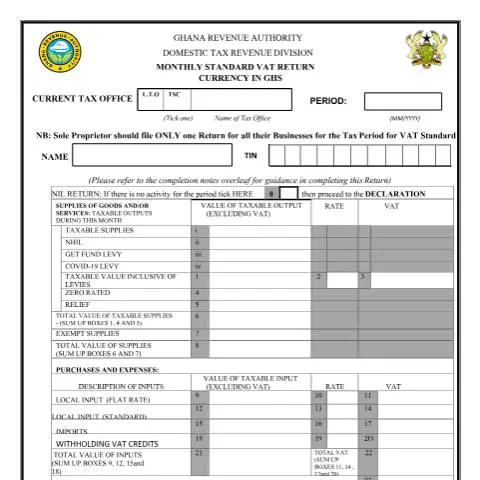
Navigating the VAT NHIL COVID-19 Standard Rate Return Form (DT-0135)
In the realm of taxation, particularly in Ghana, the VAT NHIL COVID-19 Standard Rate Return Form (DT-0135) stands as a pivotal document for businesses. With the onset of the pandemic, the Ghana Revenue Authority (GRA) instituted various tax measures to alleviate the financial burden on taxpayers. This form plays an essential role in reporting VAT obligations during this period.
Understanding Who Must File the Form
The obligation to submit the DT-0135 is primarily directed at registered VAT taxpayers, including corporations, partnerships, and sole proprietors. However, understanding who is required to file can be nuanced. Here are the essential categories:
- Active Businesses: If a business is operational and generating taxable supplies, it must file the form monthly.
- NIL Returns: Businesses with no activity during the tax period must still submit a 'NIL return' to maintain compliance.
- Sole Proprietors: They must file only one return encompassing all business activities for the month.
- New Registrants: Newly registered entities are also required to submit the DT-0135, even if they have not yet commenced operations.
The Step-by-Step Journey: From Filling to Submission
Submitting the VAT NHIL COVID-19 Standard Rate Return Form is not merely about filling out a form; it's a journey that involves several essential steps. Here’s how it unfolds:
- Preparation: Gather all necessary financial records for the month, including sales invoices, purchase receipts, and any other relevant documents.
- Filling the Form: Carefully complete each section of the DT-0135 using accurate data. It’s vital to avoid common pitfalls that could lead to errors.
- Review: Post-completion, review the entries to ensure all information is correct and consistent with your records.
- Submission: File the form at your designated GRA tax office. This can be done in person or, where applicable, via the GRA’s digital channels.
- Confirmation: After submission, ensure you receive acknowledgment of receipt. Keep this for your records.
Deep Dive: Decoding the Sections of the DT-0135
A thorough understanding of the specific boxes on the form is crucial for accurate reporting and compliance. Below is a breakdown of the key sections:
Box 0: The NIL Return Declaration
If your business had no transactions during the reporting month, you must tick Box 0 for a 'NIL return.' This indicates to the GRA that while there were no sales or purchases, you are still fulfilling your reporting obligations.
Box 1-7: Reporting Taxable Supplies
The form requires taxpayers to report various categories of taxable supplies:
- Box 1: Enter the VAT-exclusive value of taxable supplies made during the month, excluding zero-rated and exempt supplies.
- Box 2: Here, you indicate the applicable rate of tax for your supplies.
- Box 3: This box captures the actual VAT charged, calculated as Box 1 multiplied by Box 2.
- Boxes 4 and 5: Report any zero-rated supplies and those with granted VAT relief.
- Box 6: Total taxable supplies are summed here, combining Boxes 1, 4, and 5.
- Box 7: Report the value of exempt supplies made during the month.
- Box 8: This is the sum of Boxes 6 and 7—total supplies for the month.
Boxes 9-20: Input Purchases and Expenses
In this segment, report your purchases and expenses, differentiating between various sources:
- Box 9: Value of local purchases taxed at the VAT flat rate.
- Box 12: Taxable local purchases taxed at the standard VAT rate.
- Box 15: Report the VAT-exclusive value of imports during the month.
- Box 18: Include any taxable local supplies related to withholding VAT certificates.
Summation Boxes: Boxes 21-26
These final boxes determine your net VAT position:
- Box 21: Total value of inputs is calculated by summing various Boxes (9, 12, 15, and 18).
- Box 22: This box captures the total VAT from purchases (Boxes 11, 14, 17, and 20).
- Box 23: Deductible input VAT, which can be offset against output VAT.
- Boxes 24-26: These will reflect whether you owe VAT (Box 24), have an overpayment (Box 25), or are carrying forward credit (Box 26).
Addressing Challenges: What If There Are Errors or Missing Information?
Filing the VAT NHIL COVID-19 Standard Rate Return Form can bring to light various challenges, including errors or incomplete submissions. Here’s how to navigate these potential pitfalls:
Incorrect Information
If an error is discovered post-submission, it's vital to correct it promptly. The process generally involves:
- Identifying the error in your submitted form.
- Contacting your local GRA tax office to report the issue and seek guidance on rectifying it.
- Submitting an amended return, clearly marking it as such, within the stipulated time frame.
Missing Information
In case of missing documents or information:
- Reach out to your accounting department or relevant stakeholders to gather the needed information.
- File the return with a note indicating the missing pieces, if necessary.
- Follow up with the GRA after submission to ensure your filing is processed correctly.
Key Dates: Setting Your Calendar for VAT Compliance
Timeliness is essential when it comes to tax submissions. Understanding the critical dates associated with the VAT NHIL COVID-19 Standard Rate Return Form can help businesses maintain compliance without incurring penalties:
| Action | Date | Notes |
|---|---|---|
| Filing Deadline | 15th of the following month | All VAT returns for the preceding month must be filed by this date. |
| Payment Due | Same as filing deadline | Ensure any VAT payable is settled by this date to avoid penalties. |
| Amendment Window | Within 30 days post-filing | Corrections to filed returns should be submitted within this period. |
The Importance of Compliance and Consequences of Ignoring Obligations
Filing the VAT NHIL COVID-19 Standard Rate Return Form is not merely a bureaucratic requirement; it has significant implications for businesses in Ghana. Understanding these can help businesses make informed decisions:
- Legal Compliance: Filing is a legal obligation under the Ghanaian tax laws. Non-compliance can lead to legal repercussions.
- Financial Implications: Accurate filing can lead to potential VAT refunds if input VAT exceeds output VAT.
- Tax Penalties: Late submissions may incur fines and interest on outstanding VAT payments, impacting cash flow.
- Business Reputation: Maintaining compliance enhances credibility with stakeholders, including customers, suppliers, and regulatory authorities.
Additional Resources and Support for Taxpayers
For taxpayers navigating the complexities of the VAT NHIL COVID-19 Standard Rate Return Form, support is available through various channels:
- Ghana Revenue Authority (GRA): The GRA provides resources and guidelines on its official website, aiding taxpayers in understanding their obligations.
- Tax Professionals: Engaging with certified tax consultants can offer tailored advice and assistance with filing and compliance.
- Workshops and Seminars: The GRA occasionally hosts training sessions to educate taxpayers about their responsibilities and updates in tax legislation.
Understanding the VAT NHIL COVID-19 Standard Rate Return Form (DT-0135) is crucial for any business operating in Ghana. By following the guidelines above, businesses can ensure compliance, avoid penalties, and navigate the post-COVID-19 tax landscape effectively.
Understanding the VAT/NHIL COVID-19 Standard Rate Return Form
The VAT/NHIL COVID-19 Standard Rate Return Form is an essential document for businesses operating within Ghana who are obligated to pay Value Added Tax (VAT) and the National Health Insurance Levy (NHIL). The form is specifically tailored to assist businesses in reporting their VAT and NHIL liabilities during the COVID-19 pandemic, which has presented unique challenges for many sectors.
This form not only supports compliance with the Ghana Revenue Authority (GRA) regulations but also addresses the specific changes to VAT and NHIL due to the economic impact of COVID-19. It is vital for businesses to understand the nuances of the form to ensure accurate reporting and avoid potential penalties.
The VAT/NHIL forms are usually filled out on a monthly basis and submitted by the 15th day of the month following the reporting period. The GRA has emphasized the necessity of timely submissions to maintain good standing and ensure that businesses can take advantage of any available relief measures in light of the pandemic's effects.
The following key elements are typically required when filling out this return form:
Business Identification: This includes the Ghana Revenue Authority Tax Identification Number (TIN), as well as the Ghana Card number which is increasingly integrated into official documentation processes.
Sales and Revenue Data: Businesses must report their total sales, including exempt sales, which can vary widely between different sectors. Careful record-keeping during this time is crucial, especially if businesses have adjusted their pricing models due to the pandemic.
Output Tax Calculation: Businesses need to calculate the VAT/NHIL payable based on their sales. Many companies may have had to recalibrate their output tax during COVID-19, so understanding the tax rate applicable is vital. The GRA has provided guidance on how to apply these rates correctly under the current circumstances.
Deductions and Credits: It is also essential to consider any allowable deductions or credits that may lower the overall tax liability. For instance, businesses that have invested in sanitation and safety measures may find specific deductions available, as encouraged by the GRA during the pandemic.
Filing Process: Submitting the form can usually be done electronically through the GRA's e-services platform. However, businesses should verify whether there are any recent changes to this process or deadlines as they relate to ongoing adjustments in the wake of COVID-19.
Failure to comply with the submission requirements of the VAT/NHIL COVID-19 Standard Rate Return Form may lead to financial consequences, including fines or interest on unpaid amounts. Therefore, it is recommended that businesses keep abreast of any updates from the GRA regarding tax policies and filing requirements during this evolving situation.
Best Practices for Completing the VAT/NHIL COVID-19 Standard Rate Return Form
Completing the VAT/NHIL COVID-19 Standard Rate Return Form can be a straightforward process if businesses implement a set of best practices to guide them through the required steps. Here’s a detailed approach to ensure compliance and accuracy:
Maintain Accurate Records: Proper record-keeping is critical, especially in fluctuating economic circumstances. Businesses should keep track of all invoices, receipts, and transaction records related to sales and purchases. Utilizing accounting software could streamline this process and reduce errors significantly.
Stay Updated with GRA Guidelines: The GRA periodically updates its guidelines and requirements, especially in response to the evolving nature of the COVID-19 pandemic. Businesses should regularly visit the GRA’s official website or follow their social media channels to ensure they have the latest information regarding filing deadlines, rates, and any potential reliefs.
Consult with Professionals: Given the complexities involved with VAT and NHIL, engaging with a tax professional or an accountant can help businesses navigate the intricacies of the return form. This is particularly important when dealing with any potential deductions or credits that could significantly impact tax liabilities.
Double-Check Calculations: Before submitting the VAT/NHIL COVID-19 Standard Rate Return Form, it is advisable to have an internal review process. Double-checking calculations for output tax and ensuring that all sales figures are correctly categorized can prevent costly mistakes.
Plan for Cash Flow: Due to the economic effects of COVID-19, many businesses may experience cash flow challenges. It is prudent to plan for the tax liabilities that will arise from the VAT/NHIL obligations. Creating a cash reserve for these payments can help prevent financial strain when funds are required.
Utilize Digital Platforms: The GRA has made significant investments in digital platforms to facilitate the filing process. Using the GRA's e-filing system can provide a more efficient way to submit forms and keep track of compliance. Additionally, electronic submissions may offer more immediate confirmation and reduce delays associated with paper submissions.
By adhering to these best practices, businesses can not only streamline the process of filing their VAT/NHIL COVID-19 Standard Rate Return Form but also ensure full compliance with the regulations established by the Ghana Revenue Authority. This proactive approach will also help safeguard business interests during these challenging economic times.
Common Issues and How to Resolve Them When Filing VAT/NHIL COVID-19 Returns
While the VAT/NHIL COVID-19 Standard Rate Return Form is designed to facilitate compliance, many businesses encounter common issues during the submission process. Being aware of these issues and knowing how to resolve them can significantly ease the filing experience. Here are some of the most frequently encountered issues and recommended solutions:
Incorrect Business Identification: One of the most common issues arises when businesses enter incorrect identification numbers, such as the TIN or Ghana Card number. This can result in rejections or delays in processing the return. To prevent this, businesses should cross-check all identification numbers against their official documents before submission.
Miscalculated Output Tax: Businesses often miscalculate their output tax due to changes in sales numbers or an adjustment in rates applicable during the pandemic. Using accounting software can help automate calculations, but if errors occur, it is crucial to revisit the sales records and tax rate changes. Regular training or workshops for the finance team may also be beneficial.
Incomplete Documentation: Submission of the return without supporting documents can lead to delays. The GRA may require additional documentation, especially if a business has claimed significant deductions. Businesses should maintain a checklist of required documents and ensure that they are included with the return or readily available upon request.
Staying Informed about Filing Deadlines: Failing to submit the form by the stipulated deadline often results in penalties. Businesses should integrate reminders into their financial calendar to avoid missed deadlines. The GRA typically announces any changes to deadlines, so subscribing to GRA alerts can be beneficial.
Navigating Technical Issues with E-Filing: Some businesses may encounter technical difficulties when submitting their forms electronically. In such cases, it is advisable to contact the GRA’s technical support team promptly. Ensuring that internet connectivity is stable and that the form is filled according to technical specifications can mitigate many issues.
Understanding Special Circumstances: Some businesses may find themselves in unique situations, such as being part of a multi-business group or having cross-border transactions. These may require specialized knowledge of VAT implications. Consulting with a tax advisor familiar with international VAT regulations can help navigate these complexities.
Engaging with the GRA: If issues arise that a business cannot resolve independently, reaching out to the GRA for assistance is essential. They offer customer service and support to help businesses clarify their concerns, answer queries, and guide them through the submission process.
By proactively addressing these common issues, businesses can enhance their filing processes and reduce the likelihood of complications arising from their VAT/NHIL COVID-19 Standard Rate Return submissions. This level of diligence is particularly important during the current economic climate, where compliance and accuracy can have significant implications for business sustainability.