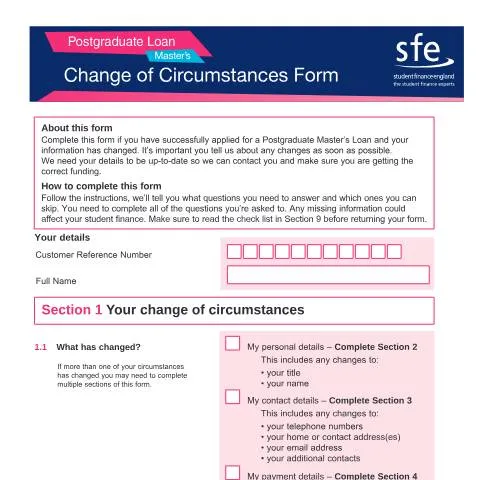
Understanding the 2022 to 2023 Postgraduate Master's Change of Circumstances Form
Imagine this scenario: you’ve secured a Postgraduate Master’s Loan, the semester has begun, and suddenly, your circumstances shift — be it a change in your course, your personal situation, or even how you want your funds managed. This is where the 2022 to 2023 Postgraduate Master's Change of Circumstances Form comes into play. Navigating through the nuances of this document can be crucial for the timely continuation of your financial support.
Who Needs to Submit This Form?
Any student who has successfully applied for a Postgraduate Master’s Loan and finds themselves in a situation where their details have undergone significant changes must complete this form. This could include
- Changes to personal details: Name, contact information, or marital status.
- Course modifications: Switching universities, changing course names, or altering study duration.
- Financial information updates: Adjustments to bank account details for loan payments.
Failing to report these changes can lead to complications in receiving your funds, potentially risking your ability to continue your studies.
Completing the Form: Important Sections to Focus On
The form is laid out in several sections, each targeting a different aspect of your information. Here’s a breakdown:
- Section 1: Your Change of Circumstances - Identify what has changed in your situation to determine which sections to complete.
- Section 2: Personal Details - Update your name or title if it has changed and provide necessary documentation.
- Section 3: Contact Information - Here, you'll need to provide any amendments to your phone numbers or email addresses, and specify if there’s been a change to your home address.
- Section 4: Payment Details - Crucially, your bank details must be accurate to avoid payment delays. Ensure that you provide a UK bank account in your name.
- Section 5: Course Details - This section is vital if you've changed your course or are transferring to a different institution. Your university will need to confirm these changes to the Student Loans Company (SLC).
In addition, if your circumstances extend beyond these categories, Section 8 allows you to inform the SLC of other changes not covered in the form.
Submission Channels: Choosing the Right Method
When it comes to submitting this form, you have options. Each method has distinct implications on the processing time and efficiency:
- Online Submission: If you already have an online account with the SLC, this is typically the fastest method. Logging in allows for quicker updates and a streamlined process.
- Postal Submission: Completing the form by hand and mailing it requires attention to detail, especially with address and postage because any delays could impact your financial support.
- In-Person Submission: While not common, if you require assistance, visiting a local SLC office may provide direct help. It’s wise to call ahead to check if appointments are necessary.
The Importance of Timely Updates
Time is of the essence when it comes to updating your circumstances. The SLC requires that you report changes as soon as they arise. If you delay, you risk:
- Payment Delays: Incorrect or outdated information can lead to disruptions in your loan payments.
- Funding Ineligibility: Changes in your course duration or eligibility can affect your financial support status.
- Administrative Headaches: Not following up can lead to complications that may take longer to rectify.
Once the form is submitted, you should expect a confirmation from the SLC. Tracking your application can be done through your online account, ensuring that you are informed of any additional information they may require.
Special Circumstances: Unique Cases
There are instances where your situation may not align with standard changes. Here are some unique scenarios:
- International Students: If you are studying in the UK on a visa, changes in your status must be reported promptly. Your eligibility for funding could change based on your visa conditions.
- Minor Students: If you are under 18, your parent or guardian must be involved in submitting changes on your behalf. This includes providing extra documentation when necessary.
- Emergency Situations: In the case of significant emergencies (e.g., health issues), contact the SLC directly for guidance on fast-tracking your changes.
Handling Refusals and Missing Information
It’s crucial to understand the potential pitfalls after submission. If your application is refused or if there are errors, take immediate action:
- Review the Communication: The SLC will provide reasons for any refusal. Understanding these can help you address specific concerns.
- Gather Required Documentation: If additional information is requested, compile the necessary documents and respond promptly to avoid further delays.
- Contact the SLC Directly: For queries regarding your application status, your best point of contact is the SLC’s customer service. Ensure you have your Customer Reference Number handy for quicker assistance.
Your Rights and Obligations as a Borrower
Filling out the change of circumstances form is not just a procedural step; it enshrines your rights and obligations:
- Rights: You have the right to accurate and timely funding based on your updated circumstances. Failure to notify can jeopardize this right.
- Obligations: You are obligated to keep your details current and comply with all requests for documentation from the SLC to maintain your loan eligibility.
Ignoring these responsibilities can lead to financial repercussions, including the cessation of your loan payments.
Final Thoughts: Staying Proactive
The 2022 to 2023 Postgraduate Master's Change of Circumstances Form is an essential tool for ensuring your educational journey remains uninterrupted. By actively managing your information and adhering to the guidelines laid out by the SLC, you can navigate through your postgraduate studies with confidence. Remember, the sooner you report changes, the smoother your financial journey will be. Keep your records organized, and make sure to reach out to the SLC if you have any uncertainties; their support is valuable in ensuring your academic success.
Understanding the 2022 to 2023 Postgraduate Master's Change of Circumstances Form
The 2022 to 2023 Postgraduate Master’s Change of Circumstances Form is a crucial document for students receiving tuition fee support or living costs from the UK government or associated funding bodies. Understanding how to use this form effectively can make a significant difference in your financial management during your postgraduate studies.
When should you consider filling out this form? Several scenarios warrant a change of circumstances submission. Common examples include changes in your course, changes in your living arrangements, or alterations in your personal circumstances that might impact your funding. For instance, if you switch from a full-time to a part-time course, this could affect your entitlement to grants and loans, requiring immediate attention through this form.
It’s essential to provide comprehensive details in this form, as incomplete applications can delay processing times, potentially leading to financial difficulties. Be prepared to include your student ID, details of your original circumstances, and any supporting documentation related to your change—this may include letters from your university or proof of residency changes.
Common Mistakes to Avoid when Submitting Your Change of Circumstances
Navigating the world of student finance can be complex, especially when dealing with forms like the Change of Circumstances. There are common pitfalls students often encounter that can lead to delays or denials of their requests. Awareness of these can ensure a smoother application process.
- Incomplete Information: One of the most frequent mistakes is failing to provide all necessary information. Each section must be completed accurately, with any required documentation attached. Missing information can result in your form being returned or delayed.
- Ignoring Deadlines: Each filing has specific deadlines. Particularly for funding changes that directly impact your current financial aid, it is crucial to submit your form promptly. Late submissions can lead to a loss of funding for that academic year, affecting your ability to continue your studies.
- Failure to Notify Relevant Authorities: In some cases, you may need to inform other departments or organizations about your changes as well. For instance, if your change of circumstances also affects your eligibility for Universal Credit, ensuring that you contact the DWP is critical.
- Not Keeping Copies: Always keep copies of submitted forms and any correspondence associated with your change of circumstances. This practice not only ensures you have a record but also aids in resolving any disputes or misunderstandings that may arise.
Impact of Change of Circumstances on Future Applications
Understanding the long-term ramifications of your change of circumstances is vital, especially if you plan to apply for further financial aid or government support in the future. Any changes should be documented carefully, as previous circumstances can play a role in assessing future funding eligibility.
If, for example, your change of circumstances leads you to acquire additional financial support, it could potentially influence your eligibility for future postgraduate funding. Be aware that each funding application will typically require a declaration of any changes made during previous academic years.
Additionally, if your current situation changes again, it could lead to a cascade of required updates across different forms, like your Self Assessment tax return if it affects your taxable income. Regularly reviewing your financial situation and understanding how various changes impact your obligations and entitlements is crucial.
Ultimately, while the Change of Circumstances Form primarily addresses immediate needs, thinking ahead can prevent complications later in your academic career. Seek advice if you're uncertain about how a change may affect future applications or your overall financial health.