When Military Life Meets National Insurance: Understanding Accompanied Assignments
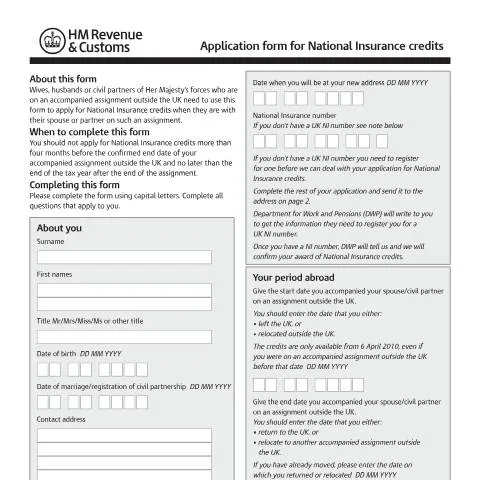
For military families, an overseas posting brings both opportunities and administrative complexities. When a spouse or civil partner accompanies a member of Her Majesty's forces on an assignment outside the UK, they face a particular challenge: maintaining their National Insurance record whilst living abroad. The MODCA1 form addresses this specific situation, ensuring that accompanying partners don't suffer gaps in their National Insurance contributions that could later affect their state pension or benefit entitlements.
This isn't merely about paperwork—it's about protecting future financial security. National Insurance credits earned through accompanied assignments can prove crucial decades later when calculating state pension entitlements or establishing eligibility for contribution-based benefits. The system recognises that military families often sacrifice career opportunities and earning potential when following postings abroad, and the MODCA1 process provides a safety net for the accompanying partner's National Insurance record.
The Legislative Framework Behind Military Family Protection
The provision for National Insurance credits during accompanied military assignments reflects Parliament's recognition of the unique circumstances faced by service families. Unlike civilian overseas workers who might maintain UK employment, accompanying military spouses typically cannot work in their home country whilst abroad, creating potential gaps in their National Insurance record.
The credits became available from 6 April 2010, marking a significant improvement in support for military families. This date represents when the government formally acknowledged that accompanying partners deserved protection for their National Insurance records, even if they were already on assignment before this date. The timing aligns with broader welfare reforms that sought to address inequities in the benefits system.
The legal basis stems from regulations that treat accompanied military assignments as a form of caring responsibility, similar to credits awarded for childcare or caring for disabled relatives. This approach recognises that the accompanying partner is fulfilling a supportive role that, whilst not generating National Insurance contributions through employment, serves the wider public interest by enabling military personnel to carry out their duties effectively.
Eligibility Criteria and Assignment Classifications
Not every overseas stay qualifies for National Insurance credits through the MODCA1 process. The assignment must be officially recognised by the military authorities, and the civilian partner must be formally accompanying their spouse or civil partner rather than simply visiting or living abroad independently.
The form distinguishes between different types of movements that mark the start and end of eligibility periods. Credits can begin when you either leave the UK or relocate outside the UK to join an assignment already in progress. Similarly, the end date corresponds to either returning to the UK or relocating to another accompanied assignment elsewhere.
| Assignment Type | Credit Eligibility | Documentation Required |
|---|---|---|
| Accompanied posting (married/civil partners) | Full eligibility from assignment start | MODCA1 with unit welfare officer validation |
| Unaccompanied posting | No eligibility for partner | Not applicable |
| Family visit during posting | No eligibility | Not applicable |
| Consecutive accompanied assignments | Separate application required for each | New MODCA1 for each assignment period |
Crucially, you must complete a separate MODCA1 application for each distinct assignment period, even if you haven't physically moved countries or returned to the UK between postings. This requirement ensures that HMRC maintains accurate records of each assignment period and can properly attribute credits to the correct tax years.
Navigating the Application Timeline and Deadlines
The timing of your MODCA1 application requires careful consideration of both military schedules and HMRC administrative requirements. You cannot apply more than four months before the confirmed end date of your accompanied assignment, but you must not leave it later than the end of the tax year following the assignment's conclusion.
This creates a narrow window that requires forward planning. For instance, if your assignment ends on 15 September 2024, you cannot apply before 15 May 2024, but you must submit your application no later than 5 April 2026 (the end of the 2025-26 tax year). Missing this deadline could result in losing entitlement to credits for the entire assignment period.
The four-month advance limit exists because military assignments can face last-minute changes, and HMRC wants confirmation of actual assignment completion before processing credits. However, the generous deadline after assignment completion recognises that military families often face transition periods where administrative tasks might be delayed.
Practical considerations include coordinating with your unit welfare officer, who must validate your application. During busy posting seasons or operational periods, welfare officers may have limited availability, so early preparation proves essential. Additionally, if you lack a National Insurance number, the process involves an extra step through the Department for Work and Pensions, potentially extending the timeline significantly.
Dissecting the MODCA1 Form Structure and Validation Process
The MODCA1 form employs a three-page structure designed to capture comprehensive information whilst ensuring proper military validation. Page 1 focuses on your personal details and assignment dates, Page 2 requires unit welfare officer validation, and Page 3 contains service member information and remains with the unit for record-keeping.
The personal information section demands precision in date entry. Assignment start dates must reflect either your departure from the UK or your relocation to join an ongoing assignment. This distinction matters because some partners may join assignments already in progress, whilst others accompany their spouse from the initial deployment. Similarly, end dates must correspond to either UK return or relocation to another assignment—not temporary leave periods.
Your contact address requires particular attention to the six-month residence question. If you're unlikely to remain at the provided address for six months, you must supply alternative contact details and specify when you'll be available at the new address. This information proves crucial for HMRC correspondence, particularly if queries arise about your application.
The National Insurance number section includes provision for applicants without existing UK numbers. If you lack a National Insurance number, you cannot simply leave this blank—you must complete the rest of the application and submit it to the Glasgow address, triggering a separate registration process through DWP before HMRC can process your credits application.
Unit Welfare Officer Validation Requirements
Page 2 requires validation from your unit welfare officer, who must confirm that the assignment dates align with official military records. This isn't merely a formality—the welfare officer serves as the official link between military personnel records and HMRC's civilian administrative system.
The welfare officer must provide their name in capital letters, contact details, and apply the official unit stamp. This creates an audit trail that HMRC can verify if questions arise about the assignment's legitimacy or duration. The welfare officer retains Page 3 for unit records, ensuring the military maintains documentation of which personnel have applied for National Insurance credits.
Processing Pathways and Administrative Destinations
Your MODCA1 application follows different processing routes depending on whether you already possess a National Insurance number. This bifurcation reflects the different administrative systems involved in National Insurance registration versus credits processing.
Applicants with existing National Insurance numbers send their completed forms to HMRC's National Insurance Contributions Office in Newcastle upon Tyne. This office specialises in contribution records and can directly process credit applications against existing accounts. The Newcastle office handles the bulk of MODCA1 applications because most accompanying partners already have UK National Insurance numbers from previous employment or benefit claims.
Applicants without National Insurance numbers must route their applications through the Fastpath Section in Glasgow, which coordinates with DWP for number allocation. This process necessarily takes longer because it involves two separate government departments and requires establishing a new National Insurance record before credits can be applied.
The Glasgow route involves DWP writing to you for additional information needed to register your National Insurance number. Once DWP allocates your number, they notify HMRC, who then process your credits application. This coordination between departments can extend processing times significantly, particularly during busy periods or if additional documentation is required.
Record-Keeping and Long-Term Implications
National Insurance credits awarded through MODCA1 applications appear on your National Insurance record as Class 3 credits, specifically coded to indicate their origin from accompanied military assignments. These credits count towards the qualifying years needed for state pension entitlement and can affect eligibility for contribution-based benefits like Jobseeker's Allowance or Employment and Support Allowance.
The credits apply to complete tax years during which you were on accompanied assignment. If your assignment spans multiple tax years, you'll receive credits for each qualifying year, potentially building substantial protection for your National Insurance record during extended overseas postings.
Future pension calculations will include these credited years when determining your state pension entitlement. Given that you typically need 35 qualifying years for the full new state pension, credits earned through military assignments can prove valuable, particularly for partners who accompany multiple assignments throughout their spouse's military career.
You can check your National Insurance record online through the government's official service or by requesting a statement from HMRC. This allows you to verify that your MODCA1 credits have been properly applied and identify any gaps that might require attention. Regular monitoring proves particularly important for military families who may have complex National Insurance records involving periods of overseas residence, employment, and credited periods.
Multiple Assignments and Career-Long Strategy
Military careers often involve multiple overseas postings, each potentially requiring separate MODCA1 applications. The requirement to submit individual applications for each assignment ensures accurate record-keeping but demands ongoing attention throughout a military career spanning several decades.
Strategic timing becomes crucial when managing multiple applications. Some military families experience back-to-back assignments with minimal UK residence between postings. In such cases, you must still complete separate MODCA1 forms for each assignment period, even though you never physically returned to the UK. The administrative system treats each assignment as a distinct period requiring separate documentation.
Consider maintaining a personal record of all MODCA1 submissions, including copies of completed forms, submission dates, and any correspondence from HMRC. This documentation proves invaluable when reviewing your National Insurance record years later or when addressing queries about your pension entitlement. Military families often face unique challenges in maintaining continuous documentation across multiple postings and house moves, making organised record-keeping essential.
The cumulative effect of multiple accompanied assignments can significantly strengthen your National Insurance record. Partners who accompany several assignments throughout a military career may find that their credited years, combined with any employment periods, provide substantial protection for their state pension entitlement, even if traditional employment opportunities were limited by the demands of military life.
Understanding Different Types of Accompanied Assignments
The MODCA1 application covers various scenarios where UK nationals or residents take up temporary positions abroad whilst maintaining their connection to the UK National Insurance system. These assignments typically fall into several distinct categories, each with specific eligibility criteria and documentation requirements.
Crown Service assignments represent the most straightforward category, encompassing diplomatic postings, military deployments, and civil service secondments. Staff working for the Foreign, Commonwealth & Development Office, Ministry of Defence, or other government departments on overseas assignments automatically qualify for National Insurance credits, provided their employer confirms the temporary nature of the posting. The accompanying spouse or civil partner can apply for credits covering the same period, regardless of whether they undertake paid employment abroad.
European Union and European Economic Area assignments present a more complex picture following Brexit. UK nationals posted to EU member states may still benefit from reciprocal social security arrangements under the Trade and Cooperation Agreement, though the specific terms vary by destination country. Those accompanying partners to positions within EU institutions, multinational organisations, or UK-based companies with European operations should verify their eligibility status, as some arrangements require specific documentation from the host country's social security authorities.
Commercial sector assignments through UK-registered companies constitute another significant category. Employees seconded to overseas subsidiaries, joint ventures, or client sites typically maintain their UK employment contract, making both the primary assignee and their accompanying partner eligible for National Insurance credits. However, complications can arise when the overseas assignment involves a formal transfer to a foreign subsidiary, potentially breaking the UK employment link that underpins credit eligibility.
International development and humanitarian assignments often qualify for credits, particularly when undertaken through recognised UK-based organisations or in partnership with government departments. Voluntary Service Overseas placements, charity work, and academic research positions may be eligible, though applicants must demonstrate the temporary nature of their assignment and their intention to return to the UK.
The geographical scope of accompanied assignments has expanded significantly, with increasing numbers of UK nationals taking up positions in emerging markets across Asia, Africa, and Latin America. Each destination country presents unique challenges regarding local employment law, tax obligations, and social security arrangements that can impact MODCA1 eligibility.
Documentation Requirements and Evidence Standards
Successfully completing a MODCA1 application requires assembling comprehensive documentation that proves both the accompanied assignment relationship and the temporary nature of the overseas posting. HMRC applies stringent evidence standards, and incomplete applications frequently result in delays or rejections that can take months to resolve.
Primary assignment documentation forms the foundation of any MODCA1 application. This includes the original employment contract or secondment agreement clearly stating the temporary nature of the overseas position, anticipated duration, and arrangements for the employee's return to the UK. Letters from HR departments must be on company letterhead, signed by authorised personnel, and include specific details about the business necessity for the overseas assignment.
For Crown Service assignments, official posting orders or diplomatic credentials provide the required evidence, though these documents often contain sensitive information requiring redaction before submission. Military personnel should include their posting order reference numbers and confirmation from their commanding officer regarding family accompaniment arrangements.
Relationship evidence must establish the genuine nature of the accompanying relationship at the time of departure. Marriage certificates, civil partnership certificates, or evidence of cohabitation spanning at least two years before the assignment commencement date are typically required. Joint financial commitments such as mortgage agreements, insurance policies, or utility bills help demonstrate the established nature of the relationship.
Where couples have married or entered civil partnerships shortly before an overseas assignment, additional evidence may be requested to verify that the relationship was not entered into solely for National Insurance purposes. This might include photographs, correspondence, or witness statements covering the period leading up to the legal commitment.
UK residence and domicile documentation proves the applicant's established connection to the UK National Insurance system. This typically includes previous P60 certificates, payslips, council tax records, or rental agreements covering the period immediately before departure. Self-employed individuals must provide self-assessment tax returns and evidence of National Insurance contributions paid through Class 2 or Class 4 payments.
Bank statements showing UK-based accounts, ongoing financial commitments such as pension contributions or insurance premiums, and evidence of maintained UK address (even if let to tenants) help establish the temporary nature of the overseas assignment. HMRC particularly values evidence showing concrete plans for UK return, such as job applications, property purchase negotiations, or school applications for children.
Overseas assignment evidence must confirm the specific nature and duration of the foreign posting. Employment contracts should clearly state start and end dates, though provisions for extension are acceptable provided the overall assignment remains temporary. For academic positions, university appointment letters and research grant documentation serve as primary evidence.
Tax equalisation agreements, housing allowances, and repatriation provisions within employment contracts strengthen applications by demonstrating the employer's expectation of the employee's eventual UK return. Conversely, arrangements suggesting permanent relocation, such as assistance with overseas property purchase or local pension scheme enrollment, may weaken MODCA1 applications.
Managing Complex Family Circumstances and Special Cases
MODCA1 applications become significantly more complex when family circumstances change during the overseas assignment period, requiring careful navigation of National Insurance rules that weren't designed to accommodate modern mobility patterns and evolving family structures.
Children born during overseas assignments present particular challenges for National Insurance credit calculations. Where UK national parents are both eligible for credits through MODCA1, determining which parent claims Child Benefit (and associated National Insurance credits) requires careful consideration of long-term pension implications. The claiming parent typically receives more valuable credits, particularly if they're not otherwise earning National Insurance qualifying years through employment.
Parents should consider future career patterns when deciding credit allocation, as the parent more likely to have career breaks for childcare responsibilities may benefit more from the guaranteed credit years. However, this decision cannot easily be reversed, making early professional advice valuable for families expecting children during extended overseas assignments.
Relationship breakdown during assignments creates complex eligibility questions that HMRC handles on a case-by-case basis. Where couples separate or divorce during an overseas assignment, the accompanying partner's credit eligibility typically continues until the original assignment end date, provided they don't enter a new relationship that would qualify for different credit arrangements.
However, if the accompanying partner establishes independent residence in the host country or takes up local employment, their MODCA1 eligibility may cease earlier than the original assignment completion date. Documentation of changed circumstances must be provided promptly to avoid later complications with credit awards or potential recovery proceedings.
Multi-location assignments spanning several countries during a single overseas period require careful documentation of each posting phase. Some international roles involve sequential assignments across different territories, potentially affecting National Insurance credit eligibility if gaps occur between postings or if certain destinations don't qualify for MODCA1 treatment.
Accompanying partners must maintain evidence of their continued relationship with the primary assignee throughout multi-location assignments, as extended separations might affect credit eligibility. Where work requirements necessitate the primary assignee's frequent travel, leaving the accompanying partner in a single location, specific arrangements may be needed to preserve MODCA1 eligibility.
Extended assignment scenarios often arise when successful overseas postings lead to extension offers beyond the original contract terms. While extensions are generally acceptable for MODCA1 purposes, assignments extending beyond five years may face additional scrutiny regarding their temporary nature. HMRC may request updated evidence of UK return intentions and concrete repatriation plans.
Assignments that evolve into permanent relocations present the most complex scenarios, potentially requiring retrospective credit adjustments if HMRC determines that the temporary assignment became a permanent move at a specific point. Clear documentation of changing circumstances and prompt notification to HMRC helps avoid later complications.
Dual nationality considerations add another layer of complexity, particularly where accompanying partners hold citizenship of the host country or other nations. While dual nationality doesn't automatically disqualify MODCA1 applications, it may affect the assessment of temporary assignment status, particularly if the accompanying partner has previous residential or employment history in the host country.
Professional advice becomes particularly valuable for dual nationals, as their broader range of options for overseas residence and employment can complicate the determination of temporary assignment status that underpins MODCA1 eligibility.