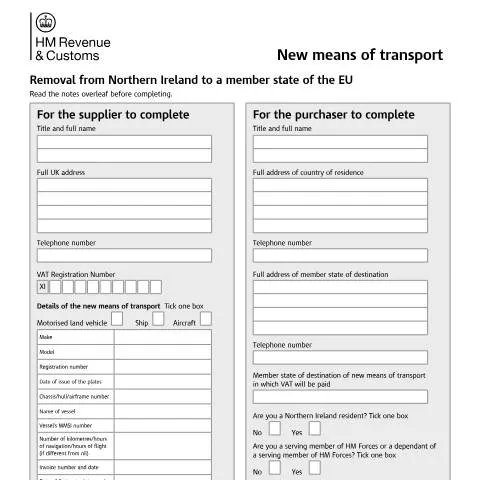
Navigating the HMRC Form for Exporting Vehicles from Northern Ireland to the EU
As the complexities of post-Brexit regulations unfold, the official document to report the removal of a new vehicle from Northern Ireland to an EU member state has gained immense significance. This HM Revenue & Customs (HMRC) form plays a crucial role in ensuring compliance with VAT regulations when transporting newly purchased vehicles across borders. Understanding the nuances of this form not only facilitates a smoother transition for vehicle owners but also safeguards them from potential tax liabilities.
Understanding the Objective of the Document
The HMRC form for reporting the removal of a new vehicle is designed specifically for individuals who have purchased a motorised land vehicle, ship, or aircraft in Northern Ireland and plan to move it to an EU member state. This form is essential for non-VAT registered persons, as it allows them to report their intentions to remove the vehicle and provides a framework for complying with VAT regulations. The form ensures that the necessary tax obligations are fulfilled while also detailing the specifics of the vehicle in question.
Why is This Form Important?
Failure to complete and submit this form correctly can lead to serious repercussions. If a vehicle is not exported within the stipulated time frame, which is two months from the date of supply, it may become liable for UK taxes, resulting in forfeiture. Therefore, timely completion and submission of this document are essential for those purchasing new means of transport in Northern Ireland.
Who Needs to Fill Out This Form?
The target demographic for this HMRC form includes:
- Individuals who have recently purchased a new vehicle in Northern Ireland and are not VAT registered.
- Residents of Northern Ireland planning to relocate the vehicle to an EU member state.
- Members of HM Forces or their dependants, with specific conditions attached.
Each of these groups has unique considerations that can affect the completion of the form. Therefore, it is essential to understand one's specific situation before proceeding.
Special Cases and Exceptions
While the form generally addresses standard cases, it also accommodates exceptions, particularly for:
- Military Personnel: If you are a member of HM Forces, special considerations may apply. You are still required to declare your intent to remove the vehicle, but the tax implications may differ.
- Non-Residents: For individuals residing outside Northern Ireland but purchasing a vehicle there, additional paperwork may be necessary to comply with their home country regulations.
Understanding these exceptions can help streamline the process and ensure compliance with both UK and EU regulations.
Preparing the Required Documents
Before filling out the HMRC form, it's essential to gather all necessary documents. The following items are generally required:
- Invoice: This must include the purchase price of the vehicle and any accessories.
- Identification: Valid identification and proof of residence may be required, especially for military personnel and non-residents.
- Vehicle Details: Information such as the make, model, registration number, and chassis number is necessary.
- VAT Information: If applicable, details regarding VAT registration must be included.
Ensuring you have these documents prepared in advance can significantly reduce the likelihood of errors when completing the form.
Diving Deep into Form Sections
The form consists of multiple sections tailored to capture all necessary information clearly and comprehensively. Each section has particular fields that must be filled out correctly to avoid complications.
Supplier Details
In the initial section, the supplier must provide:
- Title and full name
- Full UK address
- Phone number
- VAT registration number
Attention to detail is critical here, as inaccuracies can lead to significant delays or rejections.
Details of the New Means of Transport
This section requires specific information about the vehicle:
- Type of vehicle (motorised land vehicle, ship, aircraft)
- Make and model
- Registration number
- Date of issue of the plates
- Chassis or hull number
Each piece of information must align with the documentation you have submitted to prevent discrepancies.
Purchaser Information
Next, the purchaser must fill out their details, including:
- Full name
- Address of the country of residence
- Address in the member state of destination
This is particularly important for ensuring the tax authority in the destination country can contact the purchaser if needed. Accuracy in this section will facilitate a smoother process when moving the vehicle.
Submitting the Form: A Step-by-Step Guide
Once you have filled out the form, the next steps are crucial:
- Signature and Date: Ensure that both the supplier and purchaser sign and date the form, confirming that the information provided is accurate.
- Submission: The original form must be sent to the HM Revenue and Customs, specifically to the Personal Transport Unit at the address provided in the form.
- Retain Copies: The supplier should retain a copy for their records, while the purchaser must keep their copy to present to tax authorities in the destination member state.
These steps are crucial for maintaining a record of the transaction and ensuring compliance with tax regulations.
Post-Submission Actions: Tracking Your Form
After submitting the form, it’s important to monitor its status. HMRC typically processes forms promptly, but delays can occur. Here’s what you can do:
- Contact HMRC: If you do not receive a confirmation or acknowledgment, contacting HMRC is advisable. They can provide updates on your submission.
- Prepare for Additional Documentation: Be ready to provide any supplementary information that HMRC may request to process your application.
- Notify Changes: If your circumstances change and you are unable to remove the vehicle within the two-month window, you must inform HMRC immediately.
Being proactive in this phase can help mitigate potential issues down the line.
Understanding the Regulatory Framework
This form is rooted in legal frameworks that govern the removal of goods within the EU and VAT regulations. Specifically, section 30(8) of the Value Added Tax Act 1994 outlines the parameters for reporting the removal of new means of transport. Understanding these legal foundations can help taxpayers navigate the complexities of the tax code more effectively.
Implications of Non-Compliance
The consequences of failing to adhere to the regulations connected to this form can be severe:
- Forfeiture of the vehicle due to late removal.
- Accrued UK tax liabilities, which may include VAT owed upon non-compliance.
It is crucial to remain cognizant of these risks while preparing and submitting the form to ensure smooth compliance.
Final Thoughts: Preparing for a Seamless Transition
In a world marked by rapid regulatory changes, successfully navigating the reporting of a new vehicle’s removal from Northern Ireland to an EU member state requires careful preparation and attention to detail. By understanding the specific requirements and implications of the HMRC form, individuals can not only ensure compliance but also streamline their vehicle's transition process. Remember, being proactive and thorough in your approach will ultimately yield the best results in this complex administrative landscape.
Whether you’re a first-time vehicle buyer or a seasoned purchaser, staying informed about the requirements and following the guidelines outlined in this article will empower you to make informed decisions, ensuring a hassle-free experience.