The Role of Form N209A in Road Traffic Accident Claims
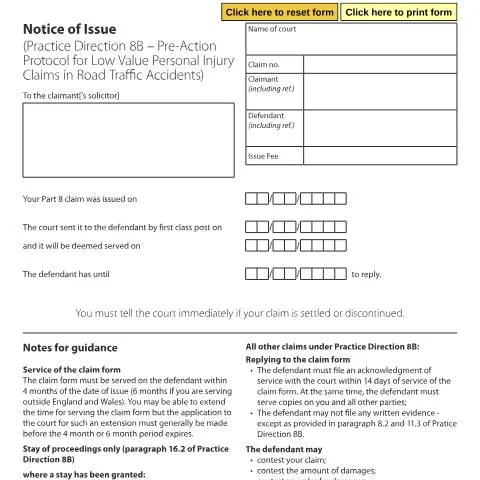
When involved in a road traffic accident, understanding the legal process can be daunting. One essential component of this process is the Form N209A: Notice of Issue in Road Traffic Accident Claims. This document is not merely a formality; it serves as a critical communication tool between the claimant and the defendant, initiating the formal legal proceedings. This guide will provide insights into the meaning, significance, and practical application of Form N209A.
Navigating the Legal Landscape: Understanding the Context
Form N209A is tied intricately to the Practice Direction 8B, which governs the Pre-Action Protocol for Low Value Personal Injury Claims in Road Traffic Accidents. This directive outlines the expected behaviours and steps to be undertaken before formal court proceedings commence. Understanding this context is crucial for both claimants and defendants, as it sets the groundwork for any claim regarding personal injury resulting from road traffic incidents.
Key Components of the N209A Document
The N209A form includes several vital components that must be highlighted:
- Claim Number: Each claim is allocated a unique identifier which is essential for tracking.
- Claimant and Defendant Information: Detailed identification of both parties involved is provided.
- Issue Fee: This indicates the cost associated with issuing a claim, helping parties understand the financial commitments involved.
- Timelines: Critical dates regarding when the claim was issued, served, and the expected response periods are clearly stated.
These details form the backbone of the claim process and are pivotal in ensuring compliance with legal requirements.
Form N209A: A Vital Tool for Claimants
For individuals pursuing a claim, the N209A form is pivotal. It marks the official initiation of their legal journey, and understanding how to utilise this document effectively can significantly influence the outcome of their case.
When to Use the N209A Form
The N209A should be employed when the claimant has completed all necessary pre-action protocols and is ready to initiate a claim against a defendant. This typically occurs when discussions between parties have failed to resolve the matter amicably, prompting the claimant to seek formal resolution through the courts.
- Claimants must ensure that they have gathered all relevant evidence and documentation to support their claim.
- Before submitting the N209A, confirm compliance with the RTA Protocol requirements.
Understanding Service of the Claim Form
A significant aspect of the N209A is its role in the service of the claim form. Servicing refers to the process of delivering legal documents to the involved parties, ensuring that they are informed of the proceedings against them. The N209A outlines specific rules regarding this process, including:
Timelines for Serving the Claim Form
According to the guidance provided, the claim form must be served on the defendant within specific timeframes:
| Service Location | Timeframe for Service |
|---|---|
| Within England and Wales | 4 months |
| Outside England and Wales | 6 months |
Failure to adhere to these timeframes may result in complications, including the potential dismissal of the claim.
Responding to the N209A: The Defendant’s Obligations
Once the defendant receives the N209A, they are not left without responsibilities. The form clearly delineates the expectations for the defendant’s response.
Acknowledgment of Service
The defendant is required to file an acknowledgment of service with the court. This must occur within 14 days of receiving the claim form, and it is a crucial step that signals their awareness of the proceedings.
- Failure to file this acknowledgment may limit the defendant's ability to fully participate in upcoming hearings.
- The defendant must serve copies of the acknowledgment on the claimant and any other relevant parties.
Failure to meet these obligations can lead to a default judgment against the defendant, emphasizing the importance of timely and proper responses.
Potential Ecuels and Misunderstandings
Despite its structured nature, misinterpretations of the N209A can lead to significant setbacks in legal proceedings. Awareness of common pitfalls can aid both claimants and defendants in navigating the process.
Common Misunderstandings
- Timeframes Mismanagement: As previously mentioned, the stringent timelines for service are non-negotiable. Miscalculating these deadlines can severely impact a claim.
- Not Understanding the Stay of Proceedings: If a stay is granted, certain conditions apply, including the need to serve a copy of the stay order with the claim.
- Confusion Regarding Legal Representation: Claimants often believe that the presence of legal representation may not be necessary, only to find themselves at a disadvantage without adequate legal guidance.
Moving Forward: What Happens After Filing
After the N209A is filed and served, several actions follow, all geared towards moving the claim forward.
Steps Following Acknowledgment of Service
Once the defendant has filed their acknowledgment of service, the court will take the next steps. These typically include:
- The court referring the file to a judge to provide directions on how to proceed.
- Setting a timeline for any hearings or additional submissions required from either party.
It is crucial for both parties to remain proactive during this stage. The court may impose additional requirements or deadlines that must be adhered to in order to keep the case moving efficiently.
Essential Contact Information for Court Queries
Communication with the court is an indispensable aspect of the process. Claimants and defendants need to know how to effectively reach out to court officials for guidance or clarification.
Contacting the Court
The court office operates on weekdays from 10 AM to 4 PM, providing a window for inquiries and submissions. When communicating with the court, it is recommended to:
- Address correspondence to the Court Manager.
- Include the claim number in all communications to ensure swift and accurate processing.
Utilising this contact information effectively can alleviate misunderstandings and ensure that all parties remain informed of developments in their case.
Final Thoughts on Using Form N209A
In conclusion, the Form N209A is not merely a procedural step; it is a cornerstone of the legal process surrounding road traffic accident claims. Proper understanding and utilisation of this notice can significantly influence the trajectory of a claim. Whether you are a claimant or a defendant, familiarising yourself with the contents and implications of Form N209A is essential for navigating the complexities of the legal landscape that governs personal injury claims in road traffic accidents.
Understanding Form N209A: The Importance of Accurate Information
When it comes to making a road traffic accident claim, the accuracy of the information provided in Form N209A cannot be overstated. This form plays a crucial role in the legal proceedings that follow an accident. It is essentially the notice of issue that informs the defendant (or their insurance company) that a claim has been lodged against them. If the information on this form is inaccurate or incomplete, it could lead to delays in the processing of the claim or, in worse cases, the dismissal of the claim altogether.
The form requires specific details, including the names and addresses of the parties involved, the nature of the accident, and the injuries sustained. It is essential to ensure that every detail is verified for accuracy. For instance, providing the correct National Insurance numbers and vehicle registration details can be particularly important for establishing liability and determining the insurance coverage in place.
Moreover, it’s essential to remember that any inaccuracies in the information provided can also have broader legal implications. For example, if misleading information is believed to have been submitted intentionally, it may lead to sanctions. Therefore, taking the time to meticulously review the details before submission can save time and resources in the long run.
Common Mistakes to Avoid When Filling Out Form N209A
Filling out Form N209A can be quite daunting, especially for those not familiar with legal terminology or the claims process. Therefore, it is crucial to be aware of common pitfalls that could jeopardize the success of your claim.
One common mistake involves overlooking the requirement for supporting evidence. While Form N209A asks for specific details related to the accident, it is beneficial to attach any supporting documents, such as photographs of the accident scene, medical reports, and witness statements. This additional evidence can substantiate your claim and provide clarity in the context of the dispute.
Another frequent error is failing to meet deadlines. Once the form has been issued, the defendant usually has a specific timeframe to respond. If you delay sending out Form N209A or fail to follow up, it could hinder your chances of a successful claim. Make sure you keep track of all dates involved in the process to ensure timely actions.
Additionally, many individuals mistakenly believe that they can fill out the form with minimal legal knowledge. However, consulting with a legal professional can be invaluable. They can provide insights into the nuances of the law as it pertains to road traffic accidents and help ensure that you are not only completing the form correctly but also maximizing your claim.
Navigating the Legal Process After Submitting Form N209A
Once your Form N209A has been submitted, the legal process for your road traffic accident claim will begin. This stage is crucial and may involve several steps that require your active participation. After the defendant receives the notice, they have a specific period—typically 14 days—to acknowledge the claim. Following this, they will likely request more information or may even dispute the claim.
It’s essential to be prepared for these potential responses. Depending on how the defendant reacts, you might need to gather more evidence to support your claim. This could include obtaining expert opinions or additional medical reports. Staying organized and maintaining clear records of all communications with the defendant and any other involved parties is pivotal during this time.
If the claim is disputed, mediation or court proceedings may be necessary. Understanding your rights and the legal framework surrounding your claim is vital. In these instances, it is advisable to seek legal counsel who specializes in personal injury claims, as they can guide you through the complexities of the legal system and help you navigate any challenges that arise.
Finally, remember that the ultimate goal of filing Form N209A is to seek fair compensation for your injuries and losses. The more proactive and informed you are during this process, the better your chances of achieving a favorable outcome.