The Licensing Trade Under Scrutiny: When the VOA Requests Your Pub's Financial Records
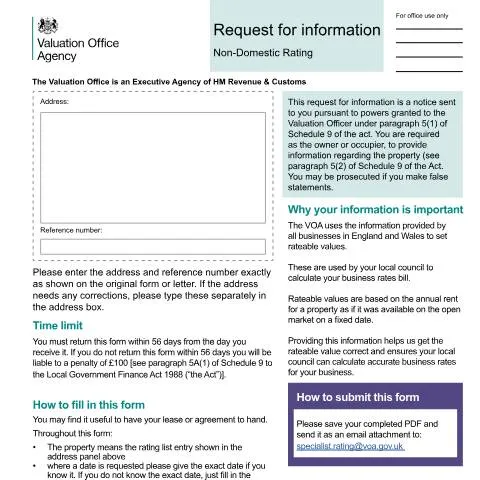
Public houses across England and Wales may find themselves facing an unexpected but entirely legitimate demand from HM Revenue & Customs' Valuation Office Agency: form VO 6010, a comprehensive request for rental and trading information. This eight-page document represents one of the most detailed financial inquiries a pub operator will encounter from government authorities, carrying significant legal weight and potential penalties for non-compliance.
Unlike routine tax returns or licensing renewals, this notice arrives under specific statutory powers granted to Valuation Officers under the Local Government Finance Act 1988. The business rates system depends entirely on accurate property valuations, and licensed premises present particular challenges due to their unique trading characteristics, tied arrangements, and complex revenue streams spanning accommodation, gaming, and various licensing activities.
The form's scope extends far beyond basic rental details, demanding three years of trading receipts broken down by category, licensing conditions, tie arrangements with breweries, and detailed accommodation occupancy rates. For many pub operators, this represents the first time they must systematically analyse and present their business model to government officials in such granular detail.
Statutory Powers and Legal Framework Behind the Request
The VO 6010 operates under paragraph 5(1) of Schedule 9 of the Local Government Finance Act 1988, granting Valuation Officers considerable investigative powers. This statutory authority extends to both property owners and occupiers, making it legally binding regardless of whether you hold the freehold, operate under a lease, or manage through other arrangements.
The legislation specifically empowers the Valuation Officer to request information necessary for "compiling a new rating list or maintaining an existing rating list." For licensed premises, this becomes particularly complex because rateable values must reflect the annual rental value a property would achieve on the open market at a fixed valuation date, typically every five years during revaluation cycles.
| Compliance Requirement | Legal Consequence | Timeframe |
|---|---|---|
| Return completed form | Avoid £100 penalty | 56 days from receipt |
| Provide accurate information | Avoid prosecution for false statements | Ongoing obligation |
| Include all requested financial data | Ensure accurate rateable value assessment | Three years' trading history |
The penalty regime operates automatically: failure to return the form within 56 days triggers a £100 fine under paragraph 5A(1) of Schedule 9. More seriously, providing false information constitutes a criminal offence, potentially leading to prosecution. This dual enforcement mechanism reflects the critical importance of accurate data in the business rates system, which generates approximately £25 billion annually for local authorities.
Why Licensed Premises Face Enhanced Scrutiny
Public houses occupy a unique position in the non-domestic rating system because their valuation methodology differs fundamentally from standard commercial properties. While most businesses are valued on a comparative rental basis, licensed premises often require the "receipts and expenditure" method, analysing actual trading performance to establish rental capacity.
This approach becomes necessary because the licensing regime, tie arrangements with pub companies, and the integration of accommodation, catering, and entertainment activities create property values that cannot be determined through simple rental comparisons. The VOA must understand how these complex revenue streams interact to generate sustainable rental levels.
Navigating the Complex World of Pub Trading Relationships
Section B of the VO 6010 immediately confronts operators with questions about tie arrangements – the commercial relationships that define much of the UK pub trade. Whether you operate under a "full tie," "beer only," or "partial tie" arrangement fundamentally affects both your trading flexibility and the property's rental value potential.
Full tie arrangements typically restrict operators to purchasing all or most products through the pub company, often at premium prices offset by reduced rent or capital contributions. The form requires detailed disclosure of these arrangements because they directly impact the property's open market rental value – a tied house cannot command the same rent as a free house due to trading restrictions.
Gaming machine revenues present particular complexity, with the form specifically requesting "NET" figures after deducting prizes, hire charges, and licence fees. The division of AWP (Amusement With Prizes) takings between operator and landlord/pub company must be precisely documented, as these arrangements significantly influence the property's income-generating capacity.
Accommodation and Mixed-Use Complexities
For establishments offering accommodation, Part B demands average occupancy rates alongside revenue breakdowns. This requirement reflects the VOA's need to understand how letting rooms contribute to overall property value, particularly relevant for country pubs with accommodation or city centre establishments operating as pub-hotels.
The form distinguishes between "accommodation excluding meals" and food revenues, recognising that many establishments operate integrated food and accommodation services. Operators must carefully separate these revenue streams, as each contributes differently to the property's rental value calculation.
Financial Disclosure Requirements and Trading Analysis
The three-year trading history requirement in Part B represents the form's most demanding element. Unlike annual accounts prepared for Companies House or HMRC purposes, the VO 6010 requires revenue categorisation specifically designed for rating valuation purposes.
- Intoxicating liquor including soft drinks, crisps, nuts – acknowledging that wet sales extend beyond alcohol alone
- Food excluding wines and liqueurs – separating kitchen operations from bar sales
- Accommodation excluding meals – isolating pure letting income
- Other receipts including admission charges – capturing entertainment, function hire, and ancillary activities
- AWP machine takings NET of all deductions – providing clear gaming revenue analysis
Each category requires turnover figures excluding VAT, ensuring consistency with standard accounting practices. However, operators must also indicate whether revenues are shared with landlords or pub companies, as this affects the tenant's actual income and consequently the sustainable rent level.
Handling Incomplete Trading Periods
The form accommodates businesses with incomplete trading years or interrupted operations by requesting the "relevant number of weeks" for each financial year. This flexibility proves essential for seasonal operations, businesses affected by licensing issues, or establishments undergoing refurbishment.
New operators who cannot provide three years' history must still complete available periods, as the VOA can extrapolate from shorter trading periods or seek comparative data from similar establishments. The key requirement is accurate reporting of actual performance rather than projections or estimates.
Rental Arrangements and Market Value Assessment
Parts D and E of the VO 6010 shift focus from trading performance to rental arrangements, seeking to establish whether current rent levels reflect genuine market value or result from special circumstances. This analysis proves crucial because rateable values must be based on hypothetical open market rental values rather than actual rents paid.
Question 9 identifies recent rental changes, reviews, or negotiations within the past three years. The VOA particularly values information about rent reviews conducted "other than by reference to turnover or RPI" because these suggest arms-length market negotiations rather than formula-based adjustments.
| Rental Scenario | Valuation Impact | Required Disclosure |
|---|---|---|
| Recent market rent review | Strong market evidence | New rent level and review date |
| Rent under current review | Potential market indicator | Review circumstances and progress |
| Lease renewal negotiation | Market testing in progress | Terms under discussion |
| Rent below market value | Requires market value estimate | Reason for below-market rent |
Identifying Non-Market Rental Arrangements
Question 12 directly addresses whether the current rent reflects open market value, with specific options for below-market arrangements. Common scenarios include percentage-based rents, where payments are calculated as a proportion of turnover rather than fixed amounts, and historic rent levels fixed when leases were originally granted, potentially decades ago.
Family arrangements, company reorganisations, or long-term agreements may result in rents significantly below market levels. The VOA requires full disclosure of such arrangements because the rateable value must still reflect hypothetical market rent, regardless of actual payments made.
Licensing Conditions and Operational Restrictions
Part A of the form addresses licensing conditions and operational restrictions that directly impact the property's commercial potential. Questions about operating hours before 10:00 AM or after 11:30 PM reflect the significant value difference between standard pub licences and extended hours operations.
The form specifically requests details of premises licence conditions restricting use of all or part of the property. These might include noise limitations affecting entertainment areas, capacity restrictions in function rooms, or conditions preventing certain activities like live music or dancing. Such restrictions directly reduce the property's rental value potential.
Enforcement action history, including suspensions, closure orders, or temporary restrictions, must be disclosed as these events can significantly impact both current trading and future licence security. The VOA considers licence stability when assessing long-term rental value, as prospective tenants factor enforcement risk into rental bids.
Separate Business Operations and Concessions
Part C addresses separate business operations conducted within the premises but not reflected in the main trading figures. Common examples include franchise coffee operations, external catering companies operating restaurant areas, or accommodation management by third-party operators.
These arrangements complicate valuation because they may indicate either additional rental capacity (if the main operator receives concession fees) or reduced operational control (if areas are effectively sub-let). The VOA requires full disclosure to understand the property's true income-generating potential under different management scenarios.
Submission Process and Administrative Compliance
The VO 6010 operates exclusively through digital submission to [email protected], requiring completion as a PDF attachment. This electronic-only approach reflects the VOA's modernisation efforts but may challenge operators more comfortable with paper-based processes.
Large print versions remain available on request from the same email address, ensuring accessibility compliance under the Data Protection Act 2018 and UK GDPR requirements. The form includes specific guidance to "save your completed PDF" before submission, preventing data loss during the completion process.
The 56-day compliance deadline runs from the day you receive the form, not from the date printed on the document. This distinction proves important for establishments with complex postal arrangements or where forms are initially received by managing agents or head office functions rather than site operators.
Record-Keeping and Documentation Strategy
Successful completion of the VO 6010 requires systematic preparation of supporting documentation. The form advises having your "lease or agreement to hand," but comprehensive preparation extends much further:
- Three years' management accounts with revenue analysis by category
- Premises licence and any variations showing current permitted activities
- Lease or tenancy agreement including all schedules and side letters
- AWP machine agreements showing revenue-sharing arrangements
- Tie agreements or supply contracts with pub companies or breweries
- Accommodation booking records supporting occupancy rate calculations
Many operators discover gaps in their record-keeping when completing the form, particularly regarding gaming machine revenues or accommodation occupancy rates. The VOA expects precise figures rather than estimates, making robust internal recording systems essential for compliance.
Post-Submission Process and Valuation Outcomes
Submission of the completed VO 6010 initiates a detailed valuation analysis that may extend over several months. The VOA combines your submitted data with comparable evidence from other licensed premises, rental transactions, and market intelligence to establish or confirm rateable values.
The information becomes part of the property's permanent valuation record, influencing not only current assessments but also future revaluations. Accurate initial submission proves crucial because subsequent amendments or corrections may trigger additional inquiries or delay the valuation process.
Following analysis, the VOA may issue a revised rateable value, confirm the existing assessment, or request additional information. Significant changes trigger automatic notification to your local billing authority, potentially affecting business rates bills from the next financial year.
Operators who disagree with resulting valuations may appeal through the Valuation Tribunal for England or Wales, but the VO 6010 data forms the foundation of the VOA's case. Comprehensive and accurate initial completion therefore provides the best foundation for any subsequent appeal proceedings, while incomplete or inaccurate submission may undermine future challenges to the assessment.