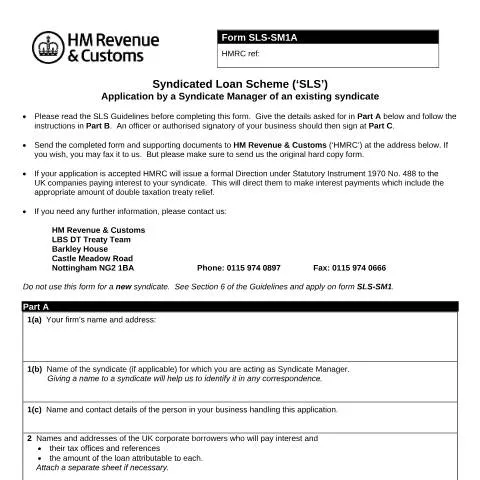
Navigating the SLS-SM1A: The Syndicate Manager's Essential Document
In the intricate world of international financing, syndicates play a pivotal role in facilitating loans across borders. For those involved as Syndicate Managers, understanding the nuances of the SLS-SM1A form is essential. This document is not merely a bureaucratic requirement; it serves as the gateway for securing double taxation treaty relief for syndicates already in operation. By correctly completing and submitting this form to HM Revenue & Customs (HMRC), managers can ensure compliance and optimize tax efficiency for their syndicate's members.
A Closer Look at the Syndicate Loan Scheme
The Syndicated Loan Scheme (SLS) allows groups of lenders to come together to fund a single loan. This arrangement can significantly reduce risk exposure and lower the overall cost of borrowing for borrowers. However, to benefit from the tax efficiencies offered by this scheme, it’s imperative that the SLS-SM1A form is filled out accurately and submitted on time. The importance of this form cannot be overstated; it is a critical piece of documentation that formally requests HMRC’s direction on applying double taxation treaty relief.
Understanding the Role of the SLS-SM1A Form
This form is crafted specifically for Syndicate Managers representing existing syndicates. It is designed to collect vital information regarding the syndicate's structure, the loans involved, and the lenders’ qualifications for tax relief. Essentially, the SLS-SM1A form allows HMRC to assess which interest payments can benefit from reductions due to treaties established between the UK and other countries.
Distinguishing the SLS-SM1A from Other Forms
It’s crucial to understand that the SLS-SM1A is not interchangeable with other forms in the HMRC catalog, specifically the SLS-SM1, which is intended for new syndicates. This distinction is vital; using the wrong form can lead to prolonged processing times or even outright rejection of your application.
Key Differences Between SLS-SM1 and SLS-SM1A
| Form Code | Purpose | Target Audience |
|---|---|---|
| SLS-SM1 | Application for new syndicates | New Syndicate Managers |
| SLS-SM1A | Application for existing syndicates | Existing Syndicate Managers |
Understanding these differences safeguards against potential pitfalls in the application process and ensures that the right information is submitted to HMRC.
Preparation: Gathering Necessary Justifications
Before diving into the completion of the SLS-SM1A, it’s essential to prepare and assemble all necessary documentation. This preparation not only streamlines the filling out process but also mitigates the risk of errors that could delay your application.
Required Documentation
- Details of the Syndicate: Firm’s name, the name of the syndicate, and the contact person responsible.
- Loan Information: Names and addresses of UK corporate borrowers, tax offices, and the total amount borrowed.
- Interest Payment Details: Specify the first interest payment date and the frequency of payments thereafter.
- Lending Members Documentation: A detailed list of lending members, their residence, and tax shares.
- HMRC References: Any prior HMRC references for past treaty relief applications associated with members of the syndicate.
Completing the SLS-SM1A: Step-by-Step Guidance
Filling out the SLS-SM1A form requires meticulous attention to detail. Each section must be completed accurately to prevent any delays in processing. Below, we break down how to fill out the form effectively.
Part A: Syndicate and Loan Details
In Part A, the Syndicate Manager must provide information about the firm, the syndicate, and pertinent loan details:
- Firm’s Name and Address: Make sure that this is the legal name of the firm.
- Syndicate Name: If applicable, provide a recognizable name to help HMRC identify the syndicate.
- Contact Person: Include the name and contact details of the individual managing the application.
- Borrower Details: List out the UK corporate borrowers alongside their tax references.
- Loan Specifications: Include the loan date, maximum facility amount, and first interest payment details.
Part B: Listing Lending Members
Part B requires a comprehensive list of lending members, grouped by their country of residence. This section is crucial for identifying the specific shares of interest payments that each member is entitled to:
“The format for listing should be clear and comply with the guidelines, ensuring that all necessary information is accurately portrayed.”
Part C: Declaration and Signature
In the final part, the Syndicate Manager must affirm their authority to act on behalf of the syndicate. This section includes a declaration that all parties are represented accurately and that the syndicate agrees to comply with the SLS guidelines. Signature, date, and position are also crucial to validate this application.
Channels for Submission: The Pathway to HMRC
Once the SLS-SM1A is completed, the next critical step is its submission to HMRC. Understanding the various channels available for submitting the form can enhance the efficiency of your application process.
Submission Methods
- Postal Submission: The traditional method involves sending the completed form and supporting documents to the specified address: HM Revenue & Customs, LBS DT Treaty Team, Barkley House, Castle Meadow Road, Nottingham NG2 1BA.
- Fax Submission: Although less common, you can fax the application. However, it is imperative to follow up with the hard copy submission.
- Compliance with Data Protection: Ensure that you adhere to the provisions under the Data Protection Act 2018 and UK GDPR when submitting any personal data.
After Submission: The HMRC's Processing Journey
After submission, the SLS-SM1A does not enter a black hole. Instead, it goes through a specific process at HMRC that a Syndicate Manager should be aware of.
What Happens Next?
Once the form is received, HMRC will review the application for accuracy and completeness. They may reach out for additional information if required. If accepted, HMRC will issue a formal Direction under Statutory Instrument 1970 No. 488, which will guide UK companies to make interest payments including the appropriate double taxation relief. This direction is a crucial document for both the syndicate and the lending members.
Tracking Your Application
It’s advisable for the Syndicate Manager to maintain a record of the submission, including the date sent and the method used. In instances where clarification or follow-up is needed, having this information readily available can expedite communication with HMRC.
Understanding the Profile of Syndicate Managers
Different Syndicate Managers may encounter varying situations based on the syndicate's composition and the complexity of the loans involved. Understanding these profiles can help in tailoring the application process appropriately.
Common Profiles of Syndicate Managers
- Experienced Syndicate Managers: Often familiar with the SLS process, they are adept at collecting documentation and understanding tax implications effectively.
- New Syndicate Managers: They may require additional guidance on the provisions of the SLS and how to manage syndicate relationships efficiently.
- Large Syndicates vs. Smaller Syndicates: Larger syndicates may encounter more complex arrangements requiring detailed documentation, whereas smaller syndicates might have simpler structures.
Special Considerations for Complex Situations
Complex financial arrangements may necessitate unique considerations when filling out the SLS-SM1A. For instance, syndicates that include members from different jurisdictions must ensure compliance with international tax laws in addition to UK regulations.
Exceptions and Key Considerations
- Multiple Currencies: If loans are issued in different currencies, managers must be prepared to provide detailed exchange rate information to HMRC.
- Changes in Syndicate Composition: If new lenders join the syndicate, a re-evaluation of the SLS-SM1A form might be required, along with additional supporting documents.
- Significant Loan Amounts: Loans that exceed typical thresholds may attract additional scrutiny; therefore, comprehensive documentation is critical.
Final Thoughts on the SLS-SM1A Process
Completing the SLS-SM1A form is an integral part of the syndicate financing landscape. This document does not exist in isolation; it is part of a broader framework that includes compliance with double taxation treaties and adherence to UK tax regulations. For Syndicate Managers, mastering the nuances of this form can lead to significant financial advantages for their syndicate's members.
In the fast-paced world of finance, ensuring that every detail is correct and every document is in order can make the difference between smooth operations and potential liabilities. Therefore, approaching the SLS-SM1A with diligence and precision is not just advisable, but essential.
Understanding the Role of a Syndicate Manager in International Taxation
The position of a Syndicate Manager is crucial in the realm of international taxation, particularly for the management of syndicates within insurance markets. In the UK, syndicates typically operate under the Lloyd's of London framework, where each syndicate is a collective of investors who jointly underwrite insurance policies. This role requires a comprehensive understanding of various international tax treaties and local tax liabilities to ensure compliance and optimise tax positions.
A Syndicate Manager must navigate both UK tax regulations and international tax laws that could impact the syndicate’s operations. This includes an understanding of transfer pricing rules, which govern the pricing of transactions between subsidiaries of multinational corporations, as well as any applicable withholding taxes on cross-border payments. The manager must ensure that the syndicate adheres to the rules outlined by HM Revenue & Customs (HMRC) regarding the taxation of profits, income sources, and capital gains, as they apply to international operations.
Moreover, the Syndicate Manager should be familiar with the implications of the Data Protection Act 2018 and UK GDPR, especially considering the sensitive nature of financial data involved in underwriting processes. Proper data management and processing are essential to mitigate risks associated with non-compliance, which could result in penalties or reputational damage.
Tax Treaties and Their Impact on Syndicate Operations
Tax treaties between the UK and other countries play a significant role in how syndicates manage their international tax obligations. These treaties are established to prevent double taxation and provide clarity on which jurisdiction has the taxing rights over various income types. For example, a syndicate that writes insurance business in a foreign country will need to ascertain whether tax treaty provisions apply, which could reduce the overall tax burden.
The importance of understanding these treaties cannot be overstated. Each tax treaty has its own provisions that define residency, types of taxable income, and exemptions. For instance, if a syndicate is able to prove that it is resident in the UK under the terms of a tax treaty, it may be exempt from paying certain local taxes on income generated abroad. Syndicate Managers must be equipped to interpret these treaties and apply them correctly in their tax calculations.
Additionally, many treaties include provisions for exchange of information, which can lead to increased scrutiny by tax authorities. It is critical for Syndicate Managers to maintain meticulous records of all transactions and communications to ensure that they can adequately demonstrate compliance if required by HMRC or other foreign tax authorities.
Practical Steps for Completing the SLS-SM1A Form
Filing the SLS-SM1A form is a key administrative responsibility for Syndicate Managers operating internationally. This form, designed for the submission of information regarding syndicate members and their international tax obligations, must be completed accurately and submitted to HMRC.
To begin with, Syndicate Managers need to gather all relevant information about the syndicate's operations, including details about its members, the nature of the insurance business, and the jurisdictions involved. Each member's National Insurance number, tax residency, and any applicable tax identification numbers should be documented to streamline the submission process.
It is paramount that the form is filled out with the utmost precision, as inaccuracies can lead to delays in processing or, worse, penalties from HMRC. Additionally, keeping abreast of any changes in tax legislation or HMRC guidelines regarding the SLS-SM1A form is essential to ensure compliance. Updates can arise due to changes in international tax agreements or domestic tax law, necessitating a review of the form and its requirements periodically.
Furthermore, it may be beneficial for Syndicate Managers to seek advice from tax professionals or legal experts who specialise in international tax compliance, as they can provide insights into complex scenarios and help ensure accurate filings.