Understanding Fair Rent Applications: A Critical Tool for Regulated Tenancies
When landlords and tenants find themselves at odds over rental charges, or when either party believes the current rent exceeds what constitutes a reasonable market rate, the Fair Rent Application emerges as a statutory mechanism rooted in decades of housing legislation. This process, administered jointly by HM Revenue & Customs and the Valuation Office Agency, represents one of the few remaining vestiges of rent control in England and Wales, applying specifically to regulated tenancies established before the Housing Act 1988 transformed the private rental landscape.
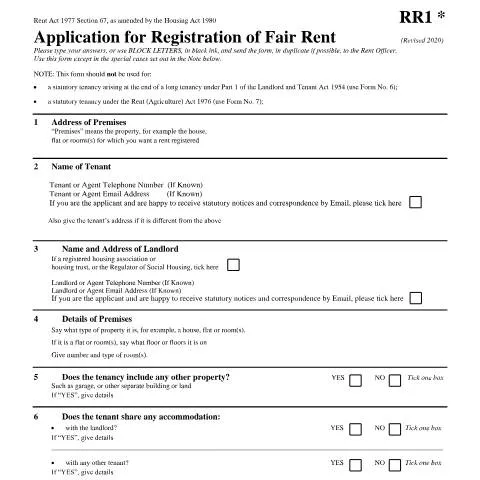
The application process centres on Form RR1, a document that has evolved considerably since its original conception under the Rent Act 1977. Unlike modern assured shorthold tenancies where market forces largely determine rental levels, regulated tenancies benefit from this statutory protection mechanism that can result in legally binding rent determinations. The implications extend far beyond simple cost considerations—a successful fair rent registration can provide tenants with significant financial relief whilst offering landlords clarity on sustainable rental income within the legal framework.
The Regulatory Framework Behind Fair Rent Determinations
The foundation for fair rent applications lies in Section 67 of the Rent Act 1977, subsequently amended by the Housing Act 1980. This legislation established the principle that certain tenancies should be subject to rent regulation, with determinations made by qualified Rent Officers rather than left purely to market negotiation. The system recognises that in some circumstances, particularly where tenants have limited mobility or face housing shortages, additional protection beyond standard contractual arrangements becomes necessary.
The Valuation Office Agency's involvement reflects the technical expertise required for property assessment, whilst HMRC's role ensures proper integration with broader housing and taxation policies. This dual oversight mechanism acknowledges that fair rent determinations impact both immediate housing costs and longer-term fiscal planning for both parties.
Crucially, the legislation distinguishes between different categories of tenancy arrangements. The RR1 form explicitly excludes certain scenarios: statutory tenancies arising from long tenancy terminations under the Landlord and Tenant Act 1954 require Form 6, whilst agricultural tenancies under the Rent (Agriculture) Act 1976 necessitate Form 7. This specificity prevents administrative confusion and ensures applications reach the appropriate assessment pathway.
Eligibility Criteria and Qualifying Circumstances
Fair rent applications apply exclusively to regulated tenancies—arrangements that predate the significant legislative changes of the late 1980s. Most private sector tenancies created after 15 January 1989 fall under assured shorthold arrangements and cannot benefit from fair rent protection. However, certain categories of accommodation continue to qualify, including some housing association properties and tenancies that have maintained regulated status through succession or assignment.
The application process accommodates various scenarios: landlords seeking rent increases, tenants challenging excessive charges, or joint applications where both parties agree to seek official determination. Shared ownership arrangements receive particular attention, with specific provisions for calculating fair rent proportions based on the tenant's ownership percentage and associated management costs.
| Tenancy Type | Form Required | Key Considerations |
|---|---|---|
| Standard Regulated Tenancy | RR1 | Include all services and furniture |
| Long Tenancy Conversion | Form 6 | Landlord and Tenant Act 1954 provisions |
| Agricultural Tenancy | Form 7 | Rent (Agriculture) Act 1976 framework |
| Shared Ownership | RR1 (modified) | Ownership percentage and management costs |
Navigating the Application Components: From Property Details to Financial Calculations
The RR1 form's structure reflects the comprehensive assessment required for fair rent determination. Sections 1-3 establish the fundamental relationship dynamics: precise property identification, tenant details including contact preferences for electronic correspondence, and landlord information with specific provisions for registered housing associations or housing trusts.
Property description requirements extend beyond basic room counts. Section 4 demands detailed accommodation analysis, including floor levels for flats, specific room types, and any shared facilities. This granularity enables Rent Officers to make accurate comparisons with similar properties and assess the relative value of different accommodation elements.
The treatment of additional property elements in Section 5 often proves crucial for rural or suburban properties. Garages, gardens, outbuildings, or separate land parcels can significantly impact fair rent calculations, particularly where these features provide practical benefits or generate additional costs for maintenance and insurance.
Shared accommodation arrangements receive detailed scrutiny through Section 6. Whether sharing occurs with landlords or other tenants affects both privacy considerations and the practical value of the accommodation. Rent Officers must distinguish between arrangements that genuinely reduce accommodation value and those that represent reasonable use of communal facilities.
Financial Disclosure and Service Charge Complications
Section 7 represents the application's financial core, requiring applicants to specify their desired fair rent figure. This amount must include all service charges and furniture provision costs whilst explicitly excluding rates. However, council tax presents particular complexity: where tenants pay council tax directly to landlords rather than local authorities, this amount becomes part of the rent calculation.
The distinction between different council tax arrangements often confuses applicants. Section 7a addresses tenant liability to landlords for council tax, whilst Section 7b covers situations where landlords retain direct responsibility for council tax payments. Houses in multiple occupation frequently trigger landlord council tax liability, except where student exemptions apply. These variations significantly impact the final rent calculation and require careful documentation.
Service provision details in Section 8 encompass cleaning, lighting, heating, hot water, and gardening services. For landlord applications, detailed expenditure breakdowns become mandatory—Rent Officers cannot process applications lacking this financial transparency. This requirement ensures fair rent determinations reflect genuine service costs rather than speculative charges.
Furniture provision under Section 10 requires comprehensive listing, often best achieved through detailed inventories attached to the application. The age, condition, and replacement value of furnished items influences fair rent calculations, particularly where landlords claim significant furniture-related costs.
Service Charge Assessment Methodology
- Cleaning services: Frequency, scope, and professional versus landlord provision
- Utilities: Separate metering arrangements and consumption monitoring systems
- Maintenance: Planned maintenance schedules and emergency response provisions
- Gardening: Seasonal requirements and tenant access to outdoor spaces
Historical Context and Previous Determinations
Section 13 addresses previous fair rent registrations, introducing the critical 21-month rule. Applications cannot normally proceed if a fair rent determination took effect less than one year and nine months previously, unless exceptional circumstances justify earlier review. This provision prevents excessive application frequency whilst allowing responses to significant changes in circumstances or property conditions.
Where previous registrations exist, applicants must demonstrate material changes justifying fresh assessment. Major improvements, substantial repairs, or significant service provision changes can trigger legitimate review requests. However, minor maintenance work or routine decoration rarely meets the threshold for early reconsideration.
The assessment of tenant improvements versus landlord responsibilities requires careful distinction. Work undertaken by tenants beyond their tenancy obligations can reduce fair rent levels, whilst tenant-caused damage or neglect may justify higher charges. These considerations often prove contentious, requiring detailed evidence and clear documentation of responsibility allocation.
Procedural Requirements and Documentation Standards
The application process demands duplicate submission where possible, reflecting the multi-party nature of most fair rent determinations. Black ink completion ensures document clarity for scanning and reproduction, whilst the preference for typed responses accommodates modern digital preparation methods alongside traditional handwritten completion.
Tenancy agreement attachment provides Rent Officers with essential context for assessing repair responsibilities, service obligations, and other contractual terms affecting property value. Where formal agreements lack clarity or omit crucial details, applicants should provide supplementary explanations addressing specific responsibilities and arrangements.
Electronic correspondence options reflect modernised administrative approaches, allowing applicants to receive statutory notices and ongoing correspondence via email. This option expedites communication whilst maintaining formal legal requirements for proper notice provision.
Essential Supporting Documentation
- Tenancy agreements (original or certified copies)
- Service expenditure records for landlord applications
- Furniture inventories with condition assessments
- Previous rent registration certificates where applicable
- Improvement or repair documentation evidencing property changes
Processing Pathways and Administrative Outcomes
Once submitted, applications enter a structured assessment process involving property inspection, comparable property analysis, and detailed financial review. Rent Officers possess extensive powers to request additional information, conduct hearings, and make binding determinations that affect both current and future rental arrangements.
The determination process typically involves physical property inspection, enabling Rent Officers to assess accommodation quality, repair standards, and service provision reality against application claims. These inspections often reveal discrepancies between application descriptions and actual conditions, potentially affecting final rent levels significantly.
Fair rent certificates, once issued, establish maximum chargeable rents for the specified property and tenancy arrangement. Landlords cannot exceed registered fair rent levels without risking legal challenge and potential penalties. Conversely, tenants benefit from clear protection against excessive charges and formal recourse where landlords attempt unauthorised increases.
The registration remains effective until superseded by subsequent applications or tenancy termination. However, changing circumstances—property improvements, service provision changes, or significant market shifts—can justify fresh applications subject to the 21-month limitation period.
Fair rent determinations create legally binding obligations affecting both landlord income and tenant expenditure. The process requires careful preparation, comprehensive documentation, and realistic expectation management regarding likely outcomes and timescales.
Strategic Considerations for Different Applicant Categories
Landlord applicants face particular challenges in justifying proposed rent levels through detailed service expenditure disclosure and property condition evidence. Successful applications typically demonstrate clear correlation between requested rents and genuine accommodation value, supported by comparable property analysis and transparent financial accounting.
Tenant applicants benefit from focusing on accommodation deficiencies, excessive service charges, or disproportionate rent levels compared to local market conditions. However, tenant applications require careful balance—challenging excessive charges whilst maintaining positive landlord relationships for ongoing tenancy success.
Joint applications often achieve smoother processing and more predictable outcomes, demonstrating collaborative approaches to rent determination whilst ensuring both parties understand and accept likely results. These applications can expedite processing whilst reducing adversarial tensions that sometimes complicate single-party submissions.
Housing association and social housing provider applications operate within specific regulatory frameworks, requiring coordination between fair rent procedures and broader social housing allocation and management policies. These applications often involve complex service charge calculations and cross-subsidy arrangements affecting final rent determinations.
Rent Officer Determinations: Understanding the Decision-Making Process
When your fair rent application reaches the Rent Officer, understanding their assessment methodology can help you prepare a stronger case and anticipate potential outcomes. The Rent Officer operates independently from both landlord and tenant, applying statutory criteria established under the Rent Act 1977 to determine what constitutes a reasonable market rent.
The assessment process typically begins with a desktop evaluation of your submitted Form 1 or Form 4. The Rent Officer examines comparable properties in your area, considering recent fair rent determinations for similar accommodation. They maintain extensive databases of local rental values, including both regulated and market rents, which inform their preliminary assessment.
Physical inspections occur when the Rent Officer deems them necessary, particularly for properties with unique characteristics or where significant discrepancies exist between the current rent and comparable properties. During inspections, they evaluate the property's condition, size, layout, and amenities against the details provided in your application. Any substantial differences from your original description could influence the final determination.
The scarcity adjustment represents a crucial element often misunderstood by applicants. Under Section 70 of the Rent Act 1977, the Rent Officer must disregard any increase in rental value attributable to housing shortage in the local area. This adjustment typically reduces the assessed rent below current market levels, reflecting the legislation's protective intent for regulated tenants.
Rent Officers consider various property factors when making determinations. The age, character, and locality of the dwelling carry significant weight, alongside the quality and extent of furniture and services provided by the landlord. Modern amenities such as central heating, double glazing, or recently fitted kitchens and bathrooms can justify higher fair rent levels.
The condition and state of repair also influence assessments. Properties requiring substantial maintenance work may receive lower determinations, while well-maintained accommodation commands higher fair rents. However, the Rent Officer distinguishes between landlord-maintained features and tenant improvements, ensuring tenants don't pay increased rent for their own property enhancements.
Geographic variations significantly impact fair rent levels across different regions. London and the South East typically see higher determinations reflecting local property values, while northern regions and rural areas often record more modest fair rent levels. The Rent Officer considers local economic conditions, transport links, and area desirability when making these regional adjustments.
Once determined, fair rents remain valid for specific periods. Most determinations last two years before becoming eligible for review, though either party can apply for earlier reassessment if circumstances change substantially. Rent Officers may also conduct periodic reviews of their own initiative, particularly in areas experiencing significant property market fluctuations.
Challenging Rent Officer Decisions: The Appeals Process
When disagreeing with a Rent Officer's determination, both landlords and tenants possess legal rights to challenge the decision through the Residential Property Tribunal system. Understanding this appeals process proves essential for securing fair outcomes, particularly when significant financial implications arise from the original determination.
The appeal window typically spans 28 days from the determination notice date, though exceptional circumstances may warrant extensions. Your appeal application must clearly articulate specific grounds for disagreement, supported by relevant evidence demonstrating why the determination appears incorrect or inappropriate for your property.
Valid grounds for appeal include procedural errors during the assessment process, failure to consider relevant property features, incorrect application of statutory criteria, or significant changes in property condition since the original application. Appeals based solely on disagreement with the final rent level rarely succeed without substantial supporting evidence.
Preparing your appeal requires methodical documentation of your case. Gather recent comparable property evidence, professional valuations if available, detailed photographs highlighting property features or defects, and any correspondence with the Rent Officer that might support your position. Estate agent particulars for similar local properties can provide valuable market context.
The Residential Property Tribunal operates independently from the Rent Officer service, providing an impartial forum for reviewing disputed determinations. Tribunal members typically include legally qualified chairpersons alongside property experts with extensive knowledge of local rental markets and valuation principles.
Tribunal hearings follow structured procedures allowing both parties to present evidence and arguments. You can represent yourself or engage professional representation, though legal aid remains unavailable for most fair rent appeals. Many appellants successfully represent themselves using well-prepared documentation and clear presentation of their case.
During hearings, the Tribunal examines all available evidence, including the original application, Rent Officer's determination reasoning, and new evidence presented by the appellant. They may also conduct their own property inspections when necessary to resolve factual disputes about property conditions or characteristics.
Tribunal decisions carry legal authority, replacing the original Rent Officer determination if the appeal succeeds. Successful appeals may result in increased or decreased fair rent levels, depending on whether landlords or tenants initiated the challenge. The Tribunal can also uphold original determinations when appeals lack sufficient merit.
Further appeals to higher courts remain possible but face strict limitations. Appeals to the Upper Tribunal (Lands Chamber) require permission and typically succeed only when significant legal errors occurred during the initial Tribunal process. Most fair rent disputes conclude at the Residential Property Tribunal level.
Strategic Considerations for Landlords and Property Management
Property owners subject to fair rent regulations must navigate complex strategic decisions balancing rental income optimization with regulatory compliance. Understanding how fair rent applications impact long-term property investment returns helps landlords make informed decisions about their regulated tenancy portfolios.
Proactive rent management begins with regular monitoring of fair rent determination patterns in your local area. Many landlords maintain detailed records of comparable property determinations, tracking how Rent Officers assess similar accommodation types. This intelligence helps predict likely outcomes when considering fair rent applications or planning property improvements.
Property enhancement strategies require careful consideration under fair rent regulations. While improvements may justify higher determinations, the return on investment often differs significantly from market rent scenarios. Focus improvements on features that Rent Officers typically recognize in their assessments, such as modern heating systems, updated kitchens and bathrooms, or enhanced security measures.
The timing of improvement works relative to fair rent applications can influence outcomes. Completing significant enhancements before submitting applications ensures Rent Officers consider these features in their assessments. However, major works undertaken immediately before applications may face scrutiny regarding their genuine completion and impact on rental value.
Portfolio diversification strategies often involve gradually transitioning away from regulated tenancies toward assured shorthold arrangements when legally possible. This typically occurs when regulated tenants vacate naturally, allowing landlords to re-let properties under more flexible rental terms. However, forced eviction attempts to achieve this transition often prove legally challenging and financially costly.
Professional property management companies increasingly specialize in regulated tenancy administration, offering expertise in fair rent procedures, compliance requirements, and tenant relationship management. Their services can prove valuable for landlords unfamiliar with regulated tenancy complexities or those managing multiple regulated properties across different areas.
Financial planning considerations extend beyond immediate rental income impacts. Fair rent determinations influence property valuations for mortgage and insurance purposes, affecting refinancing options and investment strategies. Some lenders apply different criteria to regulated tenancy properties, recognizing their unique income characteristics and tenant security provisions.
Tax implications also merit consideration, particularly regarding allowable expenses and capital allowances. Property improvements qualifying for capital allowances may provide tax benefits offsetting some costs, while maintenance expenses remain deductible against rental income as usual. Professional tax advice proves valuable for optimizing the financial impact of fair rent determinations.
Long-term planning increasingly involves succession arrangements for regulated tenancies. Understanding how statutory succession rights affect property inheritance and estate planning helps landlords make informed decisions about their property portfolios and family financial arrangements. These considerations often influence whether to maintain or gradually exit regulated tenancy investments.