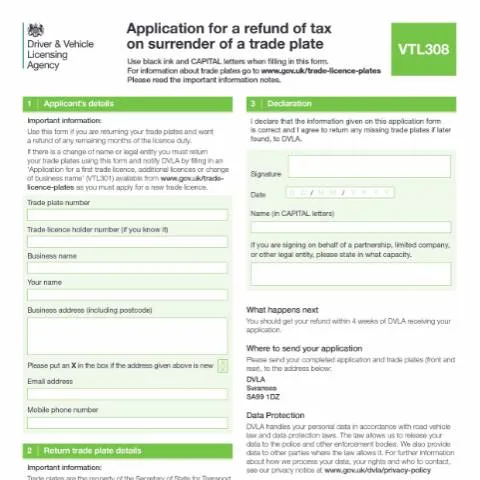
When Trade Licence Holders Surrender Their Plates: Understanding the VTL308 Refund Process
Motor traders across the UK routinely face situations where they need to surrender their trade plates before the licence period expires. Whether due to business closure, downsizing operations, or simply no longer requiring the plates, the VTL308 form serves as the official gateway to reclaiming unused vehicle excise duty. This DVLA document handles what can be a surprisingly complex administrative process, particularly when plates have been lost, stolen, or when business circumstances have changed significantly since the original licence was issued.
The refund mechanism operates on the principle that vehicle excise duty paid in advance should be recoverable when the service is no longer required. However, the process involves strict conditions around plate surrender, timing requirements, and documentation that can catch even experienced traders off-guard. Understanding these nuances becomes crucial when dealing with the four-week processing window and the various scenarios where standard procedures may not apply.
The Anatomy of Trade Plate Surrender: Who Needs Form VTL308
Form VTL308 specifically targets trade licence holders who have decided to return their plates before the natural expiry of their licence period. This encompasses a broader range of circumstances than many applicants initially realise. The form distinguishes between several categories of users, each with particular requirements and potential complications.
Primary Applicant Categories
Individual traders operating under their own name represent the most straightforward category. These applicants complete the form using their personal details as both the licence holder and the signatory. The process becomes more complex when dealing with partnerships, limited companies, or other legal entities, where the form specifically requires clarification of the signing capacity.
The form addresses this complexity in its declaration section, explicitly asking signatories to "state in what capacity" they are signing when representing partnerships, limited companies, or other legal entities. This requirement reflects DVLA's need to ensure proper authority for plate surrender, as trade plates remain the property of the Secretary of State for Transport and cannot be surrendered without proper authorisation.
Business Structure Complications
When businesses undergo structural changes, the VTL308 process can become particularly intricate. The form includes specific guidance for situations involving changes of name or legal entity, directing applicants to use the separate VTL301 form for new trade licence applications rather than attempting to modify existing arrangements through VTL308.
This distinction proves crucial for businesses that might assume they can simply update their details while surrendering plates. Instead, they must complete the surrender process entirely before applying for new licences under changed circumstances, potentially creating gaps in their ability to operate legally.
Navigating the Plate Return Requirements: Physical Surrender vs. Exceptional Circumstances
The fundamental requirement for VTL308 applications centres on the physical return of trade plates, both front and rear, including any bicycle plates issued with the licence. This seemingly straightforward requirement contains several layers of complexity that can significantly impact the refund process.
Standard Plate Return Process
Under normal circumstances, applicants must surrender all plates issued with their trade licence. The form provides clear checkboxes for front plate, rear plate, and bicycle plate, requiring applicants to confirm which plates they are returning. This systematic approach ensures DVLA can account for all plates in circulation and prevent unauthorised use.
The physical plates must accompany the completed VTL308 form when sent to DVLA Swansea. This requirement cannot be waived or satisfied through alternative means under standard circumstances, as the plates remain government property throughout the licence period.
When Plates Cannot Be Returned
The form acknowledges that plates may sometimes be unavailable for return, providing specific options for lost or stolen plates. In these circumstances, applicants must provide the date when the plates were lost or stolen, and crucially, supply a police crime reference number when plates have been stolen.
| Circumstance | Required Information | Additional Requirements |
|---|---|---|
| Lost plates | Date of loss | Detailed explanation of circumstances |
| Stolen plates | Date of theft + Police crime reference | Copy of police report may be requested |
| Damaged plates | Return damaged plates with form | Explanation of damage circumstances |
The police crime reference requirement serves multiple purposes: it validates the theft claim, provides DVLA with official documentation for their records, and helps prevent fraudulent refund applications. Applicants should ensure they obtain this reference number at the time of reporting, as retrospective requests can delay the process significantly.
Completing the Application: Critical Details and Common Pitfalls
The VTL308 form demands precision in its completion, with several fields requiring specific formatting or information that may not be immediately available to all applicants. Understanding these requirements beforehand can prevent delays and rejection of applications.
Essential Identification Information
The trade plate number serves as the primary identifier for the application, linking the refund request to specific DVLA records. Applicants must provide this exactly as it appears on their plates and accompanying documentation. Similarly, the trade licence holder number acts as a secondary identifier, though the form acknowledges this may not be known by all applicants.
Business name requirements prove particularly important for corporate applicants. The form requires the business name exactly as registered with DVLA, not trading names or abbreviated versions that might appear on correspondence. Discrepancies here can result in processing delays while DVLA verifies the connection between the application and their records.
Address and Contact Information Standards
The business address field must include the complete postcode and should match DVLA records from the original licence application. The form provides a specific checkbox for new addresses, indicating that address changes require particular attention during processing.
Contact information takes on added importance given the four-week processing timeframe. DVLA may need to contact applicants for clarification or additional information, making accurate email addresses and mobile phone numbers essential for timely resolution.
Declaration and Signature Requirements
The declaration section contains crucial legal commitments that extend beyond the immediate application. Applicants declare that the information provided is correct and commit to returning any missing trade plates if later found. This ongoing obligation means that discovering previously lost plates after receiving a refund creates a legal requirement to return them to DVLA.
For corporate entities, the signature section requires careful consideration. The signatory must clearly state their capacity (director, secretary, partner, etc.) and ensure they have proper authority to surrender the plates on behalf of the organisation.
Processing Timeline and Refund Calculations: What to Expect
DVLA commits to processing VTL308 applications within four weeks of receipt, though this timeframe assumes complete applications with all required documentation and plates. Understanding how refunds are calculated and what factors might extend processing times helps set realistic expectations.
Refund Calculation Methodology
The refund amount depends on unexpired complete months remaining on the trade licence. DVLA operates on a monthly basis for refund calculations, meaning partial months do not qualify for refunds. For example, surrendering plates on 15th March when the licence expires on 31st May would yield a refund for April and May only, not the remaining portion of March.
The rate of duty used for refund calculations reflects the amount originally paid, not current rates if these have changed since the licence was issued. This approach ensures fairness but can sometimes result in refund amounts that differ from applicants' expectations based on current pricing.
Factors Affecting Processing Speed
Several factors can extend the standard four-week processing time. Applications involving lost or stolen plates typically require additional verification, particularly when police crime reference numbers need to be validated. Similarly, applications from changed business entities or those with address discrepancies may require manual review.
- Missing or damaged documentation triggers requests for additional information
- Incomplete plate returns require follow-up correspondence
- Address verification issues may necessitate additional checks
- Police reference validation for stolen plates can add processing time
Submission Channels and Documentation: Postal Requirements Only
Unlike many DVLA services that have migrated to online platforms, VTL308 applications must be submitted by post to DVLA Swansea. This postal-only requirement reflects the need to physically return trade plates alongside the application form, making digital submission impossible under current procedures.
Postal Submission Requirements
Applications must be sent to the specific address provided on the form: DVLA, Swansea, SA99 1DZ. The requirement to include both front and rear plates (plus any bicycle plates) in the same package means applicants should use appropriate packaging to prevent damage during transit.
The form specifies that plates should be sent front and rear together, not separately. This requirement ensures DVLA can process the complete surrender simultaneously and prevents partial processing that might complicate refund calculations.
Record Keeping and Tracking
Given the postal-only nature of submissions and the four-week processing commitment, applicants should consider using tracked postal services to confirm delivery. While not mandatory, tracking provides peace of mind and helps establish delivery dates if queries arise about processing timescales.
Retaining copies of completed forms and any supporting documentation proves valuable if follow-up contact becomes necessary. The official use section of the form includes fields for DVLA receipt stamps and refund amounts, but applicants won't see these completed unless they make specific enquiries.
Data Protection and Privacy Considerations in Trade Licence Administration
The VTL308 form includes comprehensive data protection information reflecting DVLA's obligations under the Data Protection Act 2018 and UK GDPR. Understanding these provisions helps applicants make informed decisions about the information they provide and how it will be used.
Data Usage and Sharing
DVLA handles personal data "in accordance with road vehicle law and data protection laws", with authority to release information to police and other enforcement bodies. The form specifically mentions that data may also be provided "to other parties where the law allows it", encompassing various enforcement and regulatory scenarios.
This broad authority reflects the regulatory nature of trade licences and the need for enforcement agencies to access relevant information. Applicants should be aware that their submission creates records that may be accessible to law enforcement and other authorised bodies beyond the immediate refund process.
Privacy Policy and Further Information
The form directs applicants to DVLA's comprehensive privacy policy at www.gov.uk/dvla/privacy-policy for detailed information about data handling practices. This resource provides additional context about retention periods, data sharing arrangements, and individual rights under data protection legislation.
For applicants with specific privacy concerns or questions about data handling, the form encourages direct contact with DVLA rather than attempting to limit information provision, which could result in application rejection.
Post-Submission Scenarios: From Refund Receipt to Potential Complications
The completion and submission of form VTL308 marks the beginning rather than the end of the trade plate surrender process. Understanding potential post-submission scenarios helps applicants prepare for various outcomes and respond appropriately to DVLA communications.
Standard Refund Processing
When applications proceed smoothly, applicants can expect to receive their refund within the four-week timeframe without further correspondence. Refunds typically arrive as cheques sent to the business address provided on the form, though DVLA may contact applicants about alternative payment methods in specific circumstances.
The refund amount should match the calculation based on unexpired complete months, using the original duty rate. Applicants who believe the refund amount is incorrect should contact DVLA promptly with supporting documentation from their original licence application.
When Additional Information Is Required
DVLA may request additional information or documentation if the initial application raises questions or appears incomplete. Common requests include clarification of business entity changes, additional evidence for lost or stolen plates, or verification of address changes since the original licence was issued.
Responding promptly to such requests helps maintain the processing timeline, though the four-week commitment typically restarts from when complete information is received rather than the original submission date.
Ongoing Obligations After Refund
The declaration section creates ongoing obligations that persist after refund receipt. The commitment to return any missing trade plates if later found means applicants must contact DVLA if previously lost plates are subsequently recovered, even months or years later.
This obligation reflects the fact that trade plates remain government property throughout their existence, not just during active licence periods. Failure to return recovered plates could potentially impact future trade licence applications or create legal complications.