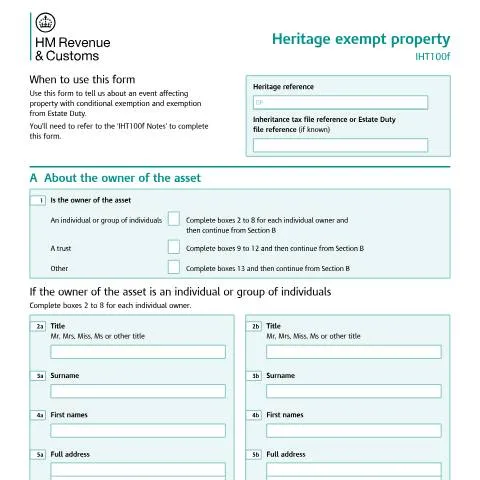
The Significance of Form IHT100f in Inheritance Tax Procedures
In the intricate landscape of inheritance tax (IHT) regulations, Form IHT100f serves a crucial role. This document is mandatory for individuals or entities reporting the end of a conditional exemption on property, which previously enjoyed relief from inheritance tax. Conditional exemptions often relate to heritage properties or assets that have significant cultural or historical value. When such an exemption ceases, it triggers obligations for the taxpayer to communicate this change to HM Revenue & Customs (HMRC). Understanding the nuances of this form can significantly impact compliance and financial responsibilities.
Who Needs to Complete Form IHT100f?
The requirement to complete Form IHT100f extends beyond just individual property owners. Here’s a breakdown of who may need to submit this form:
- Individual Owners: If a person holds property that has been conditionally exempt, they are required to fill out this form if the exemption ends due to circumstances like the sale of the asset or the owner's death.
- Trustees: In cases where the asset is owned by a trust, trustees must complete the appropriate sections of the form. They are also responsible for ensuring that the trust is registered with the Trust Registration Service, as required by law.
- Corporations or Other Entities: Entities owning heritage property must also adhere to this requirement, albeit following distinct procedures from individual owners.
Crucial Elements of Completing Form IHT100f
Completing Form IHT100f is not a mere administrative task; it requires attention to detail and knowledge of the underlying events that triggered the need for this report. Key sections of the form include:
Asset Ownership Details
The form begins with identifying the owner of the asset, which can be an individual, a group of individuals, or a trust. Each type of owner has specific requirements:
- If the owner is an individual, you must fill in personal details such as the name, date of birth, and National Insurance number.
- For trusts, additional information is required, including the trust’s name and start date.
Reporting the Chargeable Event
Section C of the form is dedicated to detailing the chargeable event that has prompted the completion of IHT100f. This could encompass:
- The death of the owner
- A commercial or private sale of the asset
- A gift of the asset to another party
- Withdrawal of public access or loss of the asset
- Other relevant events, which must be specified clearly
Each of these scenarios has distinct implications for inheritance tax liability, and proper documentation is essential.
Deadlines and Timelines: When to Report
Timeliness in reporting is paramount when dealing with HMRC. The responsibilities that come with Form IHT100f entail specific deadlines:
Event Reporting Schedule
This form should be submitted following the occurrence of a chargeable event. Generally, it should be filed as soon as possible, ideally within six months of the event, to avoid any penalties associated with late submissions. Following proper timelines supports compliance and reduces the risk of inquiries or penalties from HMRC.
Post-Submission Timeline
Once the form has been submitted:
- HMRC will acknowledge receipt of the form.
- The calculation of any tax liability will be performed by HMRC, relieving the taxpayer from this complex task.
- If overpayment occurs, refunds will be processed directly to the designated bank account provided in the form.
The Regulatory Framework Surrounding Form IHT100f
Form IHT100f does not exist in a vacuum. It is embedded in a broader regulatory framework established by the UK tax laws and the Data Protection Act 2018, which governs the handling of personal data.
Inheritance Tax Regulations
The principles guiding inheritance tax in the UK primarily stem from the Inheritance Tax Act 1984, which sets forth the parameters under which conditional exemptions can be granted. These exemptions often relate to assets of historical significance, and the cessation of such exemptions triggers the need for Form IHT100f.
Data Protection Considerations
In line with the Data Protection Act 2018 and UK GDPR, the handling of personal information on Form IHT100f must comply with stringent data protection standards. This means that all data provided must be accurate, secure, and handled with the highest regard for privacy.
Understanding the Relationship Between IHT100f and Other Tax Forms
The completion of Form IHT100f can often be part of a larger tax strategy. Inheritance tax can be influenced by various other documents and factors, including:
Complementary Forms and Tax Strategies
For individuals and trusts, various other forms may need to be completed concurrently or in succession:
- Form IHT100: This form is used for general inheritance tax reporting and may be necessary alongside IHT100f.
- Capital Gains Tax Returns: If the asset sold was subject to capital gains tax prior to its sale, the relevant forms must also be lodged.
- Trust Registration Service: Trustees need to ensure that the trust is registered and up to date, as failure to do so can have ramifications for tax reporting.
Special Cases and Exemptions: When IHT100f Applies Differently
Not all situations are straightforward when it comes to Form IHT100f. Certain factors can affect how the form is completed or if it is even required:
Exceptions to Standard Reporting Requirements
There are scenarios where the usual rules do not apply. For example:
- Non-UK Residents: If the owner of the asset resides outside the UK, specific international tax treaties may adjust the reporting requirements.
- Charitable Donations: Transfers of property to registered charities can potentially exempt the asset from IHT liabilities, altering the necessity of filing.
- Small Estates: If the estate falls below a certain threshold, simplified reporting may be permitted, potentially excluding the need for Form IHT100f.
How to Submit Form IHT100f: Channels and Procedures
Submitting Form IHT100f is a process that can be navigated through various channels, each with its own advantages and limitations.
Digital Submission
Online submission offers a streamlined process for completing Form IHT100f. Through the HMRC portal, submissions can be made swiftly, allowing for immediate processing and reducing the potential for errors associated with physical documentation.
Paper Submission
For those who prefer traditional methods, paper submissions are still accepted. However, this route can lead to longer processing times and may increase the likelihood of errors due to manual handling.
In-Person Submission
While submitting IHT100f in person at HMRC offices is less common, it remains an option. This method can provide peace of mind, as individuals can confirm receipt of their documents directly with HMRC staff.
Final Thoughts on Managing Inheritance Tax with IHT100f
Completing Form IHT100f may seem daunting, but understanding its significance within the broader context of inheritance tax management is vital. Its accurate completion ensures compliance with UK tax laws and helps mitigate potential liabilities. By keeping abreast of deadlines, regulations, and filing procedures, individuals and trustees can navigate the complexities of inheritance tax with greater confidence.
In the end, timely and accurate reporting using Form IHT100f not only fulfills legal obligations but can also significantly influence the financial legacy left for beneficiaries. Keeping detailed records and being aware of the surrounding regulations can provide clarity and reassurance in what can often be a challenging process.
Understanding Conditional Exemptions in Inheritance Tax
Conditional exemptions are essential components of the UK’s Inheritance Tax (IHT) regime. They allow certain assets to be exempt from IHT if specific conditions are met. The most common conditional exemption applies to assets that are left to charities or qualifying private schools, and it can significantly reduce the tax liability for an estate. However, understanding when these exemptions apply and how to report their ending is crucial to ensuring compliance with HMRC regulations.
For example, if a property was gifted to a charity but later utilized for non-charitable purposes, the conditional exemption may cease. It is vital for executors or beneficiaries to be vigilant and understand that their obligations to report changes in the status of these exemptions are both legally binding and essential for maintaining tax compliance.
In addition, it’s important for individuals to keep records which clearly document the initial conditions under which the exemption was granted. This may include agreements, correspondence, or any legal documents which justify the initial claim for exemption. Generating thorough and accurate documentation can be invaluable should HMRC decide to investigate the legitimacy of the exemption that was previously in place.
Steps to Notify HMRC of the Ending of Conditional Exemptions
When a conditional exemption comes to an end, the responsibility falls on the executor or the person responsible for administering the estate to notify HMRC promptly. The process involves several steps:
- Gather Necessary Information: Before making contact with HMRC, ensure that all relevant details are organized. This includes the deceased’s National Insurance number, details of the estate, and documentation regarding the initially granted exemption.
- Complete the IHT100F Form: The IHT100F form is specifically designed for notifying HMRC about the ending of a conditional exemption. Be prepared to provide detailed information on the asset in question, the reason for the cessation of the exemption, and any relevant dates.
- Submit the Form: Once you have completed the IHT100F, submit it to HMRC through the designated channels. Ensure that you keep a copy of the form and any correspondence for your records.
- Await Confirmation: After submission, it is prudent to wait for confirmation from HMRC that they have processed the information. If there are any discrepancies or further clarifications needed, HMRC will reach out to address these points.
- Update Estate Records: Following the notification, ensure that the estate records reflect this change. This includes adjusting any valuations or tax liabilities associated with the estate.
It’s essential to follow these steps meticulously to avoid potential penalties or complications arising from miscommunication or failure to report changes timely.
Potential Consequences of Failing to Notify HMRC
Neglecting to inform HMRC about the ending of a conditional exemption can lead to serious repercussions. If an estate fails to report such changes, the executor may become personally liable for unpaid taxes, penalties, and interest charges that could accrue from the date the exemption ceases.
Furthermore, HMRC has the authority to initiate investigations into estates that do not have proper documentation or timely notifications of conditional exemptions. Such investigations can be lengthy, stressful, and potentially damaging to the reputation of those involved. It is vital to remain transparent in all dealings with HMRC and to respond promptly to any requests for information.
In severe cases, failure to report can also lead to legal proceedings, including but not limited to fines or even criminal charges in the case of fraudulent activities. Such implications underscore the importance of diligent administration of estate matters and compliance with tax obligations.
In summary, understanding the importance of conditional exemptions under the Inheritance Tax regime, knowing the steps to notify HMRC when these exemptions end, and being aware of the potential consequences of inaction are all critical components for anyone involved in estate management. Proper preparation and proactive communication with HMRC can save time, money, and effort down the line.