Understanding the Transfer of a Landfill Tax Registration Number
Transferring a landfill tax registration number is a crucial step for businesses engaging in landfill operations. When ownership of a landfill site changes hands, the new owner may want to retain the existing registration number to ensure continuity in compliance with the landfill tax obligations. This document, Transfer a Registration Number for Landfill Tax, is essential for facilitating this process.
Who Initiates the Transfer and When?
In the UK, the responsibility for initiating the transfer of the landfill tax registration number lies primarily with the parties involved in the business transition. Specifically, both the previous owner and the new owner must play their respective roles in filling out the necessary parts of the form.
Eligibility for Transfer
- The request can be made by anyone taking over a landfill business as a going concern.
- The previous owner must agree to the transfer.
- Both parties must confirm that the previous owner will cease operations on the landfill site from the specified transfer date.
Moreover, if there's a change in the legal structure of the business, such as a sole trader transitioning to a limited company, the registration number may also be transferred under the same conditions.
Steps to Complete the Transfer Form
Completing the Transfer a Registration Number for Landfill Tax form involves several detailed steps, divided into two distinct parts:
Part 1: Previous Owner's Responsibilities
The previous owner is tasked with providing precise information about themselves and confirming their intent to cease operations. Key fields include:
- Full name and trading name (if applicable).
- Date of business transfer or change in legal status.
- Landfill tax registration number being transferred.
Part 2: New Owner's Responsibilities
The new owner must also fill out their details, including:
- Full name and the date they took over the landfill operation.
- Agreement to assume responsibility for any outstanding tax obligations related to the previous owner.
Both parties are required to sign the form, establishing a binding agreement for the transfer of responsibilities and rights pertaining to the landfill tax registration.
Filing and Submission Process
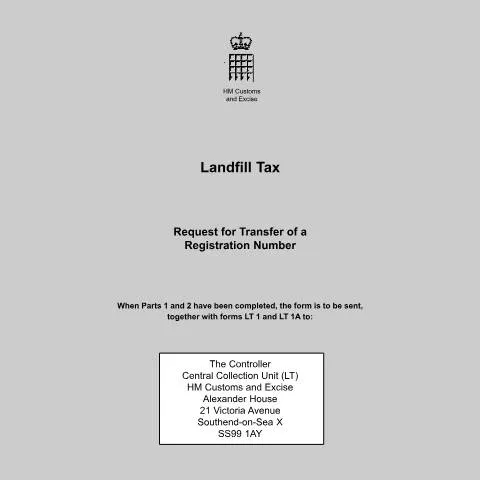
Once both parts of the transfer form are completed, the new owner must submit it, along with forms LT1 and LT1A, to the following address:
The Controller Central Collection Unit (LT) HM Customs and Excise Alexander House 21 Victoria Avenue Southend-on-Sea SS99 1AY
It’s crucial to ensure that the form is sent out promptly, as any delays could result in the loss of the registration number. A deadline is provided on the form; if not returned by this date, HMRC will assume that the registration number is no longer wanted by the new owner.
What Happens After Submission?
After submitting the transfer request, the new owner may wonder about the processing timeline. HMRC will review the submission and, typically, a letter will be dispatched to the new owner confirming whether the transfer has been approved or rejected.
Tracking the Application
While waiting for a response, it is advisable for the new owner to keep a record of the submission date and any correspondence sent to HMRC. If there is no response within a reasonable timeframe, the new owner may contact HMRC for an update on the status of the application.
Legal Framework Surrounding the Transfer
The necessity of this process is rooted in the Landfill Tax Regulations 1996, which govern the UK's landfill tax system. This legal framework ensures that all landfill operations are subject to tax compliance, and the transfer mechanism is designed to maintain accountability and transparency during ownership changes.
Addressing Potential Issues: Refusals and Errors
In the unfortunate event of a refusal, the new owner will receive a notification detailing the reasons behind the decision. Common issues leading to refusals may include:
- Lack of agreement from the previous owner.
- Failure to complete both parts of the form adequately.
- Failure to comply with other landfill tax obligations.
If an error is identified in the application after submission, the new owner should act promptly to rectify the issue. Contacting HMRC directly for guidance on resubmitting an amended form or providing additional documentation is recommended.
Understanding Transfer Dynamics: Common Confusions
Many individuals often confuse the transfer of a landfill tax registration number with other related forms or applications, such as those for registering a new landfill site or changing business details with HMRC. Key distinctions include:
| Form Type | Purpose | Key Participants |
|---|---|---|
| Transfer of Registration Number | To transfer ownership of an existing registration number | Previous Owner & New Owner |
| New Site Registration | To register a new landfill site for tax purposes | Business Owner |
| Change of Business Details | To update HMRC on business structure or ownership changes | Business Owner |
Understanding these distinctions is vital for ensuring compliance and avoiding regulatory pitfalls.
Special Cases and Considerations
Certain situations may require additional considerations when transferring a landfill tax registration number. These include:
Implications for Partnerships
In cases where a partnership is involved, all partners must sign the transfer form. This is vital to ensure that all parties agree to the transfer of the tax registration number.
Dealing with Estate Executors
If the previous owner was a sole proprietor who has passed away, the executor of the estate is responsible for signing the transfer form on behalf of the deceased. This ensures that the tax registration number can be appropriately transferred while respecting the legal framework surrounding the estate's administration.
Preparing Supporting Documentation
Along with the transfer form, certain supporting documents may be necessary to accompany the submission to enhance the chances of successful approval. These might include:
- Previous owner's landfill tax returns, if relevant.
- Proof of ownership transfer, such as a sale agreement.
- Identification documents for both parties.
Final Notes on Best Practices
To ensure a smooth transfer process, both parties should:
- Double-check all information on the form for accuracy.
- Ensure that all necessary signatures are present.
- Retain copies of all submitted documents, including the transfer form, for future reference.
By adhering to these best practices and being aware of the specific requirements associated with the Transfer a Registration Number for Landfill Tax form, businesses can navigate the complexities of landfill tax registration changes more effectively.
Understanding the Landfill Tax Registration Process
Before initiating the transfer of a registration number for Landfill Tax, it is crucial to grasp the fundamentals of the Landfill Tax system in the UK. The Landfill Tax is an environmental tax levied on the disposal of waste at landfill sites, aiming to incentivize waste minimization and encourage recycling. The tax is applicable to all waste types, with different rates based on the categorization of the waste—active or inactive.
Businesses that operate landfill sites or transport waste to landfill sites must register with HM Revenue & Customs (HMRC) as a Landfill Operator or Transmitter. This registration provides a unique reference number that is essential for compliance with Landfill Tax obligations. To ensure a smooth operation, it’s important to maintain updated records and ensure that the registration details are accurately reflected in HMRC’s records.
When transferring a registration number, the first step is verifying that your current registration details are accurate. If there are discrepancies or outdated information, it needs to be rectified before the transfer process begins. Contacting HMRC’s Landfill Tax helpline can provide clarity on the process and any specific obligations that apply to your situation.
Common Scenarios for Registration Number Transfers
Several scenarios may prompt a transfer of a Landfill Tax registration number, including:
- Change of Ownership: If a landfill site is sold or transferred to another entity, the new owner must register for Landfill Tax under their name. The previous owner's registration number will need to be transferred or cancelled, depending on the circumstances of the sale.
- Business Structure Changes: If your business undergoes structural changes, such as becoming a limited company, you may need to transfer the registration number to align with the new legal entity.
- Merger or Acquisition: In the event of a merger or acquisition, the registering entity may change, necessitating a transfer of the registration number while ensuring compliance with the Landfill Tax regulations.
Understanding these scenarios helps in preparing the necessary documentation and ensuring compliance throughout the process. It is essential to inform HMRC promptly of any changes that may affect your Landfill Tax registration to avoid potential penalties.
Documentation Required for Transferring a Registration Number
The transfer of a Landfill Tax registration number isn't merely a procedural formality; it necessitates proper documentation. The required documentation may include:
- Proof of Ownership: Documentation that establishes ownership of the landfill site or the business, such as a sale agreement or ownership certificate.
- Change of Business Structure Documentation: If the transfer arises from changes in the business structure, relevant legal documents that delineate these changes must be submitted. This may include incorporation documents, partnership agreements, or dissolution letters for previous structures.
- Notification Letter to HMRC: A formal letter addressing HMRC to notify them of the transfer, detailing the old registration number, new ownership details, and a request to update their records accordingly.
- National Insurance and Tax Information: Business National Insurance number and any relevant tax documentation that confirms the tax status of the new operator or owner.
It is advisable to prepare a checklist of these documents before initiating the transfer to ensure a streamlined process. Failing to provide adequate documentation can result in delays or complications, potentially leading to non-compliance with Landfill Tax regulations.