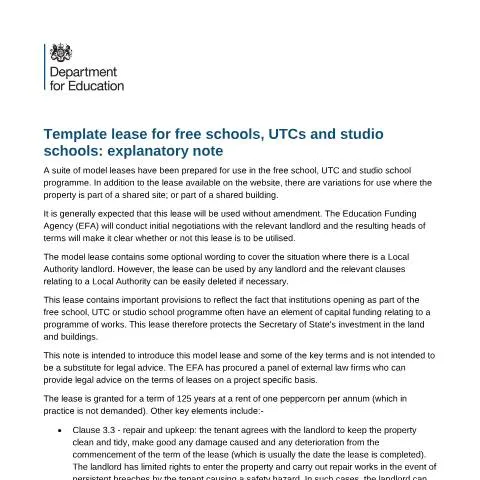
Navigating the Model Lease for Free Schools and UTCs
Understanding the model lease for free schools, University Technical Colleges (UTCs), and studio schools is crucial for any educational institution embarking on establishing itself in the UK. This document not only outlines the terms and conditions for occupying a property but also safeguards the investments made by the Secretary of State in these educational initiatives. With the complexities involved, it's essential to grasp the nuances of this lease to ensure compliance and successful operation.
The Importance of the Standard Lease Agreement
The model lease serves as the foundational document that governs the relationship between educational institutions and their landlords. In the vast landscape of free schooling, understanding this lease is beneficial not just for the institutions but also for landlords who may collaborate with these schools. The lease is set for a term of 125 years at a nominal rent, which is critical for maintaining a sustainable financial model for the schools.
- Long-Term Security: The extended lease period ensures that institutions have a secure footing for many years, allowing them to plan long-term educational strategies.
- Minimal Rent Obligations: With a peppercorn rent, financial strain is alleviated, providing more resources for educational activities.
Key Provisions and Their Practical Implications
Each clause in the model lease carries significant implications for both parties involved. Understanding the critical terms can influence how institutions manage their properties and interact with stakeholders.
Clause 3.3: Repair and Upkeep Responsibilities
Under this clause, tenants are obligated to maintain the property in a clean, tidy state and repair any damage. This is not merely a formality, as neglect could lead to the landlord taking action, including charging for repairs. Educational institutions must ensure that they have a solid plan for property management to avoid financial repercussions.
Clause 3.5: Alterations and Additions
Institutions often seek to adapt their facilities to meet specific educational needs. This clause restricts structural or external changes without the landlord's consent, which can only be withheld on limited grounds. Schools must develop a clear communication strategy with their landlords to navigate these requirements effectively.
Strategies for Seeking Permissions
- Clearly outline the intended changes and their educational benefits.
- Engage in proactive communication with landlords to address any concerns.
- Document all agreements and approvals for future reference.
What Happens When Issues Arise?
Institutions must be prepared for potential disputes or challenges regarding the lease. This includes issues like breaches of terms or disputes over property conditions.
Addressing Breaches: Landlord's Rights
In cases where the property is misused or lacks adequate insurance coverage, landlords have the right to terminate the lease. Before doing so, they must notify the Secretary of State, allowing for corrective measures to be taken. This provision underscores the necessity of compliance with lease terms to avoid harsh penalties.
Resolving Disputes: Best Practices
- Maintain Open Communication: Regular discussions with landlords can preempt misunderstandings.
- Legal Guidance: Given the complexities of lease agreements, consulting legal experts is advisable when disputes arise.
Understanding the Relationship Between Lease and Educational Funding
The model lease is interlinked with funding agreements between the Secretary of State and educational institutions. This relationship is pivotal as it dictates the operational viability of schools. For example, if funding agreements are terminated, the lease can also be ended, showcasing the fragility of the institutional framework reliant on government support.
Funding Agreements: Key Considerations
When entering into a lease, understanding how it correlates with funding agreements is essential. Institutions should be aware of the following:
- Identify all funding streams and their implications on property use.
- Regularly review funding agreements to align operational practices with funding conditions.
Variations for Different Landlords
The model lease accommodates different scenarios, including cases where the landlord is a local authority or a private entity. Institutions must be aware of the clauses that may differ based on the landlord type and prepare accordingly.
Local Authority Landlords
When dealing with local authorities, certain clauses may include additional stipulations or permissions. It's crucial for institutions to identify and understand these variations to ensure compliance and foster good relationships with local government entities.
Checklist for Working with Local Authorities
- Review all specific clauses related to local authority variations.
- Ensure regular communication with local council representatives.
Protecting the Secretary of State's Investment
One of the primary roles of this model lease is to protect the significant government investment in educational properties. The lease’s terms are designed to mitigate risks associated with the potential misuse of educational facilities.
Key Protective Measures
Key provisions that safeguard these investments include:
- Insurance Requirements: Tenants must obtain proper insurance coverage for the buildings, ensuring that any potential damages can be mitigated.
- Termination Clauses: The lease includes stipulations that allow for early termination if the property is not used for its intended educational purposes, thereby protecting taxpayer investments.
Special Circumstances: What to Consider
There are instances where schools may find themselves in unique situations, such as operating in shared spaces or facing urgent repairs. Understanding how to navigate these situations can make a significant difference in operational efficiency.
Shared Spaces and Lease Terms
For institutions located in shared buildings or sites, particular clauses of the lease might require adjustment or additional agreements with other occupants. Effective collaboration is essential to ensure that all parties benefit from the shared resources.
Dealing with Urgent Repairs
In the event of unexpected repairs, institutions must act swiftly. The lease allows landlords limited rights to enter the property to conduct repairs if there are persistent safety hazards. Schools need to ensure they address maintenance issues promptly to avoid such interventions.
Demystifying the Lease: Common Confusions
Given the complexities of legal language, it’s common for institutions to confuse this lease with similar documents. Understanding the distinctions can help in the proper management of school estates.
Comparing with Other Lease Types
The model lease for free schools differs significantly from typical commercial leases. Key differences include:
| Aspect | Model Lease for Free Schools | Commercial Lease |
|---|---|---|
| Lease Duration | 125 years | Typically 3-10 years |
| Rent | Peppercorn | Market Rate |
| Use of Property | Education-related purposes only | Varies widely |
Recognizing these differences is key to avoiding misinterpretations and ensuring compliance with the specific terms of the model lease.
Empowerment Through Knowledge
Ultimately, understanding the model lease is not just about legal compliance; it is about empowering educational institutions to thrive. By ensuring that all terms are clearly understood and adhered to, schools can focus on what matters most: delivering quality education.
- Continuous Education: Regular training sessions on lease management can equip staff with the knowledge they need.
- Legal Support: Engage legal counsel familiar with educational leases to navigate any complexities that arise.
In conclusion, while the model lease for free schools, UTCs, and studio schools may seem daunting at first glance, a closer examination reveals the opportunities it presents. By fostering a thorough understanding of this document, institutions can build a solid foundation for their operations, ensuring that they meet the needs of their students and communities effectively.
Understanding the Operational Framework of Free Schools
Free schools are a type of academy in England, funded by the government but not controlled by local authorities. They provide an opportunity for parents, teachers, and community groups to create new schools tailored to their specific educational needs. Under the Education Act 2011, these schools have more freedom in terms of their curriculum and operations compared to traditional schools, but they must adhere to certain standards set by the Department for Education (DfE). Their establishment is often driven by local demand for specific educational models, such as alternative curricula or different teaching methodologies.
The operational framework of free schools is articulated through their funding agreements, which outline the responsibilities of both the governing body and the DfE. A key aspect is ensuring that the school is compliant with the standards of educational provision, safeguarding, and financial management. This framework also includes a requirement for the school to demonstrate a sustainable model, ensuring that they can operate effectively within their allocated budgets and resources. Free schools must also engage with their local communities, fostering parental involvement and satisfaction in their educational offerings.
Lease Agreements for University Technical Colleges (UTCs)
University Technical Colleges (UTCs) are a unique type of secondary school that focuses on delivering a high-quality education in science, technology, engineering, and mathematics (STEM) while simultaneously preparing students for the demands of the workforce. These institutions are sponsored by universities and businesses, facilitating a curriculum that is closely linked to real-world applications and industry needs.
When it comes to lease agreements for UTCs, several factors must be considered due to their specific operational goals. Typically, the lease arrangement is negotiated to reflect the unique partnerships that UTCs foster with local universities and businesses. These relationships often dictate the facilities required, such as specialized laboratories, workshops, and collaborative spaces designed for both educational and vocational training purposes.
The lease document must stipulate provisions concerning the maintenance and use of these specialized facilities, ensuring that they meet regulatory standards for health and safety as well as educational compliance. Furthermore, UTC leases may incorporate clauses that allow for flexibility in terms of space usage, enabling the institution to adapt to evolving industry demands and to innovate in teaching methodologies. Additionally, consideration should be given to the lease duration, aligning with the UTC’s long-term strategic goals, which often involve significant investment from business partners.
Studio Schools: Unique Lease Considerations
Studio schools represent an innovative educational model designed to provide a more personalized learning experience, particularly for students who may not thrive in traditional academic settings. These schools focus on project-based learning in a real-world context, often collaborating with local businesses to create a curriculum that is relevant and engaging. This practical approach necessitates unique considerations when drafting lease agreements.
When establishing a lease for a studio school, it’s crucial to incorporate clauses that allow for dynamic, adaptable learning environments. This may include specifying the use of open-plan spaces that can be reconfigured depending on project requirements or the types of collaborative ventures the school may pursue with local industry partners. Given the project-based learning methodology, the lease should also accommodate for spaces dedicated to workshops, studios, and labs that are essential for hands-on learning opportunities.
Moreover, a studio school’s lease might also consider terms that promote community engagement, such as allowing the facility to be used after hours for community activities or workshops. This integration with the community enriches the educational environment and provides students with valuable networking opportunities. As with UTCs, it’s important to ensure that the lease terms support the school’s long-term vision, accommodating potential growth and collaboration with various stakeholders in the education and business sectors.