When Property Ownership Changes Through Death: The Critical Role of Mortgage Transfer
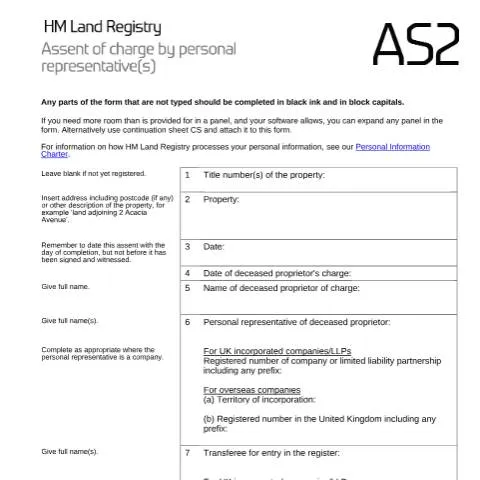
When a property owner dies whilst their home remains subject to a mortgage charge, the legal landscape becomes considerably more complex than a straightforward inheritance. The AS2 form serves as the essential mechanism for transferring that mortgage charge from the deceased's estate to the new property owner, ensuring the land register accurately reflects the continuing security arrangements that protect the lender's interests.
This transfer process affects thousands of families annually across England and Wales, particularly given that many homeowners pass away before fully repaying their mortgage. The form bridges the gap between probate procedures and land registration requirements, creating a clear legal pathway for mortgage charges to follow property ownership through inheritance or estate administration.
Unlike standard property transfers, this process involves three distinct parties: the deceased's personal representatives (executors or administrators), the beneficiary receiving the property, and crucially, the mortgage lender whose security interest must remain protected throughout the transition. The AS2 form coordinates these competing interests whilst maintaining the integrity of the land registration system.
The Personal Representatives: Navigating Executor Responsibilities
Personal representatives carry the primary burden of completing the AS2 form, acting as the bridge between the deceased's estate and the continuing mortgage obligations. Executors named in a will typically handle this responsibility, though administrators appointed by the court step in when no valid will exists or when named executors cannot or will not act.
The timing proves crucial for personal representatives. They cannot execute the AS2 until they have obtained the necessary grant of probate or letters of administration, yet they must act promptly to prevent complications with the mortgage lender. Many lenders impose strict timeframes for notifying them of a borrower's death, and delays in transferring the charge can trigger default procedures that complicate the entire estate administration.
Corporate Personal Representatives
When a bank, solicitor's firm, or trust company acts as executor, additional documentation requirements apply. The form demands specific corporate details including the registered number and, for overseas companies, territorial incorporation information. These corporate executors must also demonstrate their authority to act, often requiring board resolutions or powers of attorney that can significantly extend the processing timeline.
Professional executors frequently encounter complications when the deceased held property through complex ownership structures. Joint tenancies may automatically pass to surviving co-owners, potentially eliminating the need for AS2 altogether, whilst tenancies in common require careful analysis of the deceased's share and corresponding mortgage liability.
Transferee Profiles: Who Inherits the Mortgage Burden
The transferee receiving the mortgage charge faces immediate legal and financial obligations that extend far beyond simple property ownership. Most commonly, surviving spouses or civil partners inherit both the property and its associated mortgage, though the form accommodates various beneficiary arrangements including multiple inheritors, family trusts, and even corporate entities.
Adult children inheriting the family home often struggle with the mortgage transfer implications. Unlike the property itself, which they receive through inheritance, the mortgage represents an ongoing debt obligation that may exceed their financial capacity. The AS2 form merely transfers the security charge – the lender's legal claim against the property – but does not automatically transfer personal liability for the debt itself.
| Transferee Type | Documentation Required | Typical Complications |
|---|---|---|
| Individual beneficiary | Full name and service address | Affordability assessment by lender |
| Multiple inheritors | All names and respective shares | Joint liability arrangements |
| Trust arrangements | Trust deed and trustee details | Ongoing administrative obligations |
| Corporate beneficiary | Company registration documents | Constitutional capacity to hold property |
International Beneficiaries
When overseas residents inherit UK property subject to mortgage charges, the AS2 process becomes significantly more complex. Non-resident transferees must provide UK service addresses, often requiring professional representatives or family members to receive legal correspondence on their behalf. Additionally, many mortgage lenders impose stricter criteria on non-resident borrowers, potentially triggering immediate repayment demands upon completion of the charge transfer.
Timing Imperatives: The Critical Completion Date
The completion date entered in panel 3 carries profound legal significance, establishing the precise moment when mortgage responsibility transfers from the estate to the beneficiary. This date cannot precede the signing and witnessing of the form, yet it must align with broader estate administration timelines and lender requirements.
Many families underestimate the coordination required between probate completion, mortgage lender negotiations, and land registry processing. The AS2 cannot be dated or submitted until all parties have executed the document properly, yet delays can trigger default provisions in the original mortgage terms, potentially leading to possession proceedings against a property the beneficiaries cannot yet legally defend.
Personal representatives often face pressure from beneficiaries eager to assume ownership whilst simultaneously managing lender demands for updated insurance arrangements, property valuations, and affordability assessments. The completion date must accommodate these competing pressures whilst ensuring all legal requirements are satisfied.
Seasonal and Administrative Considerations
HM Land Registry processing times fluctuate throughout the year, with December through February typically experiencing higher volumes due to year-end estate settlements. Personal representatives should factor these seasonal variations into their planning, particularly when beneficiaries face time-sensitive situations such as divorce proceedings, business transactions, or tax planning deadlines.
Technical Completion Requirements: Avoiding Registration Failures
The AS2 form demands meticulous attention to technical details that frequently cause registration delays or rejections. Panel 1 requires the precise title number, though properties not yet registered present particular challenges. Unregistered properties necessitate detailed descriptions including postal addresses with postcodes, or alternative descriptions such as "land adjoining" references that clearly identify the property boundaries.
Panel 4's requirement for the original mortgage date often proves problematic when dealing with older properties or complex refinancing histories. Personal representatives must trace the charge back to its initial registration, which may involve multiple previous transfers, variations, or consolidations that complicate the historical record.
Title Guarantee Implications
Panel 10's choice between full title guarantee and limited title guarantee significantly impacts the transferee's legal protection and potential liability. Full title guarantee provides comprehensive warranties about the estate's right to transfer the charge, whilst limited guarantee restricts these warranties to the period of the estate's ownership. Personal representatives lacking complete knowledge of the property's history often opt for limited guarantee to avoid potential future claims.
This decision particularly affects properties with complex ownership histories, previous boundary disputes, or unclear easement arrangements. The guarantee level influences the transferee's ability to obtain title insurance and may affect future mortgage or sale negotiations.
Documentation Pathways: Streamlining Professional Certification
Panel 11 offers qualified conveyancers a significant administrative shortcut through professional certification rather than document submission. The prescribed certificate allows solicitors and licensed conveyancers to confirm they hold original or certified copies of probate grants, letters of administration, or relevant court orders without physically submitting these documents to HM Land Registry.
This certification pathway reduces processing times and eliminates risks associated with posting original probate documents. However, it places substantial professional responsibility on the certifying conveyancer, who faces potential disciplinary action for incorrect certifications. The certificate must specify that the grant was issued in the United Kingdom, excluding foreign probate arrangements that require separate procedures.
International Probate Complications
Properties inherited by beneficiaries through foreign probate systems cannot utilise the professional certification route. Scottish confirmations, Northern Irish grants, or overseas probate documents require physical submission and often additional authentication procedures. These international elements can extend processing times by several months, particularly when translation or apostille certification becomes necessary.
Execution Formalities: Preventing Legal Invalidity
The execution requirements in panel 12 follow strict legal formalities that, if violated, render the entire transfer invalid. All personal representatives must sign when multiple executors exist, regardless of whether one executor handles day-to-day estate administration. This requirement often causes delays when executors live in different countries or when professional executors require internal approval processes.
Witnessing requirements vary depending on the signatory's status and location. Individual signatories require independent witnesses who must provide their full names and addresses, whilst corporate signatories follow different procedures outlined in Schedule 9 to the Land Registration Rules 2003. The witness cannot be a spouse, civil partner, or other person with a beneficial interest in the property.
Electronic Execution Challenges
Whilst electronic signatures are increasingly common in commercial transactions, the AS2 form typically requires wet signatures with traditional witnessing procedures. This requirement complicates matters for overseas executors or beneficiaries who cannot easily arrange physical meetings for signing ceremonies. Remote witnessing procedures, where permitted, require careful compliance with evolving legal standards and technology requirements.
Consequences of Processing Delays: Risk Management for Families
Failed or delayed AS2 submissions create cascading problems that extend far beyond administrative inconvenience. Mortgage lenders may activate default procedures when charge transfers remain incomplete, potentially leading to possession proceedings against properties that beneficiaries cannot yet legally defend. These situations place families in the impossible position of making mortgage payments on properties they do not yet legally own.
The Land Registration Act 2002's protection mechanisms operate differently during estate administration periods. Indemnity provisions that normally protect registered proprietors may not extend to beneficiaries whose interests remain unregistered pending AS2 completion. This gap in protection exposes inheriting families to potential losses if registration mistakes occur or if competing claims emerge during the transfer period.
Insurance implications prove particularly troublesome during extended AS2 processing periods. Many household insurance policies automatically terminate upon the policyholder's death, leaving properties uninsured precisely when mortgage lenders require continuous coverage. Personal representatives must arrange temporary insurance whilst beneficiaries cannot yet obtain permanent policies on properties they do not yet legally own.
The form's warning about fraud penalties reflects HM Land Registry's increasing vigilance regarding false information, with maximum penalties reaching ten years' imprisonment. This severity underscores the importance of accurate completion and proper legal advice, particularly given the complex interplay between probate law, land registration requirements, and mortgage obligations that the AS2 process must navigate successfully.
AS2 Form Completion: Critical Requirements and Common Pitfalls
Successfully completing an AS2 form demands meticulous attention to detail, as errors can lead to rejection by HM Land Registry or, worse, invalid transfers of mortgage liability. The form's structure follows a logical progression, but each section contains specific requirements that vary depending on your circumstances.
The property description section requires precise matching with the registered title. You cannot simply copy the postal address; instead, you must reference the exact title number and ensure the description aligns with the official register entry. For leasehold properties, additional complications arise when the mortgage charge affects both the leasehold interest and any associated share of freehold. In such cases, you may need to complete separate AS2 forms or provide supplementary documentation clarifying which interests the assent covers.
Personal representative details demand careful consideration of your legal status. If you're acting as an executor under a grant of probate, your authority differs from that of an administrator appointed under letters of administration. The form requires you to specify not only your name but also your capacity and the source of your authority. Joint personal representatives face additional complexity—all must sign unless one holds a valid power of attorney from the others.
The beneficiary identification section often causes confusion when multiple parties inherit the charged property. You must distinguish between joint tenants and tenants in common, as this affects how the mortgage liability transfers. Joint tenants automatically inherit each other's shares, while tenants in common can leave their shares to different beneficiaries. If the will creates a life interest with remainder to others, the AS2 form may not suffice—you might need additional legal instruments to clarify ongoing mortgage responsibility.
Date accuracy proves crucial throughout the form. The death date must match the death certificate exactly, while the assent date cannot precede the grant of representation date. Some personal representatives mistakenly believe they can backdate the assent to the death date, but this creates legal invalidity. The assent only takes effect from the date you actually complete and sign the form, regardless of when beneficial ownership might have vested.
Property valuation requirements vary depending on whether inheritance tax applies. For estates exceeding the nil-rate band, you may need professional valuations dated close to the death. However, the AS2 form itself doesn't require you to state the property's value—this information belongs in separate inheritance tax documentation.
Timing Strategies and Registration Implications
The timing of your AS2 submission can significantly impact both the estate administration and the beneficiaries' financial obligations. Unlike many Land Registry applications, assents don't face strict statutory deadlines, but practical considerations often dictate optimal timing strategies.
Early registration offers several advantages, particularly when property prices are rising or when beneficiaries wish to remortgage quickly. By completing the AS2 soon after obtaining probate, you establish clear legal title that enables beneficiaries to deal with the property without restrictions. This proves especially valuable if beneficiaries need to raise funds against the property or if they plan to sell within the administration period.
However, premature registration can create complications if estate debts remain uncertain. Once you've assented the charged property to beneficiaries, recovering it to meet unexpected estate liabilities becomes legally complex. Creditors retain certain rights against inherited property, but the administrative burden increases significantly after registration. Consider whether all known debts are settled and whether any potential claims might arise before proceeding with the AS2.
Capital gains tax implications also influence timing decisions. The date of assent establishes the base cost for future capital gains calculations by beneficiaries. If property values fluctuate significantly during administration, the assent date could affect the beneficiaries' eventual tax liability when they dispose of the property. While you cannot manipulate this for tax avoidance purposes, understanding the implications helps inform discussions with beneficiaries about their preferences.
Mortgage payment responsibilities during the interim period require careful management. Before registration of the AS2, the estate technically remains liable for mortgage payments, though beneficiaries often assume practical responsibility. Clear agreements about who pays what during this transitional period prevent disputes and ensure mortgage terms aren't breached. Some mortgage lenders require formal notification of the intended assent before accepting payments from beneficiaries.
Priority protection becomes relevant if multiple applications affect the same property simultaneously. For example, if beneficiaries are simultaneously applying to discharge the existing mortgage and register a new one, the order of registration matters significantly. HM Land Registry's priority system means the first application lodged takes precedence, potentially affecting subsequent applications' validity.
Search requirements vary depending on your approach to timing. If you're registering the AS2 months after the death, updated official copy entries and search results ensure no intervening interests have affected the property. Conversely, immediate registration after probate reduces the risk of complications but requires confidence that no unknown interests exist.
Multi-Party Scenarios and Complex Family Structures
Contemporary family structures often create intricate scenarios that challenge standard AS2 procedures, requiring nuanced approaches to ensure legal compliance while meeting all parties' needs. Blended families, international beneficiaries, and commercial property interests introduce layers of complexity that demand careful navigation.
Divorced beneficiaries inheriting jointly-charged property face particular challenges, especially when existing court orders affect property dealings. If divorce proceedings included matrimonial property orders that haven't been fully implemented, the AS2 may conflict with outstanding obligations. Personal representatives must verify that completing the assent won't breach court orders or prejudice either party's rights. Sometimes, court approval becomes necessary before proceeding with the AS2, particularly if the inheritance affects maintenance calculations or property adjustment orders.
International beneficiaries introduce both practical and legal complications that extend beyond simple form completion. Tax residents of different countries may face varying inheritance tax obligations, and some jurisdictions don't recognize certain types of property ownership that the AS2 creates. Before assenting charged property to overseas residents, consider whether their home country's legal system accommodates the resulting ownership structure. Additionally, currency fluctuations between death and assent dates can affect the real value of inheritances, sometimes creating disputes between beneficiaries in different countries.
Trust beneficiaries require special consideration when the will creates ongoing trust arrangements rather than outright inheritances. If the AS2 transfers the charged property into trust, the trustees become responsible for mortgage obligations, but their powers to deal with the property may be restricted by trust terms. Complex trust structures, such as discretionary trusts with multiple potential beneficiaries, may require specialist legal advice before completing AS2 forms, as the assent could inadvertently limit trustees' future flexibility.
Business partnerships inheriting charged commercial property through AS2 forms must consider partnership law implications alongside property law requirements. If the deceased was a business partner and the charged property was partnership property, the AS2 may need coordination with partnership dissolution procedures. Surviving partners might have pre-emption rights or other claims that affect the validity of assenting to named beneficiaries. Professional practices, such as medical or legal partnerships, often have specific regulatory requirements governing property transfers that must be satisfied alongside Land Registry procedures.
Vulnerable beneficiaries, including those lacking mental capacity or minors, cannot receive assents in their own names without appropriate protective measures. For beneficiaries under 18, the AS2 must transfer the property to trustees until majority, but selecting appropriate trustees and defining their powers requires careful consideration. Adult beneficiaries lacking capacity need Court of Protection involvement, and the AS2 process may need to wait for deputy appointments or specific court orders authorizing the property transfer.
Disputed wills create additional complications that may prevent AS2 completion until resolution. If potential claimants under the Inheritance (Provision for Family and Dependants) Act 1975 have indicated intentions to challenge the will, completing the AS2 could prejudice their claims or create unnecessary complications. Personal representatives must balance the risk of claims against the practical need to progress estate administration, sometimes requiring protective measures such as insurance or court directions before proceeding with charged property assents.