Understanding Your Legal Obligation: When the Courts Call Upon You as a Witness
Receiving a witness summons can feel unsettling, particularly when it arrives unexpectedly through your letterbox. The Form FP25 witness summons represents one of the most direct ways the English and Welsh court system can compel your attendance to provide evidence in legal proceedings. Unlike voluntary witness statements or informal requests for cooperation, this official document from HM Courts & Tribunals Service carries the full weight of judicial authority behind it.
The summons serves a dual purpose within civil proceedings: it can require you to attend court to give oral evidence or to produce specific documents that are considered crucial to the case. In some instances, both obligations may apply simultaneously. This legal instrument ensures that courts can access vital evidence that might otherwise remain unavailable, particularly when witnesses are reluctant to participate voluntarily or when specific documentation held by third parties becomes essential to determining the facts.
The form's significance extends beyond mere administrative procedure. It represents a fundamental principle of English law: that the pursuit of justice may require citizens to contribute their knowledge or documents to legal proceedings, even when they have no direct interest in the outcome. This civic duty comes with both legal protections and serious consequences for non-compliance.
Decoding the FP25: Essential Elements and Your Responsibilities
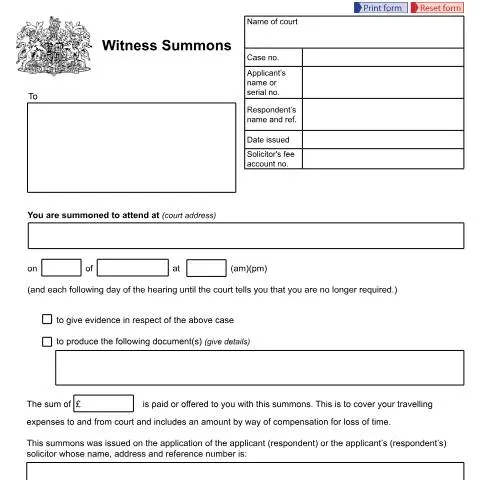
The witness summons contains several critical sections that determine your specific obligations. The court identification section at the top specifies which court has issued the summons, along with the case number and parties involved. This information becomes crucial if you need to contact the court about your summons or seek variations to the requirements.
The attendance requirements section specifies the exact date, time, and location where you must appear. Pay particular attention to the phrase "and each following day of the hearing until the court tells you that you are no longer required." This means your obligation may extend beyond the initial date specified, potentially requiring attendance for multiple days depending on the case's complexity and your role within it.
Where document production is required, the summons will contain a detailed description of what you must bring. These descriptions can range from specific contracts or correspondence to broader categories like "all documents relating to the agreement dated..." The precision of these requirements matters significantly, as producing incomplete documentation could result in further legal complications.
| Summons Element | Your Response Required | Potential Consequences of Non-Compliance |
|---|---|---|
| Attendance Date/Time | Arrive at specified court by stated time | Contempt of court, possible arrest warrant |
| Document Production | Bring all specified materials to court | Further summons, wasted costs liability |
| Expense Payment | Acknowledge receipt if enclosed | Reduced compensation claim if not reported |
Financial Compensation and Expense Provisions
The witness summons system recognises that compelling attendance places financial burdens on citizens. The expense compensation mechanism outlined in the FP25 provides for both travel costs and compensation for lost time, though the amounts may not fully cover all inconvenience experienced.
When properly issued, the summons should include or be accompanied by a conduct money payment covering your reasonable travel expenses to court and basic compensation for time lost from work or other activities. This payment typically arrives as a payable order enclosed with the summons, though the specific amount varies depending on your location relative to the court and current compensation rates.
If you do not receive conduct money with your summons, this may provide grounds for challenging the validity of the summons itself. The court rules require that proper provision for expenses must accompany the summons for it to be legally enforceable. However, you should seek legal advice before assuming non-payment automatically invalidates your obligations.
Additional expenses beyond the standard conduct money may be claimable, particularly if your attendance extends over multiple days or requires overnight accommodation. The court has discretion to award further compensation, though this typically requires a formal application supported by receipts and evidence of actual costs incurred.
Calculating Your Potential Loss
While the standard compensation may seem modest, you can apply for additional amounts if you can demonstrate significant financial loss. Self-employed individuals, for instance, may claim for lost business opportunities, while employees might seek compensation beyond basic lost wages if their absence creates particular hardship.
Challenging or Modifying Your Summons: Available Legal Options
The FP25 explicitly acknowledges your right to apply to set aside or vary the witness summons, though this process requires careful consideration of the available grounds and potential consequences. Courts will not automatically grant such applications, and you must demonstrate compelling reasons why your attendance would be inappropriate or impossible.
Legitimate grounds for challenging a summons might include:
- The documents or evidence sought are not in your possession or control
- Your evidence would not be material to the issues in dispute
- Attending would cause exceptional hardship disproportionate to the case's importance
- The summons was improperly served or failed to include required conduct money
- You have insufficient knowledge of the matters about which you're expected to testify
The application process typically requires completing additional court forms and may involve a hearing where you must present your case. Legal representation, while not mandatory, often proves beneficial given the technical nature of the arguments required. The court will balance your circumstances against the parties' right to present their case effectively.
Timing becomes crucial when challenging a summons. Applications made close to the hearing date may be refused simply due to the disruption they would cause, regardless of their merits. Courts expect reasonable notice when witnesses seek to avoid their obligations, recognising that last-minute changes can derail carefully planned legal proceedings.
Partial Compliance Options
In some circumstances, courts may accept modifications rather than complete discharge of your obligations. You might successfully argue for testimony via video link if travel presents particular difficulties, or for document inspection at your premises rather than bringing materials to court.
The Service Process and Certificate Requirements
The certificate of service section at the bottom of Form FP25 serves as proof that you have been properly notified of your obligations. This administrative detail carries significant legal weight, as courts cannot enforce summons obligations unless proper service has been completed according to established procedures.
Service typically occurs through first-class post to your last known address, though personal service may be used in complex cases or where postal service has previously failed. The certificate must be completed by a court officer and includes details of when and how the summons was delivered, along with confirmation that appropriate conduct money was enclosed.
If you believe you have been improperly served—perhaps because you never received the summons or it was sent to an outdated address—this may provide grounds for challenging any subsequent enforcement action. However, courts increasingly expect individuals to keep their addresses updated with relevant institutions, and claiming non-receipt can be difficult to substantiate.
The service requirements also extend to the conduct money provisions. The certificate confirms whether expense payments were enclosed and in what amount. Discrepancies between what should have been provided and what was actually included may affect the summons's enforceability.
Consequences of Non-Compliance: Understanding Contempt Proceedings
The FP25 makes clear that disobedience of a witness summons constitutes contempt of court, potentially resulting in fines or imprisonment. This is not merely administrative inconvenience—contempt proceedings can have serious personal and professional consequences that extend far beyond the original case.
When witnesses fail to attend without valid excuse, courts may issue bench warrants authorising your arrest and detention until you can be brought before the judge. While imprisonment for contempt is relatively rare in witness cases, it remains a real possibility, particularly where non-attendance appears deliberate or where you have previously ignored court orders.
Financial penalties for contempt can be substantial and are separate from any liability for wasted costs that arise from your non-compliance. If your absence forces an adjournment, you may be required to pay the legal costs incurred by all parties, including court fees, solicitor charges, and barrister fees. These amounts can easily reach thousands of pounds in complex commercial litigation.
Professional consequences may follow contempt findings, particularly for individuals in regulated occupations. Many professional bodies consider contempt of court a serious matter that may trigger disciplinary proceedings, potentially affecting your ability to practice your profession.
Fill in your form directly online
No printing: type your details into the boxes of the official form, tick, then download the PDF ready to send.
- 1Type into the form boxes
- 2Tick in one click
- 3Save and download the PDF
Mitigating Factors and Emergency Situations
Courts recognise that genuine emergencies or unforeseen circumstances may prevent attendance. Medical emergencies, family crises, or transport disruptions may provide valid excuses, but you must notify the court as soon as reasonably possible and provide supporting evidence.
Practical Preparation: Maximising Your Effectiveness as a Witness
Once you accept that attendance is unavoidable, thorough preparation becomes essential for minimising the time you spend in court and ensuring your evidence proves helpful to the proceedings. Document organisation represents the first crucial step, particularly where your summons requires production of specific materials.
Create copies of all documents you must produce, keeping originals secure until court attendance. Courts may retain original documents as evidence, so ensuring you have copies for your own records prevents future complications. Where voluminous documentation is involved, consider creating an index or summary to help legal representatives locate specific items quickly.
Review any documents or correspondence relevant to the case, even if not specifically mentioned in your summons. Your memory of events may be tested during cross-examination, and refreshing your recollection beforehand helps ensure accurate testimony. However, avoid discussing your evidence with the parties or their representatives unless specifically requested to do so by the court.
Practical considerations for court attendance include:
- Arriving at least 30 minutes before your scheduled time to allow for security procedures and finding the correct courtroom
- Bringing identification and a copy of your witness summons for court staff verification
- Dressing appropriately in business attire to show respect for the court process
- Arranging childcare or other personal obligations well in advance
- Planning alternative transport routes in case of delays or disruptions
Consider the potential duration of your involvement. While some witness testimony concludes within hours, complex commercial disputes may require your presence over several days. Discuss with your employer any potential extended absence and ensure important personal commitments can be rescheduled if necessary.
After Compliance: Understanding Your Ongoing Obligations
Completing your initial court attendance does not necessarily conclude your obligations under the witness summons. The phrase "each following day of the hearing until the court tells you that you are no longer required" means you may need to remain available throughout the trial's duration, even if not actively giving evidence.
Courts typically release witnesses once their evidence is complete and they are no longer needed for potential recall. However, complex cases may require witnesses to return for additional questioning if new issues arise during the proceedings. Maintain contact with the court or the legal representatives who requested your attendance to understand when your obligations are fully discharged.
Document any additional expenses incurred through extended attendance, as these may be recoverable through the court's expense compensation system. Keep detailed records of travel costs, accommodation, meals, and lost earnings to support any additional claims for reimbursement.
Your experience as a witness may also inform future decisions about voluntary cooperation in legal proceedings. Understanding the court process and your rights within it can help you make more informed decisions if approached by legal representatives in other cases where formal summons might be avoided through willing participation.