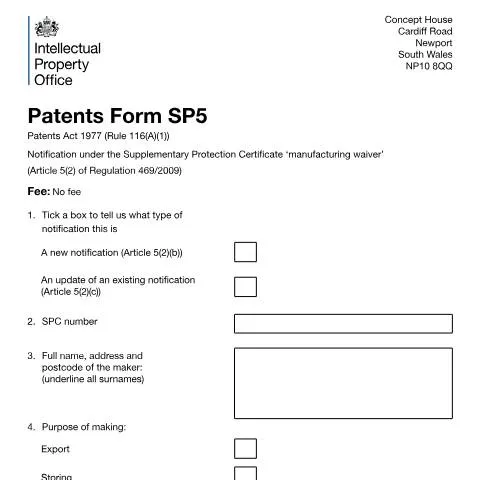
Navigating the Supplementary Protection Certificate 'Manufacturing Waiver'
The Supplementary Protection Certificate (SPC) 'manufacturing waiver' plays a crucial role for businesses involved in the pharmaceutical sector, particularly for manufacturers who wish to export medicinal products outside the UK, the Isle of Man, and EU Member States. This document, issued by the Intellectual Property Office (IPO), facilitates compliance in a regulatory landscape characterized by stringent health and safety standards.
Understanding the nuances of the SPC 'manufacturing waiver' can be the difference between a smooth export process and facing legal complications. This article delves into what this notification entails, who qualifies, and the steps necessary for obtaining it, among other critical details.
Understanding the Value and Legality of the Notification
The notification serves as an official acknowledgment from the IPO regarding the usage of SPCs for the manufacturing of medicinal products. This means that the manufacturer can legally produce and store products that are intended for export, without infringing on patent rights during the specified period of the waiver.
Key Legal Framework
The SPC 'manufacturing waiver' is governed by Article 5(2) of Regulation (EC) No 469/2009, which provides a legislative framework for SPC regulations. Manufacturers must adhere to the provisions of the Patents Act 1977, particularly Rule 116(A)(1), which outlines the notification process. The legal implications are significant; any discrepancies or failures to comply could result in legal actions or financial penalties.
What the Notification Confirms
- Legitimacy: Confirms that the manufacturing process is compliant with existing patent laws.
- Scope of Use: Provides a clear outline of what the waiver covers, including exporting, storing, or both.
- Accountability: Holds the manufacturer accountable for the information provided, including details of the marketing authorisation.
Steps to Obtain the SPC 'Manufacturing Waiver'
Obtaining this waiver can seem daunting, yet the process is straightforward if you methodically follow the necessary steps.
The Application Process
- Complete the Notification Form: You can choose to submit the application online or via post. Ensure you accurately fill in all required fields, particularly the SPC number and the full details of the manufacturer.
- Indicate the Purpose: Clearly state whether the products are intended for export, storage, or both.
- Provide Marketing Authorisation Numbers: For products intended for export, you must include marketing authorisation reference numbers for each destination country.
- Submit Your Application: Depending on your chosen method, follow the appropriate guidelines—either upload online through your Intellectual Property account or send the form to the IPO's postal address.
Online vs. Postal Submission
| Method | Steps | Advantages |
|---|---|---|
| Online Submission |
|
Faster processing time, Real-time confirmation |
| Postal Submission |
|
Tangible record, Preferred by some for formal documentation |
Eligibility Criteria for the SPC 'Manufacturing Waiver'
Not everyone can apply for the SPC 'manufacturing waiver.' Understanding the eligibility criteria is fundamental for ensuring your application stands a chance of approval.
Who Can Apply?
The SPC 'manufacturing waiver' is primarily aimed at manufacturers of medicinal products who hold a valid SPC. However, the following criteria must be met:
- The applicant must be a qualified manufacturer recognized under UK law.
- The medicinal products must possess a valid marketing authorisation.
- Products intended for export must comply with international regulatory standards.
- The application must be submitted before any manufacturing activity takes place under the waiver.
Special Considerations
Manufacturers intending to use the waiver for products destined for multiple countries may need to pay special attention to the marketing authorisation requirements specific to each country. Improper documentation can lead to significant delays and potential legal issues.
Addressing Errors, Loss, or Controversies Surrounding the Notification
Errors in the SPC 'manufacturing waiver' documentation can have serious implications. Recognizing and addressing these issues promptly is essential for maintaining compliance.
What to Do in Case of Errors
- Review Your Application: Before submitting, double-check all provided information, ensuring accuracy in SPC numbers and marketing authorisation details.
- Amendment Process: If an error is identified post-submission, you must submit an update notification (as specified in Article 5(2)(c)) to rectify any inaccuracies.
Handling Controversies
If disputes arise regarding the legitimacy of the SPC or the use of the waiver, manufacturers may face scrutiny from regulatory bodies. Here are steps to mitigate potential issues:
- Document Everything: Maintain comprehensive records of all communications and submissions related to the SPC 'manufacturing waiver.'
- Engage Legal Counsel: Consult with legal experts specializing in intellectual property rights to navigate complex disputes effectively.
The Practical Use of the SPC 'Manufacturing Waiver'
Utilizing the SPC 'manufacturing waiver' effectively can provide significant advantages for manufacturers, especially in a global market. Understanding its practical applications can enhance your business strategy.
Real-World Applications
- Exporting Products: The waiver allows manufacturers to produce medicinal products in anticipation of international demand, positioning them strategically in foreign markets.
- Storage Solutions: Manufacturers can store products without risk of infringing patent rights, enabling them to manage inventory more effectively.
Collaboration with Regulatory Bodies
Successful navigation of the SPC landscape requires collaboration with various regulatory agencies. Staying in close contact with the IPO and understanding their requirements can streamline your operations considerably.
Conclusion: Maximizing the Benefits of the SPC 'Manufacturing Waiver'
The SPC 'manufacturing waiver' represents a valuable tool for pharmaceutical manufacturers looking to enhance their export capabilities without contravening patent laws. By fully understanding the notification process, eligibility criteria, and potential challenges, manufacturers can leverage this waiver to their advantage. Taking a proactive approach, remaining informed, and consulting with legal experts can ensure a successful journey through the often intricate world of intellectual property.
Understanding the Supplementary Protection Certificate (SPC) in the UK
The Supplementary Protection Certificate (SPC) is designed to extend the protection of a patented medicinal or plant protection product after the standard patent term has expired. This extension is particularly relevant for products that have undergone long testing and approval processes, which may delay the actual market launch. The SPC, therefore, can provide up to five additional years of protection, enabling the patent holder to recover their investment and incentivise further innovation.
In the UK, the process and criteria for obtaining an SPC are outlined by the Intellectual Property Office (IPO). To qualify for an SPC, the product must meet several conditions: it must be a pharmaceutical or plant protection product, the product must be protected by a basic patent in force, and it must have received a valid marketing authorisation before the SPC application is made. Notably, the SPC cannot be applied for products that have already been marketed prior to the SPC's introduction.
It is crucial to keep in mind that the SPC is only available for certain types of products, and therefore, understanding the eligibility requirements is essential for patent holders considering this route. For instance, the product must be the first authorisation of its kind, which means that subsequent variations or formulations do not qualify for a new SPC.
The Manufacturing Waiver: Implications for Stakeholders
The manufacturing waiver, introduced in the UK to comply with EU regulations before Brexit, allows generic and biosimilar manufacturers to prepare their products during the SPC term, under specific conditions. The waiver aims to foster competition by enabling these manufacturers to stockpile their products before the SPC expires, thus ensuring that patients have access to affordable alternatives as soon as the original product's protection ends.
Fill in your form directly online
No printing: type your details into the boxes of the official form, tick, then download the PDF ready to send.
- 1Type into the form boxes
- 2Tick in one click
- 3Save and download the PDF
However, the manufacturing waiver comes with strict guidelines. The activity must take place for the purpose of preparing a generic or biosimilar product intended for marketing once the SPC expires. Manufacturers must not place the products on the market during the SPC term, and they must inform the original patent holder in a timely manner to maintain transparency. The notification requirement is critical as it allows patent holders to anticipate potential competition and strategise accordingly.
In practice, stakeholders must carefully document their production processes under the waiver to ensure compliance with the legal framework. Additionally, understanding the nuances of notification under the manufacturing waiver can be key for legal protection and risk mitigation. If the original patent holder believes that their rights are being infringed upon, they can take legal action against manufacturers who do not adhere to the waiver's stipulations.
Navigating the Notification Process for the Manufacturing Waiver
For manufacturers intending to utilize the SPC manufacturing waiver, navigating the notification process is vital for compliance. First and foremost, it is essential to gather all necessary information about the SPC holder, including their contact details and the specifics of the SPC in question. This information can often be found on the IPO’s website or through other official resources.
Once the manufacturer has compiled this information, the next step is to draft a notification letter. This letter should clearly state the intent to manufacture and supply the product under the waiver, along with relevant details such as the expected date of market entry following the expiration of the SPC. The letter should also include an assurance that the manufacturer will not engage in any marketing or sales activities until after the SPC has lapsed.
It is advisable to send this notification well ahead of the SPC expiration to provide the original patent holder adequate time to respond. While there is no specific timeframe mandated by law, a minimum of three months is generally recommended. This proactive approach not only demonstrates good faith but also helps mitigate the possibility of legal disputes arising from perceived infringements.
After sending the notification, it is prudent to keep records of all correspondence and any responses received from the patent holder. If the patent holder raises any objections or engages in discussions regarding the manufacturing plans, it is essential to document these interactions carefully.
Lastly, manufacturers should remain informed about any developments within the regulatory landscape that may affect the notification process. Changes in legislation or guidance from the IPO could impact how the waiver is applied or the obligations of the parties involved. Engaging with legal counsel familiar with the SPC framework can also provide valuable insights and ensure that all procedures are followed correctly.