Understanding the Official UK Document: Consent for Child Adoption Placement (Form A102)
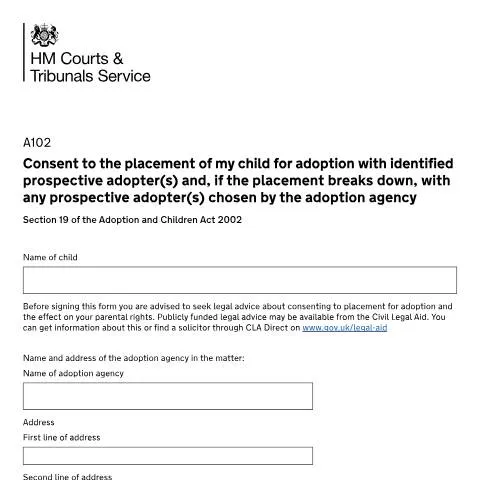
This article provides a comprehensive overview of the official UK government form known as Consent to the placement of my child for adoption with identified prospective adopter(s), and if the placement breaks down, with any prospective adopter(s) chosen by the adoption agency. It is issued by the HM Courts & Tribunals Service under the authority of Section 19 of the Adoption and Children Act 2002. This form is a crucial legal document used in the process of child adoption, ensuring that birth parents understand and formally agree to the placement of their child with prospective adopters.
Scope and Purpose of the Document
This form is designed to obtain the explicit consent of a parent or guardian to the placement of a child for adoption. It details the circumstances under which the child's placement can occur, including:
- Placement with a specifically identified prospective adopter(s).
- In case the initial placement breaks down, with other prospective adopters chosen by the adoption agency.
The document aims to safeguard the rights of birth parents while facilitating the legal process of adoption, ensuring all parties are aware of the implications of their consent.
Who Is Concerned by This Document?
This form is primarily relevant for birth parents or legal guardians of a child who is being considered for adoption. It is also used by adoption agencies and court authorities involved in the legal proceedings of the child's placement. The process requires parents to be fully informed and to seek legal advice if needed, emphasizing the importance of understanding the legal ramifications of giving consent.
Key Points and Legal Implications
Consent and Parental Rights
By signing this form, the parent consents to the child's placement for adoption with specific prospective adopters or, if the placement fails, with any adopters chosen by the agency. The parent understands that:
- The child's legal relationship will transfer to the adopters once the placement is finalized.
- The parent’s parental responsibility will be limited or extinguished.
- The child will become part of the adopters' family.
Withdrawal of Consent
The parent retains the right to withdraw consent until the prospective adopters initiate a court application for adoption. After that point, withdrawal may no longer be possible, and the parent’s ability to oppose the adoption depends on the court’s permission and the circumstances at the time.
In case of withdrawal, the agency will typically return the child within seven days unless the court considers that the child should be adopted. If an adoption application has been made, the parent can only oppose it with the court’s approval, based on a change of circumstances.
Contact and Legal Advice
Once consent is given, the parent generally loses contact rights unless arrangements are made through the court or the adoption agency. The form also mentions that legal advice should be sought before signing, and that publicly funded legal aid may be available.
Legal and Procedural References
This form is issued under the legal framework established by the Adoption and Children Act 2002. It is a formal legal document that must be completed in accordance with the law, with the parent fully understanding the consequences of their consent. The form is also a record that the parent has been advised to seek legal counsel, which can be arranged through legal aid services.
Conclusion
The Form A102 is a vital document in the UK adoption process, ensuring that birth parents provide informed consent for their child's placement. It balances the rights of the parent with the legal requirements of adoption, emphasizing the importance of legal advice and understanding the long-term implications of such decisions. Anyone involved in this process should carefully consider the information provided and seek professional legal guidance if necessary.