Understanding Form T439: The Essential Declaration for Self-Employed Individuals
Navigating the complexities of legal proceedings can be daunting, especially for self-employed individuals required to assert claims for loss of earnings due to attendance at an employment tribunal. Form T439 is a critical document in this journey, enabling self-employed parties or witnesses to formally declare their financial losses related to their tribunal attendance. This declaration not only aids in substantiating claims but also ensures that individuals are compensated for the income they could not earn due to their required presence at the tribunal.
Decoding the Structure of Form T439
Form T439 consists of several key components that together form a comprehensive declaration. Each segment of the form is designed to capture specific information that is crucial for processing your claim. Understanding these elements can significantly enhance the likelihood of a successful application.
Headed Paper Requirement
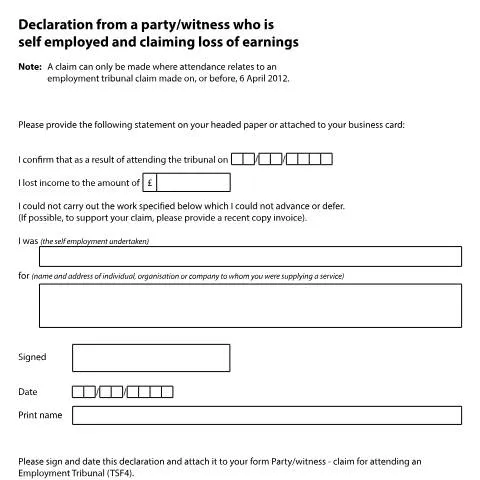
- The form requires you to provide your declaration on your business's headed paper or attach it to your business card.
- This is essential as it validates your status as a self-employed individual and provides context for your claim.
Declaration Statement
The core of Form T439 is the declaration itself, in which you must state:
- The date of your tribunal attendance.
- The amount of income lost as a direct result of this attendance.
- A brief description of the work you were unable to perform or defer.
Each of these components must be meticulously filled out to avoid delays in processing your claim.
Notifying the Tribunal of Your Losses
You must provide a specific statement detailing your losses. The phrasing you use can significantly impact the clarity of your declaration:
“I confirm that as a result of attending the tribunal on [insert date], I lost income to the amount of [insert amount].”
This clear articulation ensures that the tribunal can adequately assess your situation and the financial implications of your attendance.
Who Needs to Submit Form T439?
The applicability of Form T439 is essential for various self-employed individuals. If you were a witness or party in an employment tribunal, and your attendance resulted in lost earnings, you are eligible to complete and submit this form. Here are some profiles of individuals who would typically need to use this form:
Self-Employed Professionals
Individuals running their own businesses, such as consultants, freelancers, or tradespeople who had to attend the tribunal can use Form T439 to reclaim lost earnings.
Witnesses in Employment Tribunals
Self-employed witnesses called to testify in tribunal cases also need to complete this form to articulate their loss of income due to the tribunal's scheduling.
Situations Requiring Special Attention
While filling out Form T439, certain situations may necessitate additional attention. Here are a few scenarios where special care is advisable:
Complex Employment Arrangements
If you are part of a partnership or if your income is derived from multiple sources, accurately detailing your loss can become more complicated. It may be necessary to provide additional documentation:
- Invoices from clients for the work you missed.
- Contracts or agreements that outline expected income during the relevant period.
International Circumstances
For self-employed individuals based outside the UK, understanding the nuances of how Form T439 interacts with international laws and regulations is essential. Ensure you:
- Consult a legal professional familiar with UK tribunal processes.
- Gather evidence that complies with UK requirements while also considering your home country's practices.
Linking Form T439 to the Tribunal Process
Form T439 should not be viewed in isolation; it plays a vital role within the broader context of tribunal procedures. Understanding this connection can clarify the importance of accurate and timely submission. The form must be submitted alongside the Party/Witness Claim for attending an Employment Tribunal (TSF4).
Submission Timing
Timing can be crucial. You must submit Form T439 within a reasonable time frame after your tribunal attendance. Failure to do so may hinder your ability to claim lost earnings.
Follow-Up Actions
After submitting the form, keep in mind the next steps:
- The tribunal will review your claim as part of the overall case proceedings.
- You may be required to provide additional documentation or clarification.
- Monitor any correspondence from the tribunal for updates on your claim status.
Preparing Supporting Documents
To enhance the effectiveness of your Form T439 submission, it’s paramount to prepare and organize your supporting documents. A robust submission not only includes the form itself but also relevant evidence that substantiates your claims.
Invoice Preparation
As part of the declaration, it’s advantageous to attach a recent invoice. This should:
- Clearly outline the services you were engaged in prior to attending the tribunal.
- Demonstrate how your absence affected your business operations.
Additional Documentation
Consider including other forms of evidence:
- Proof of previous income (e.g., bank statements, previous tax returns).
- Client communications that indicate scheduled work that you were unable to complete.
Essential Guidelines for Completing and Submitting T439
Completing Form T439 correctly is crucial for ensuring a smoothly processed claim. Here are some essential guidelines to follow:
Clarity and Accuracy
Every piece of information you provide must be truthful and precise. Inaccuracies can lead to delays or even rejection of your claim. Double-check your entries for:
- Correct dates.
- Accurate amounts.
- Clear descriptions of your lost work.
Signature and Date
Don’t forget the importance of signing and dating the declaration. Omitting this step can render your submission incomplete:
“Please sign and date this declaration and attach it to your form Party/witness - claim for attending an Employment Tribunal (TSF4).”
Understanding the Legal Context: Data Protection and Compliance
When dealing with personal information in legal contexts, compliance with the Data Protection Act 2018 and UK GDPR is vital. When filling out Form T439, be aware of how your data is handled:
Data Processing Standards
The Ministry of Justice and HM Courts and Tribunals Service has established standards for processing personal data. This ensures that your information is handled ethically and securely. For more information, you can visit the:
Personal Information Charter
Right to Information
Should you require a paper copy of your privacy notice, you have the right to request this. Contact the appropriate numbers depending on your location:
- 0300 323 0196 for calls within England.
- 0300 790 6234 for calls from Scotland.
Next Steps After Submission
After completing Form T439 and submitting it along with your TSF4 claim form, it's essential to understand what happens next. This section outlines the expected progression of your case:
Awaiting Confirmation
After submission, you will typically receive acknowledgement from the tribunal. This may take a few weeks, during which your claim will be processed. It’s wise to keep track of all correspondence related to your claim and maintain copies of everything you submit.
Pursuing Further Action
If there are any complications or additional requirements, the tribunal will communicate directly with you. It is crucial to respond promptly and furnish any requested information to avoid delays.
Concluding Thoughts on Form T439
Form T439 is not merely a bureaucratic requirement; it is an essential tool for self-employed individuals who have incurred financial losses due to their mandatory attendance at an employment tribunal. By carefully completing the form and gathering the necessary documentation, you ensure that your legitimate claims are adequately presented and processed.
As you engage with the tribunal process, remember that accuracy, clarity, and compliance with data protection laws are paramount. Understanding the significance of Form T439 within your broader tribunal experience can empower you to navigate this complex system successfully.
Understanding the Importance of Form T439 in Loss of Earnings Claims
Form T439 is crucial for self-employed individuals who are seeking to claim for loss of earnings due to being unable to work as a result of an accident or other valid reason. While many may consider it just another bureaucratic hurdle, understanding the nuances of this form can significantly impact the success of your claim.
When filling out Form T439, it’s imperative to accurately document your usual hours of work, income, and any contracts or agreements that substantiate your normal earning capacity. Most importantly, it’s essential to demonstrate that your inability to work was directly linked to the incident in question. In essence, the more detailed and comprehensive your declaration, the higher your chances of receiving an appropriate compensation for your loss.
Furthermore, it’s advisable to keep track of any additional costs incurred as a result of your inability to work. This could include hiring temporary help or incurring travel expenses to attend medical appointments. Providing a comprehensive account of all losses related to your self-employment can enhance the credibility of your claim.
Common Mistakes to Avoid When Completing Form T439
Submitting Form T439 isn’t merely a matter of filling in blanks; it requires careful consideration and precision. Many self-employed individuals fall into common pitfalls that can jeopardize their claims. One of the most frequent mistakes is failing to maintain thorough records of income. HMRC recommends keeping accurate and up-to-date accounting records, which should include invoices, receipts, and bank statements. Lack of documentation can lead to delays or rejection of your claim.
Another common mistake is underestimating the importance of providing clear and specific details about the incident that caused the loss of earnings. Ensure that your explanation clearly outlines how your work was affected, including specific dates and situations. The more detailed your account, the easier it will be for the reviewing authority to assess your claim.
Additionally, many applicants overlook the importance of deadlines. The timeline for submitting Form T439 may vary depending on the specific circumstances of your case. Always check with the relevant governing bodies or seek legal advice to ensure you meet all necessary deadlines. Late submissions can lead to automatic disqualification of your claim.
When to Seek Professional Advice on Form T439
While many self-employed individuals might attempt to navigate Form T439 independently, there are circumstances where seeking professional advice is advisable. If your case involves complex legal questions, or if there’s a potential dispute regarding the circumstances of your loss, it may be beneficial to consult with a solicitor or a claims advisor who specializes in self-employment issues. They can provide insights that go beyond the written word, helping you to articulate your situation more effectively.
Moreover, if your loss of earnings claim involves significant amounts or complicated financial records, the expertise of a professional can help interpret data accurately. Additionally, if you have previously submitted a claim that was denied or if you anticipate issues with your current claim, professional guidance can streamline the process and enhance the likelihood of a successful outcome.
Ultimately, while Form T439 is designed to facilitate self-employed individuals in claiming for loss of earnings, the intricacies of completing this form correctly should not be underestimated. By acknowledging the importance of detailed documentation, avoiding common mistakes, and recognizing when to seek professional help, you can improve your chances of receiving the compensation you deserve.