When Your Trade Mark Registration Lapses: Understanding the Restoration Window
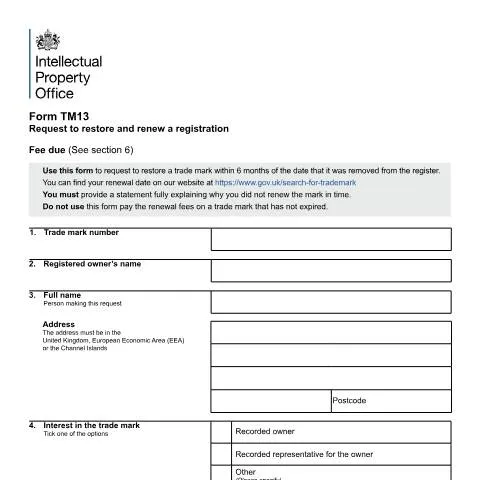
A trade mark registration that has lapsed doesn't automatically mean the end of your intellectual property protection. The Intellectual Property Office provides a crucial six-month grace period during which owners can restore their registration through Form TM13 – the Request to restore and renew a registration. This form serves as both a lifeline for businesses that have inadvertently allowed their trade mark to expire and a formal mechanism requiring full accountability for the oversight.
The restoration process differs fundamentally from standard renewal procedures. Unlike routine renewals that can be processed automatically with payment alone, restoration demands a comprehensive explanation of why the renewal was missed in the first place. This requirement reflects the IPO's approach to maintaining the integrity of the trade mark register whilst acknowledging that genuine oversights can occur in business operations.
Understanding when and how to use Form TM13 becomes critical when facing the potential loss of valuable intellectual property rights. The form applies exclusively to trade marks that have already been removed from the register due to non-renewal, creating a distinct window of opportunity that operates under different rules from standard maintenance procedures.
The Critical Six-Month Restoration Timeline
The restoration window operates on strict temporal boundaries that leave no room for extension or appeal. From the date a trade mark is removed from the register, owners have precisely six months to submit Form TM13 with all required documentation and fees. This deadline is absolute – the IPO cannot exercise discretion to extend this period under any circumstances.
Determining the exact removal date requires checking the IPO's online trade mark search facility at www.ipo.gov.uk/tmnumbersearch, where the system displays renewal dates and current status. The removal date typically falls on the anniversary of the original registration date, assuming renewal fees were not paid during the standard renewal window.
The six-month restoration period begins immediately upon removal, not from when the owner discovers the lapse. This distinction proves crucial for businesses that may not monitor their trade mark portfolio regularly or rely on external representatives who fail to provide adequate notification systems.
| Timeline Stage | Action Required | Consequences of Missing Deadline |
|---|---|---|
| Standard renewal window | Pay renewal fees (£200 + £50 per additional class) | Trade mark removed from register |
| Months 1-6 post-removal | Submit Form TM13 with restoration fee (£125) plus renewal fees | Window for restoration remains open |
| After 6 months | No restoration possible | Trade mark permanently lost |
Completing the Statement of Explanation: More Than Administrative Formality
The statement explaining why renewal was missed represents the most critical component of Form TM13, yet it receives insufficient attention from many applicants. The IPO requires this statement to be comprehensive and specific, moving beyond generic explanations to demonstrate genuine circumstances that prevented timely renewal.
Acceptable explanations typically fall into several categories: administrative oversights within the business, failure of renewal reminder systems, changes in company structure affecting responsibility chains, or external circumstances such as serious illness of the person responsible for IP maintenance. The statement must provide sufficient detail to allow the IPO to understand both what went wrong and why the failure was genuinely unintentional.
Unacceptable explanations include financial difficulties, strategic business decisions to allow the mark to lapse, or simple statements that renewal was "forgotten" without further context. The IPO seeks evidence of systems and processes that would normally prevent such oversights, making it clear that restoration is intended for genuine mistakes rather than changes of mind.
The statement should address three key elements: what systems were in place to ensure renewal, what specifically went wrong with those systems, and what measures have been implemented to prevent recurrence. Documentation supporting the explanation, such as evidence of system failures or medical certificates, strengthens the application significantly.
Crafting an Effective Explanation
The statement must be attached as a separate document, clearly referenced in section 7 of the form. There is no prescribed format, but the explanation should be structured logically and include specific dates, names, and circumstances. Vague or incomplete statements frequently result in rejection, requiring resubmission within the remaining restoration window.
Professional representatives often provide template explanations, but these must be tailored to reflect genuine circumstances rather than generic scenarios. The IPO's examination of statements has become increasingly rigorous, particularly for valuable or contested trade marks where restoration might affect third-party interests.
Fee Structure and Payment Mechanics
Form TM13 involves dual fee obligations that reflect both the restoration process and the underlying renewal requirement. The restoration fee of £125 applies regardless of the number of classes involved, whilst renewal fees follow the standard structure of £200 for the first class and £50 for each additional class.
This dual structure means that restoring a single-class trade mark costs £325 total, whilst a mark registered in five classes would require £525 (£125 restoration fee plus £200 + £200 additional class fees). These amounts must be calculated precisely and paid in full – partial payments will not initiate processing.
The IPO offers multiple payment channels, each with distinct processing implications. Online card payments through the secure portal at fees.ipo.gov.uk/pay provide immediate confirmation and fastest processing. The system generates a 10-character reference code that must be recorded on the form as proof of payment.
Alternative Payment Methods
IPO deposit account holders can instruct deduction directly, provided sufficient funds are available. This method suits frequent users of IPO services but requires advance account setup and funding. Bank transfers offer another option, using specific account details provided on the form, though processing may take several working days to confirm.
Cheque payments, whilst still accepted, significantly slow processing times and risk delays if the cheque requires clearing. Given the strict six-month deadline for restoration, electronic payment methods provide greater certainty and speed.
Applicant Eligibility and Representative Authority
Form TM13 can be submitted by different categories of applicant, each requiring specific authority verification. The recorded owner holds primary right to seek restoration and needs no additional documentation beyond proof of identity and explanation of circumstances.
Recorded representatives, typically intellectual property attorneys or solicitors already on file with the IPO, can submit restoration requests on behalf of owners. Their existing authority usually covers restoration actions, though the IPO may request confirmation if there are doubts about current representation status.
Third parties claiming "other" interest must specify their relationship to the trade mark and demonstrate legitimate authority to act. This might include licensees with contractual obligations to maintain registration, insolvency practitioners managing corporate assets, or executors dealing with deceased owners' estates.
The address requirement for applicants reflects post-Brexit arrangements, limiting acceptable addresses to the United Kingdom, European Economic Area countries, or the Channel Islands. Applicants based elsewhere must appoint a representative with an acceptable address to handle the restoration process.
Corporate Changes and Ownership Issues
Restoration becomes complex when ownership has changed since the original registration or when companies have undergone restructuring. The IPO may require additional documentation proving current ownership rights before processing restoration requests.
Mergers, acquisitions, or corporate dissolutions affecting the registered owner necessitate careful documentation of legal succession. These situations often require separate recordal applications alongside restoration, extending timescales and potentially affecting the six-month deadline.
Processing Outcomes and Post-Decision Procedures
The IPO's examination of restoration requests focuses primarily on two elements: whether the application falls within the six-month window and whether the statement of explanation demonstrates unintentional failure to renew. Technical deficiencies in form completion typically result in examination reports requesting corrections rather than outright rejection.
Successful restoration results in the trade mark being returned to the register with renewed protection for the full ten-year term. The IPO updates the online database within days of approval, restoring the mark's legal status and protection scope immediately.
Rejection occurs when the explanation fails to demonstrate unintentional oversight or when applications fall outside the restoration window. The IPO provides written reasons for rejection, but there is no appeal process for restoration decisions. Once rejected, the trade mark cannot be restored, and the registration is permanently lost.
The implications of rejection extend beyond immediate loss of rights. Third parties may file new applications for identical or similar marks once restoration fails, potentially preventing the original owner from regaining protection even through fresh application procedures.
Monitoring and Confirmation
Following submission, applicants should monitor progress through the IPO's online systems and respond promptly to any examination reports. The restoration process typically takes 4-6 weeks for straightforward cases, though complex explanations or technical deficiencies may extend timescales.
Confirmation of restoration appears in the Trade Marks Journal, providing public notice of the mark's return to the register. This publication serves as definitive proof of restoration for enforcement and licensing purposes.
Strategic Considerations Beyond Form Completion
Restoration through Form TM13 represents more than administrative correction – it involves strategic decisions about continuing trade mark protection and associated business implications. The six-month window provides opportunity to reassess the mark's commercial value and decide whether restoration justifies the combined costs.
During the restoration period, the trade mark lacks legal protection, creating vulnerability to third-party applications or infringement. Businesses should monitor for competing applications filed during this gap and consider whether restoration remains viable if conflicts arise.
The requirement for detailed explanation also creates disclosure obligations that may reveal internal business processes or commercial strategies. Companies should consider whether the benefits of restoration outweigh potential confidentiality concerns arising from the explanation requirement.
Successful restoration requires immediate attention to renewal reminder systems to prevent recurrence. The IPO's records will show the restoration history, potentially affecting future renewal processing or creating additional scrutiny for subsequent lapses.
International considerations also influence restoration decisions, particularly for businesses with trade mark portfolios spanning multiple jurisdictions. Restoration in the UK may trigger obligations or opportunities in other territories where similar marks exist or where Madrid Protocol extensions remain active.
Understanding Different Types of Registration Restoration
The restoration process varies significantly depending on the nature of your registration. Company registrations struck off by Companies House follow distinct procedures compared to intellectual property renewals or professional body reinstatements.
For company restorations, you'll encounter two primary routes: administrative restoration and court restoration. Administrative restoration applies when Companies House struck off your company for failing to file accounts or confirmation statements. This route requires all outstanding filings to be up to date and fees paid before submission. The application must typically be made within six years of dissolution, though specific circumstances may affect this timeframe.
Court restoration becomes necessary when administrative restoration isn't available—perhaps because the six-year window has passed, or third parties hold claims against the dissolved company. Court proceedings involve higher costs and longer timeframes, but may be your only option in complex situations.
Trademark restoration through the Intellectual Property Office follows different principles entirely. If your trademark registration lapsed due to non-renewal, you generally have a six-month grace period to restore it with additional fees. Beyond this period, restoration becomes impossible, and you'll need to file a fresh application—risking objections if others have registered similar marks in the interim.
Professional registrations present their own complexities. Medical practitioners seeking restoration to the General Medical Council register face scrutiny of their continued competence and any fitness-to-practise concerns that arose during their absence. Similar principles apply to solicitors, accountants, and other regulated professionals, where restoration often requires evidence of continuing professional development and character references.
Vehicle registrations struck off DVLA records due to SORN (Statutory Off Road Notification) violations or export declarations require different approaches. You'll need to demonstrate current insurance, MOT validity (where applicable), and pay any outstanding vehicle excise duty before restoration.
Fill in your form directly online
No printing: type your details into the boxes of the official form, tick, then download the PDF ready to send.
- 1Type into the form boxes
- 2Tick in one click
- 3Save and download the PDF
Each registration type carries specific evidential requirements. Company restorations demand detailed explanations for non-compliance periods, while professional body restorations may require character witnesses or competency assessments. Understanding these distinctions prevents inappropriate applications and associated delays.
Navigating Complex Restoration Scenarios
Certain restoration situations involve multiple complications that require careful strategic planning. These scenarios often arise when registrations have been dormant for extended periods or when underlying circumstances have changed significantly.
Concurrent regulatory issues frequently complicate restoration attempts. A company seeking restoration while facing ongoing HMRC investigations must address tax compliance before Companies House will consider the application. Similarly, professional practitioners with outstanding disciplinary proceedings cannot typically restore their registration until these matters conclude satisfactorily.
When ownership disputes exist, restoration becomes particularly complex. If company shareholders disagree about restoration, or if professional partnerships have dissolved acrimoniously, you may need legal resolution before proceeding. The restoration authority cannot adjudicate ownership disputes and will typically reject applications lacking clear consensus among entitled parties.
International complications add another layer of complexity. Companies with overseas subsidiaries or cross-border trading arrangements may find that restoration triggers additional compliance requirements. Professional qualifications recognised internationally might require notification to foreign regulatory bodies, potentially affecting practice rights abroad.
Insolvency history creates specific challenges for company restorations. If your company was dissolved following insolvency proceedings, administrative restoration may be unavailable. You'll likely need court restoration, with creditors having opportunities to object. The Official Receiver may hold relevant records, and their cooperation becomes essential for successful applications.
Third-party claims against dissolved entities require careful consideration. Restoration might revive liabilities that disappeared upon dissolution, potentially exposing directors to renewed personal risk. Insurance coverage, limitation periods, and creditor notification all factor into restoration decisions.
Some registrations involve regulatory overlap between different authorities. A dissolved company holding professional licences or intellectual property rights must coordinate restoration across multiple agencies. Sequencing becomes crucial—restoring company registration before addressing dependent licences ensures continuity of corporate capacity.
Legacy compliance issues often surface during restoration attempts. Historical VAT registration problems, unresolved employment disputes, or environmental compliance failures may block restoration until addressed. These issues require systematic resolution, often involving specialist advice to navigate competing regulatory demands effectively.
Post-Restoration Compliance and Ongoing Obligations
Successfully restoring your registration marks the beginning, not the end, of your compliance journey. Post-restoration obligations often exceed normal maintenance requirements, particularly during initial monitoring periods.
Enhanced reporting requirements typically apply immediately following restoration. Companies restored to the register face accelerated filing deadlines for overdue accounts and confirmation statements. You'll often have reduced timeframes—sometimes as little as one month—to bring filings current. Failure to meet these compressed deadlines can trigger immediate strike-off proceedings.
Professional body restorations frequently involve probationary periods with heightened supervision. Medical practitioners might face practice restrictions, required mentorship arrangements, or mandatory continuing education beyond normal requirements. These conditions vary by profession and individual circumstances but commonly last 12-24 months post-restoration.
Financial monitoring intensifies following restoration. HMRC may flag restored entities for closer scrutiny, particularly regarding corporation tax compliance or VAT registration accuracy. Self-employed professionals returning to practice must ensure their Self Assessment records accurately reflect their restoration date and any gap-period activities.
Many restored registrations carry notification obligations to third parties. Insurance providers must be informed of restoration dates to ensure coverage continuity. Banking relationships often require reactivation, potentially involving enhanced due diligence procedures. Professional indemnity insurance becomes immediately crucial for practitioner registrations.
Record-keeping standards become particularly stringent post-restoration. Companies must maintain detailed documentation explaining the restoration process and any remedial actions taken. This documentation proves vital for future compliance audits or if subsequent issues arise.
Some restorations trigger automatic reviews by regulatory authorities. The Financial Conduct Authority might reassess permissions for restored financial services firms. The Care Quality Commission may require fresh registration applications for healthcare providers. Understanding these automatic triggers prevents unexpected compliance gaps.
Stakeholder communication requires careful management following restoration. Customers, suppliers, and professional contacts need notification of your restored status. However, restoration doesn't automatically reinstate contractual relationships—these may require separate renegotiation.
Post-restoration monitoring periods vary significantly between registration types. Some authorities impose formal monitoring for defined periods, while others maintain informal heightened attention. Understanding your specific monitoring regime helps maintain compliance and demonstrates your commitment to proper governance going forward.
The restoration process ultimately aims to return you to full regulatory compliance, but this objective requires ongoing attention to evolving requirements and maintaining the standards that prevented the original lapse from recurring.