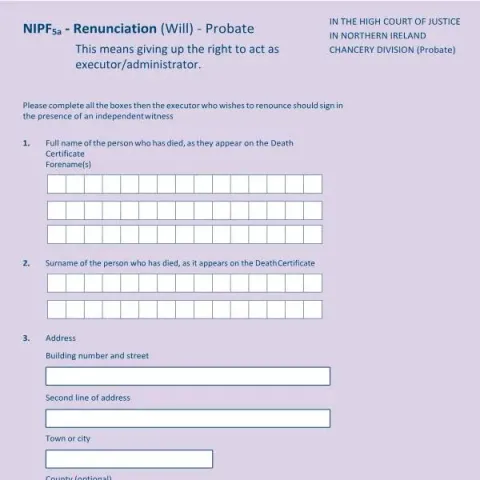
Understanding the NIPF5a Form: Renunciation of Probate Rights in Northern Ireland
The NIPF5a form, titled "Renunciation (Will) - Probate," is an official document issued by the High Court of Justice in Northern Ireland, specifically within the Chancery Division (Probate). It serves a critical legal purpose: allowing an executor or administrator to formally renounce their right to act in the administration of a deceased person's estate. This process is essential for individuals who wish to relinquish their role as executor or administrator, either to avoid conflicts of interest or for personal reasons.
What Is the Purpose of the NIPF5a Form?
The primary objective of the NIPF5a form is to facilitate the legal renunciation of probate rights by an individual designated as an executor or administrator in a will. When a person passes away, the estate must be managed and distributed according to the will or intestacy laws. Executors named in the will are usually responsible for this process, but sometimes they choose to decline this role formally. This form provides the official record of such a decision, ensuring that the estate's administration proceeds smoothly and legally.
Preparing to Complete the NIPF5a Form
Before filling out the form, it is important to gather all relevant information, including:
- The full name of the deceased as it appears on the Death Certificate
- The date of death
- Details of any codicils (amendments to the will)
- The full name and address of the executor or administrator renouncing their rights
- Confirmation that you have not intermeddled with the estate with intent to defraud creditors
Having these details on hand ensures a smooth completion process and helps prevent delays in legal proceedings.
How to Complete and Submit the Form
Step-by-Step Instructions
- Identify the deceased: Fill in the full name and address of the person who has died, as per their Death Certificate.
- Specify the date of death: Provide the exact date when the deceased passed away.
- Include will and codicil details: Indicate the date of the will and any codicils, if applicable.
- Provide your details: Complete your full name and address as the executor or administrator renouncing the estate.
- Declaration of non-interference: Confirm that you have not intermeddled with the estate with intent to defraud creditors.
- Signature and witnessing: Sign the form in the presence of an independent witness who will also sign to validate your declaration.
Witnessing Requirements
The witness must be an independent person, not related to you, and with no interest in the estate. Their role is to verify your identity and confirm that your signature was made voluntarily and knowingly. The witness should print their name, sign, and date the form accordingly.
Submitting the NIPF5a Form
The completed form can be submitted directly to the Probate Registry of the High Court of Justice in Northern Ireland. Submission methods may include in-person delivery or postal submission, depending on current court procedures. It is advisable to check the latest guidance from the court or legal advisors to ensure compliance with any procedural updates.
Fill in your form directly online
No printing: type your details into the boxes of the official form, tick, then download the PDF ready to send.
- 1Type into the form boxes
- 2Tick in one click
- 3Save and download the PDF
Legal Implications and Next Steps
Once the form is accepted and processed, your renunciation is legally recognized, and you will no longer have any responsibilities or rights related to the estate. This allows other named executors or administrators to proceed with the administration process. If you are the sole executor, renouncing your role effectively transfers responsibilities to the next eligible individual or entity.
Contacts and Further Assistance
For assistance with completing the NIPF5a form or understanding the probate process in Northern Ireland, you may contact the Probate Registry of the High Court of Justice or seek legal advice from qualified solicitors specializing in probate law. It is important to ensure all legal requirements are met to avoid delays or complications in estate administration.