Navigating the Final Costs Certificate (Form N256(HC)) from the High Court
In the complex landscape of UK legal proceedings, the Final Costs Certificate (Form N256(HC)) issued by the HM Courts & Tribunals Service plays a pivotal role. It's not just another piece of paper; it can significantly impact financial responsibilities and obligations in civil cases. Understanding this document, its implications, and the processes involved can save considerable time and financial resources for all parties involved in litigation.
Understanding the Essence of the Final Costs Certificate
The Final Costs Certificate is more than a mere formal notice; it's a legal endorsement of the costs incurred during litigation. It serves as a definitive record of the court's decision regarding what costs are payable following a successful claim. When a judge assesses costs and issues a certificate, it signifies that the costs have been scrutinized and deemed reasonable. This document, therefore, acts as a crucial element for enforcing payments dictated by the court's ruling.
What Does the Final Costs Certificate Include?
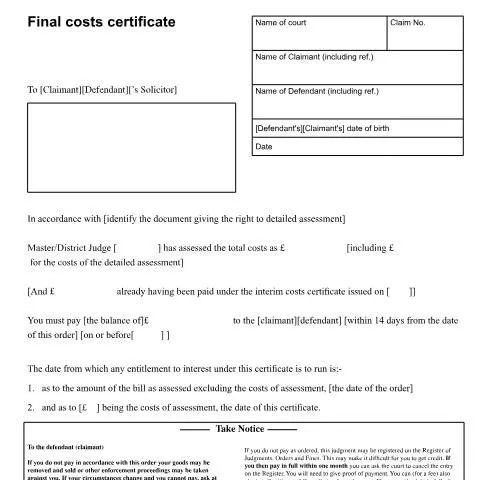
This certificate contains several key pieces of information:
- Name of the Court: Identifies where the case was heard.
- Claim Number: The unique identifier of the case.
- Details of the Parties: Names and references of both the claimant and the defendant.
- Cost Breakdown: Total costs assessed, including any interim payments already made.
- Payment Instructions: Details on where and how to make payments, along with deadlines.
- Interest Entitlement: Notes about any applicable interest on the awarded costs.
The Pathway to Obtaining Your Final Costs Certificate
Securing a Final Costs Certificate involves a defined process that typically follows a successful outcome in court. Here’s a concise breakdown:
1. Detailed Assessment Request
After the conclusion of a case, the party entitled to costs must apply for a detailed assessment. This process is initiated by filing the appropriate application with the court, supported by a bill of costs. The request must comply with the specific guidelines set forth by the court.
2. Assessment Hearing
A judge or district judge will conduct a hearing to evaluate the claimed costs. Both parties have the opportunity to present their arguments regarding the appropriateness of the costs claimed. Here, documentation supporting the claim will be crucial.
3. Issuance of the Certificate
If the judge deems the costs reasonable, a Final Costs Certificate is issued, confirming the amount payable by the other party. This document reinforces the legal obligation to pay the assessed costs.
Who is Entitled to the Certificate?
Not everyone can simply request a Final Costs Certificate. The entitlement to obtain this document hinges on specific conditions:
- Litigants: Primarily, it is the successful party in the litigation who is entitled to apply for the certificate.
- Represented Parties: If a party is represented by a solicitor, the solicitor typically handles the application for the certificate.
- Post-judgment Context: The request must originate post-judgment, meaning the court must have already made a decision in the case.
What the Certificate Validates: Legal Significance and Enforcement
The Final Costs Certificate functions as a formal decree of what has been deemed payable by one party to another. Its validation is rooted in the court's authority, and it carries significant legal weight:
Legal Authority
The certificate represents the culmination of legal assessment and judgment. It can be enforced through various legal channels, ensuring that the financial obligations specified are met. Should a party fail to comply, the certificate can lead to enforcement actions, including:
- Seizure of assets.
- Attachments to earnings or bank accounts.
- Entry on the Register of Judgments, Orders, and Fines, which may affect credit ratings.
Timeframes and Validity: Knowing Your Deadlines
Once the Final Costs Certificate is issued, specific timelines come into play. The certificate requires the party to pay the assessed costs within a stipulated timeframe—typically 14 days from the date on the certificate. Here's a clearer picture:
| Action Required | Timeframe |
|---|---|
| Pay assessed costs | Within 14 days of the certificate date |
| Interest accrual begins for unpaid sums | From the date of the order or certificate, as specified |
Falling behind on these deadlines can lead to adverse consequences, including additional interest being charged or enforcement action being initiated.
In Case of Issues: Handling Errors or Disputes
Errors may arise in relation to the Final Costs Certificate, whether in the form of incorrect details, disagreements over costs, or failure to pay. Understanding how to address these issues is crucial:
1. Reporting Errors
If there are inaccuracies within the certificate, a party should promptly contact the court office where the case was heard. This requires providing evidence to support the claim of error, which may lead to a correction being issued.
2. Contesting Costs
Should the opposing party dispute the costs assessed, they can apply for a review of the final costs certificate. This process involves filing an application in court, which will trigger a further hearing to reassess the costs in question.
3. Non-Payment Consequences
The certificate serves as a legal document that can lead to severe repercussions for non-payment. If payment isn’t made within the stipulated time, various enforcement measures may be initiated, including:
- Goods may be seized and sold to recover the debt.
- Registration of the judgment on the Register of Judgments, making future credit applications difficult.
- Potential for additional penalties if the debt remains unpaid.
How to Ensure Compliance with Payment Instructions
Once a Final Costs Certificate is issued, observing the payment instructions meticulously is essential. Payments should be directed explicitly to the person named in the certificate, along with the specified case number. Here are some key points regarding payment:
- Do not send payments to the court: They will not accept them.
- Keep records: Always maintain comprehensive records of payments made, to avoid disputes later.
- Use secure payment methods: Avoid sending cash; instead, employ bank transfers or cheques with recorded delivery to ensure safety.
Final Thoughts on the Final Costs Certificate
Understanding the intricacies of the Final Costs Certificate (Form N256(HC)) is crucial for both claimants and defendants navigating the UK legal system. Beyond being a formality, it encapsulates financial responsibilities that can significantly impact the post-litigation landscape. Awareness of the processes, timelines, and legal implications surrounding this document empowers parties to manage their obligations effectively and mitigate potential risks.
Understanding the Role of Form N256(HC) in High Court Proceedings
Form N256(HC), known as the Final Costs Certificate, plays a pivotal role in the context of civil litigation within the High Court of England and Wales. This certificate is essential for parties involved in a legal dispute as it formalises the costs that have been incurred throughout the proceedings. It serves as a final determination of costs that are recoverable by the winning party, thereby ensuring that the financial aspects of the litigation are settled fairly based on the court's assessment.
One of the critical functions of Form N256(HC) is to provide clarity and transparency in the cost recovery process. It outlines specific costs that have been awarded, such as legal fees, disbursements, and any additional expenses that the court deems recoverable. The completion of this form is not merely a formality; it obliges the court to review the submitted costs and either accept or modify them based on the merits of the case and prevailing legal principles.
Fill in your form directly online
No printing: type your details into the boxes of the official form, tick, then download the PDF ready to send.
- 1Type into the form boxes
- 2Tick in one click
- 3Save and download the PDF
Both solicitors and litigants must understand the significance of properly filling out Form N256(HC). Failure to provide accurate information may result in delays or disputes regarding payment. The court expects that all costs claimed are reasonable, necessary, and proportionate to the litigation in question. Therefore, it is advisable to maintain comprehensive records of all costs incurred during the legal process to support the final claim made in this form.
The Implications of Costs Decisions in High Court Cases
The decision regarding costs in High Court cases can have far-reaching implications for both parties involved in litigation. When the court awards costs, it does so based on the principle that the losing party should contribute to the legal expenses of the winning party. This principle is intended to deter frivolous claims and ensure that parties are mindful of the potential financial repercussions of their legal actions.
Upon receiving the Final Costs Certificate via Form N256(HC), the winning party must understand the nuances of collecting awarded costs. While the certificate provides a legal acknowledgment of the costs awarded, it does not guarantee immediate payment. The losing party may have the right to appeal the costs decision, potentially delaying the recovery process. Therefore, it is prudent for the winning party to be prepared for potential negotiations or additional proceedings regarding the costs.
Moreover, litigants should be aware that cost awards can also affect the negotiations of future settlements. A party that has a clear winning position and has successfully obtained a Final Costs Certificate may leverage this in any settlement discussions, knowing they have the court's backing on the recoverability of costs. Conversely, for the losing party, understanding the implications of an awarded costs decision could influence their willingness to settle to avoid incurring further financial liability.
Common Challenges and Disputes Related to Form N256(HC)
While Form N256(HC) is designed to promote efficient cost recovery, it is not without its challenges. Disputes regarding the costs claimed often arise, leading to further complications in the litigation process. Common challenges include disagreements on what constitutes reasonable costs, disputes over disbursements, and differing interpretations of court allowances.
One common issue is related to time recording. Solicitors are required to keep detailed time records of the work performed on a case. If these records are not meticulously maintained, it can lead to disputes over the hours claimed. The court may disallow costs that appear inflated or lack proper justification. In such instances, the losing party may contest the Full Costs Certificate, leading to a further examination of the submitted documentation.
In cases where disputes arise, parties have the option to request a detailed assessment of costs under Part 47 of the Civil Procedure Rules. This process allows for a thorough review of the claimed costs, and parties may need to prepare for hearings where the legitimacy of the claimed amounts will be scrutinised by the court.
Additionally, parties must be cognizant of the time limits associated with disputes over costs. Once Form N256(HC) is issued, there are strict timeframes within which appeals or objections must be lodged. Failure to adhere to these timelines can result in losing the opportunity to contest the costs awarded.